10 Myths About Phuket People Believe Before Moving
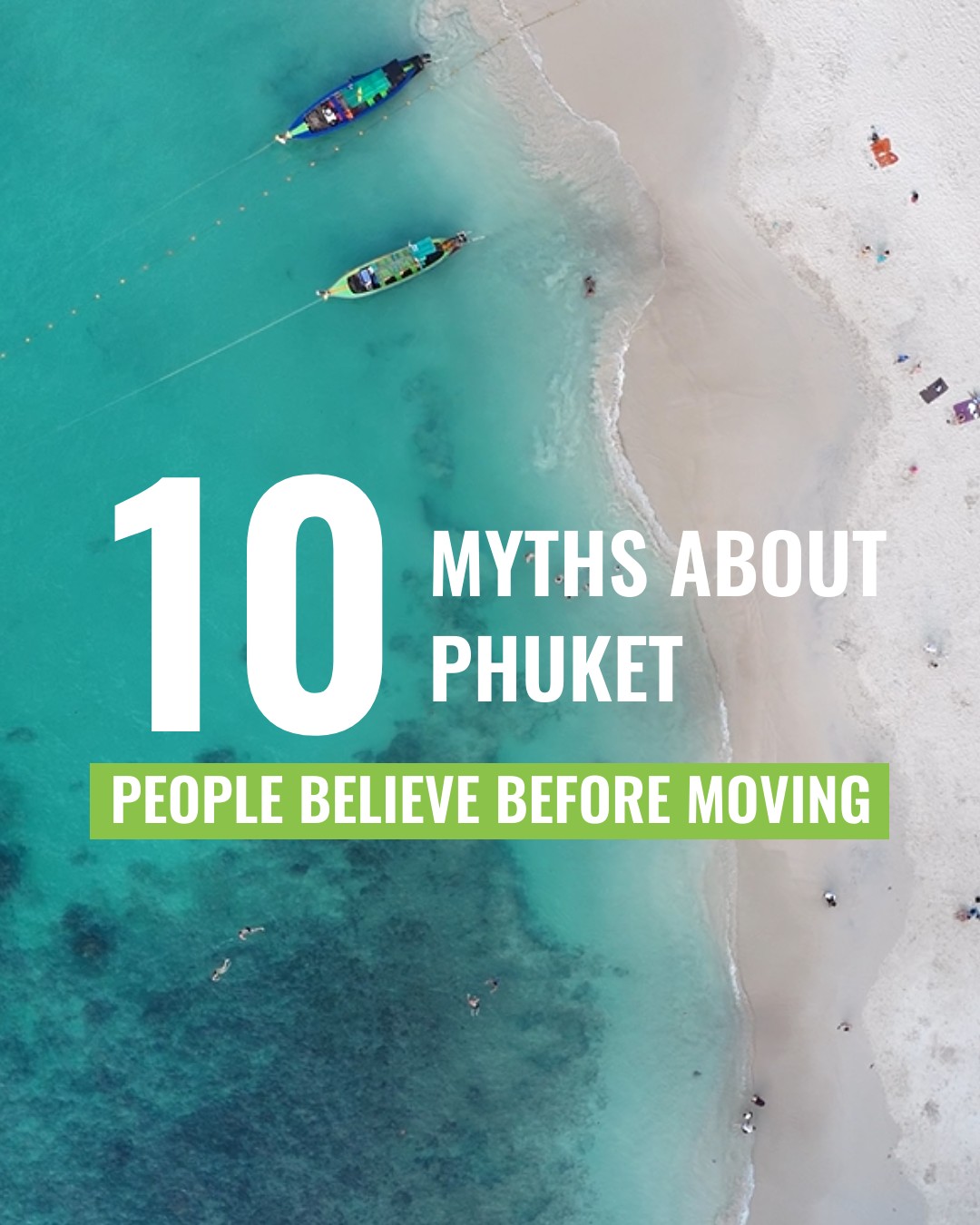
Moving to an island almost always begins the same way: beautiful photos, turquoise water, palm trees, and the feeling that somewhere out there exists a different, easier life. Phuket, in this sense, is the perfect hero for such fantasies. It has long become a symbol of an “eternal vacation”, an escape from routine and dullness. But reality, as often happens, is far more complex and multifaceted.
Over the years of living on the island, we’ve heard myths about Phuket dozens of times — from friends, acquaintances, followers, and those who are only planning to move. Some of them seem harmless, while others can seriously affect expectations and decisions. What follows is an honest conversation about what Phuket looks like after the move, not at the stage of dreaming.
Myth 1. “Life in Phuket is always like a vacation”
The most popular and most persistent myth. It seems that people who move to the sea do nothing but relax, swim, and sunbathe. In practice, everything is quite different.

Living in Phuket requires no less work than before. On top of that, a whole set of everyday tasks appears that simply didn’t exist before: visas, insurance, paperwork, the language barrier, housing, transportation. If you have children — schools, kindergartens, extracurricular activities, logistics, homework.
By the way, in our experience, having personal transportation not only makes life on the island easier, but also significantly reduces expenses. There are two options: buying or renting. If you’re planning to live on the island for one or two years, it’s usually easier to rent a car or a motorbike.
Our typical day looks very ordinary: in the morning we drop the kids off, then we work, meet deadlines, in the evening we do grocery shopping at the supermarket, cook, and take care of everyday chores. Sometimes friends who come to visit genuinely ask, “Don’t you get bored here?” And we do exactly the same things they do — just with the occasional opportunity to do them under palm trees.
It sounds absurd, but over the course of a year we go to the sea less often than a tourist does in two weeks. And sometimes we even feel a bit of friendly envy toward those who fly to Phuket specifically for a vacation. Because for them it’s a holiday — and for us it’s just everyday life.
Myth 2. “Everything is cheap here”
Phuket is far from a budget place to live. If you compare expenses with any Russian city with a population of over a million, the result is almost always the same — life on the island is 2.5–3 times more expensive.
On top of regular expenses, you also have:
- housing rent;
- renting or buying a car or motorbike;
- visas and extensions;
- medical insurance;
- private schools and kindergartens;
- imported products that you tend to miss when living abroad.
The only tangible savings come from not needing warm clothes. You really can walk around here in shorts and flip-flops all year round.
Myth 3. “The weather on the island is always perfect”
You open tour operator websites and it seems like rain doesn’t exist in Phuket at all. But the island is located in the tropics, which means monsoons, heavy downpours, and high humidity are quite common here.
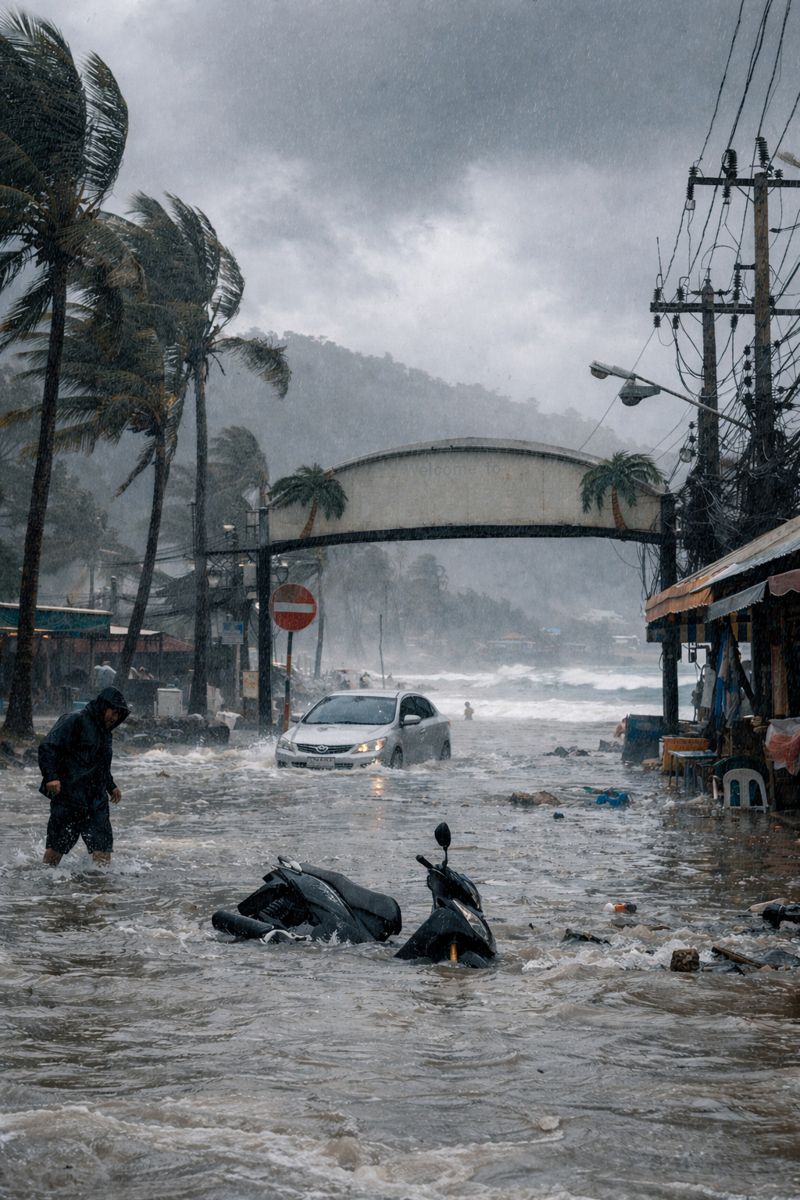
In 2025, for example, it rained from late October until the end of November, even though November is already considered high season. There was so much rainfall that it started to get on the nerves even of us, who are used to seasonal weather.
We have an article Weather in Phuket by Month, where we describe what is typically expected for each month. But sometimes forecasts don’t come true — and that’s normal. By the way, for more accurate weather forecasts we use the Windy app, but generally there’s no real point in checking the forecast more than five days ahead.
During rainy periods in Phuket, you may encounter:
- flooding and landslides;
- massive traffic jams;
- dirty beaches;
- murky seawater.
If you’re “lucky with the weather,” check out our guides on what to do in Phuket when it rains and where to find beaches without waves.
Myth 4. “It’s easy to make friends here”
At first, it really feels like there’s an endless community around you. But in reality, most people come for a short vacation, a winter stay, or a year “to try it out”.
After living in Phuket for one or two years, many move on — to Bali, Malaysia, or Europe. As a result, your social circle is constantly changing. You barely get used to people, and then they leave.
Myth 5. “Relationships become stronger on the island”
At first — yes. Moving together, new experiences, and the euphoria of “living in paradise” truly bring people closer. But then the real test begins.

Among our acquaintances, there is a very high percentage of couples who broke up after moving. In a new country, the usual support system disappears: friends, relatives, work, social roles. All the pressure concentrates within the couple, and a partner often becomes the only close person, a source of support and a “point of stability.” Not everyone can handle that kind of load.
Emigration works like a mirror: it doesn’t destroy relationships — it exposes them. Some people grow closer and stronger, while others realize that their paths are no longer aligned.
Myth 6. “Phuket is for everyone”
A 100% myth. Island life isn’t for everyone — and that’s perfectly normal. Many people genuinely find it difficult here:
- there are almost no sidewalks;
- very few parks and walking areas;
- chaotic traffic;
- a lack of a “city vibe”;
- a language barrier;
- being cut off from a familiar social circle;
- a different culture.
Expectations and reality often don’t match — and disappointment follows. In fact, most migrants experience this at some point. The process usually looks like this: first comes the euphoria phase — everything is new, beautiful, and unusual, and it feels like life has finally “truly begun.” Then reality sets in: everyday routines, the language, paperwork, climate, cultural differences. That’s when disappointment appears — expectations collide with daily life.
Disappointment comes in different forms. For some, it’s a temporary low that’s followed by acceptance and a deeper, more realistic love for the place — without illusions. For others, it’s a signal that this particular country or city isn’t right for them, and that’s also a completely valid outcome.
Myth 7. “The level of service is high here”
Service in Phuket varies, but on average it’s lower than, for example, in Russia. A typical situation: a technician promises to come fix your air conditioner at 5:00 p.m., but shows up at 6:00 p.m. And that’s the good scenario — sometimes they don’t show up at all.
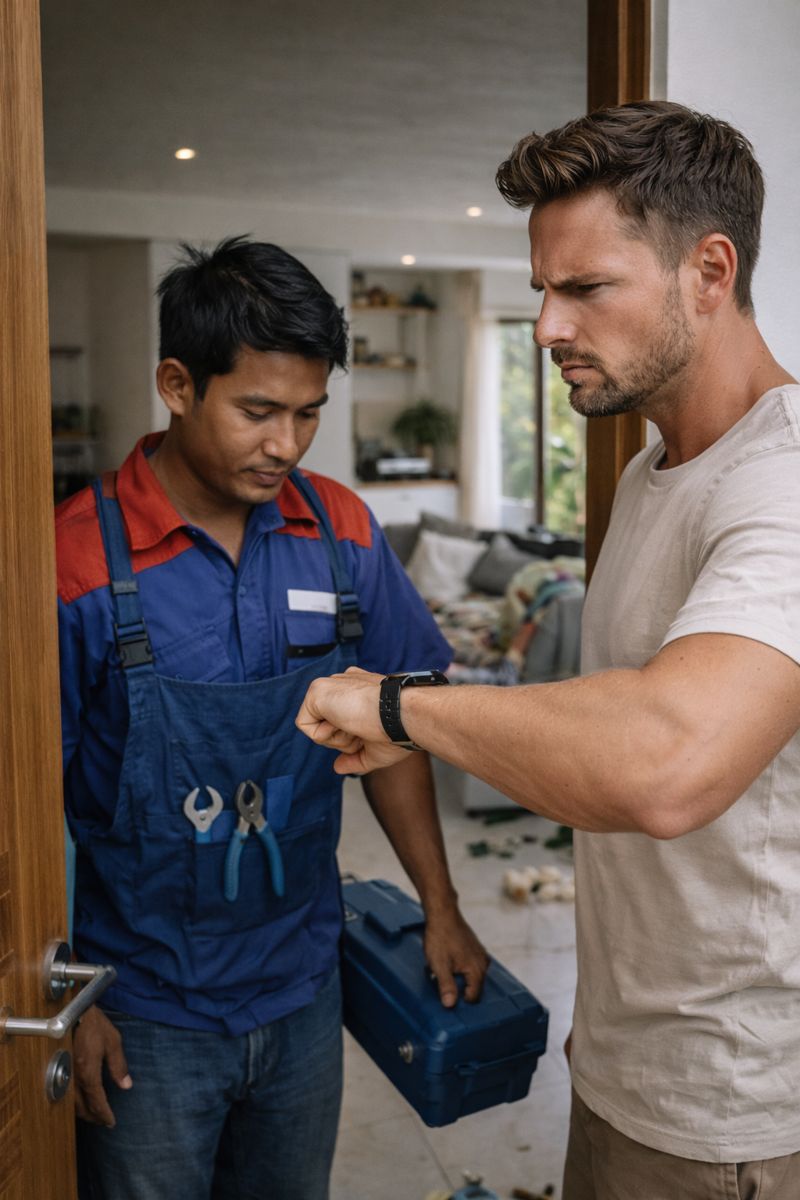
There is, however, another nuance: Thais almost never get irritated, raise their voices, or engage in conflicts. They may be late, but they’ll arrive with a smile and say, “Mai pen rai,” which means “no problem” or “it’s nothing serious”.
By the way, we have an interesting article about Thai philosophy — Mai Pen Rai, Sanuk, and Sabai: The Key to the Thai Soul.
Myth 8. “If you work remotely, life is easy”
Many people plan a move to Phuket thinking, “I work remotely, so I’ll be able to live peacefully by the sea”. But remote work in emigration is not about ease — it’s about a different level of responsibility.
First, remote income is rarely stable. Exchange rates, clients, projects, gaps between contracts — all of this is felt much more acutely when you live in a country where almost all expenses are tied to foreign currency.
Second, expenses grow quietly. It feels like you’re spending less than before, but gradually visas, insurance, equipment, coworking spaces, cafés “for work,” taxis in the rain, delivery, paid services, and subscriptions are added to rent and food. At some point, your budget starts to “leak,” even though your lifestyle seems modest.
Time zones are a separate reality. Working on Moscow, European, or U.S. time often means calls late in the evening or at night. As a result, “working by the sea” turns into working at home under the air conditioner with the curtains closed.
Internet and equipment also become critically important. Good internet isn’t available everywhere, outages happen, and any disruption instantly turns into stress — because work isn’t an option, it’s a condition for living.
In the end, remote work in Phuket is not a vacation with a laptop. If you approach it realistically, without illusions, it can be comfortable — but definitely not easy.
Myth 9. “It’s easy to be relaxed and happy here”
For many people, a paradise island is associated with zen and calm. But the reality is that your inner state doesn’t move with your suitcases.
If life felt anxious, difficult, or heavy before, that doesn’t disappear in Phuket. On the contrary, because of the heat, humidity, loneliness, and lack of familiar support systems, emotions can sometimes feel even more intense. The island doesn’t heal — it amplifies.
Myth 10. “Everyone lives the same way in Phuket”
From the outside, it seems like there’s a single “typical Phuket lifestyle.” In reality, the island is very diverse. You can live in a tourist area and see crowds every day; in a local neighborhood and barely encounter tourists; in a hillside villa or a seaside condo; in noise or in complete silence. Two people can live on the same island and have completely different experiences.
To help you understand where your vibe is — and where it isn’t — we created a series of guides about different areas of Phuket:
- for families with children;
- for nightlife lovers;
- for expats and winter residents;
- for lovers of luxury;
- for those who prefer being far from civilization.
Tourist Phuket and Phuket for living are two different worlds. A tourist sees the storefront. A resident sees the backstage. And only over time does it become clear that the island is not just beaches, but also immigration queues, torrential rains, local markets, neighborhood dogs, unexpected power outages, and rare — but very real — moments of happiness.
We’ve made our choice — now it’s your turn to make yours. And Phuket Insider will always help you make life on the island easier and more comfortable.
Visas: tourist, DTV, LTR, education visa
Transport: bikes, passenger cars, motorcycles, SUVs, convertible and luxury cars
Insurance: life insurance, real estate insurance, car and bike insurance
Kindergartens and schools: international kindergartens and Russian-speaking kindergartens, international schools and Russian-speaking schools
Sports Sections: gyms, dance studios, yoga studios, football, padel, tennis