Chinese New Year in Phuket 2026
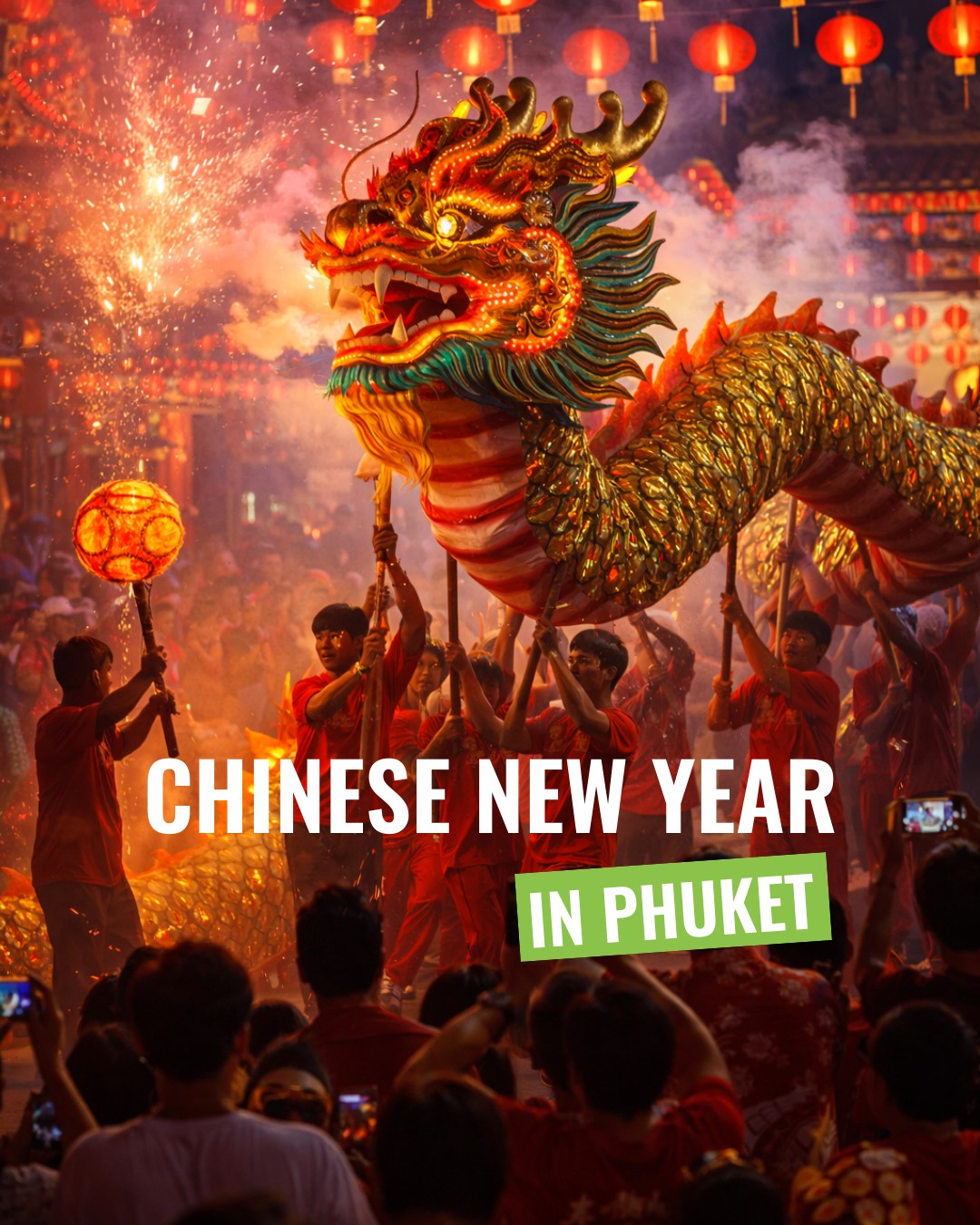
On February 17, 2026, Phuket welcomes the Chinese New Year – the beginning of the Year of the Fire Horse according to the Lunar calendar. For the island, this is not just a colorful celebration but one of the key events: the Fire Horse is a rare visitor in the Chinese zodiac cycle, appearing only once every 60 years. The last time was in 1966, and the next will be only in 2086.
The schedule of events dedicated to the Chinese New Year is available on this page.
Unlike many resort destinations where Chinese New Year is limited to decorations in shopping malls, in Phuket it is deeply rooted in the island’s history and identity.
Here’s why Chinese New Year is so important for Phuket, how the community prepares for the celebration, and what events await the island this year.
Why Chinese New Year Is Celebrated on Such a Grand Scale in Phuket
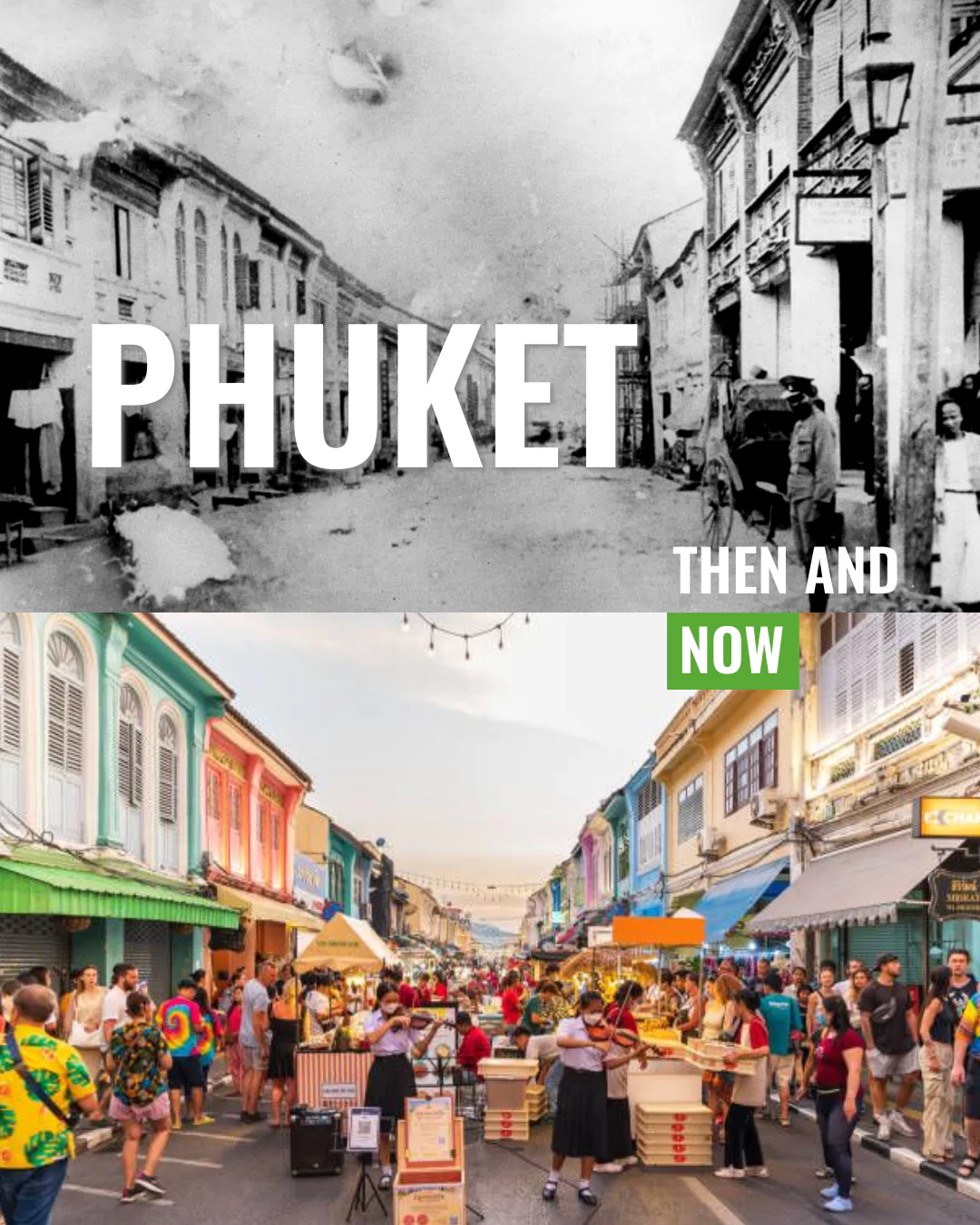
The reason is simple: about one third of Phuket’s population are Thai people of Chinese descent, primarily immigrants from southern China’s Fujian province. Locally, they are known as Hokkien. It was the Hokkien Chinese community in Phuket that arrived in the 19th century to work in the tin mines and gradually became the cultural and economic backbone of Phuket Town, preserving their traditions to this day.
We have two in-depth articles on this topic: From Tin Mines to a World-Class Resort: The Transformation of Phuket and Peranakan Culture in Phuket.
For the Hokkien community, this is a family and sacred holiday, not a tourist show. That is precisely why it feels especially authentic in Phuket.
Preparing for the Celebration
Chinese New Year in Phuket is not just a single festive event, but a whole series of preparatory rituals and everyday concerns that begin long before the actual date. In many ways, it is similar to New Year celebrations in CIS countries or Christmas in Catholic countries.
- Cleaning the Home and Space
Preparations begin with a thorough house cleaning — it is believed that cleaning removes old energy from the home and makes space for good fortune and prosperity in the coming year.
- Updating the Wardrobe and Buying Gifts
To welcome the New Year with fresh energy and good intentions, families prepare: new clothes for all family members, gifts for relatives and children, and a special holiday attribute — red envelopes filled with money.
- Preparing Traditional Treats
A day or several days before the celebration, homes and shops are bustling with activity. People prepare:
- khanom — traditional cakes and sweets;
- khanom riew — for gods and spirits
- khanom kheng — for ancestors
- khanom ku, khanom chan
- fruits, tea, water, and drinks;
- additional dishes for the family table.
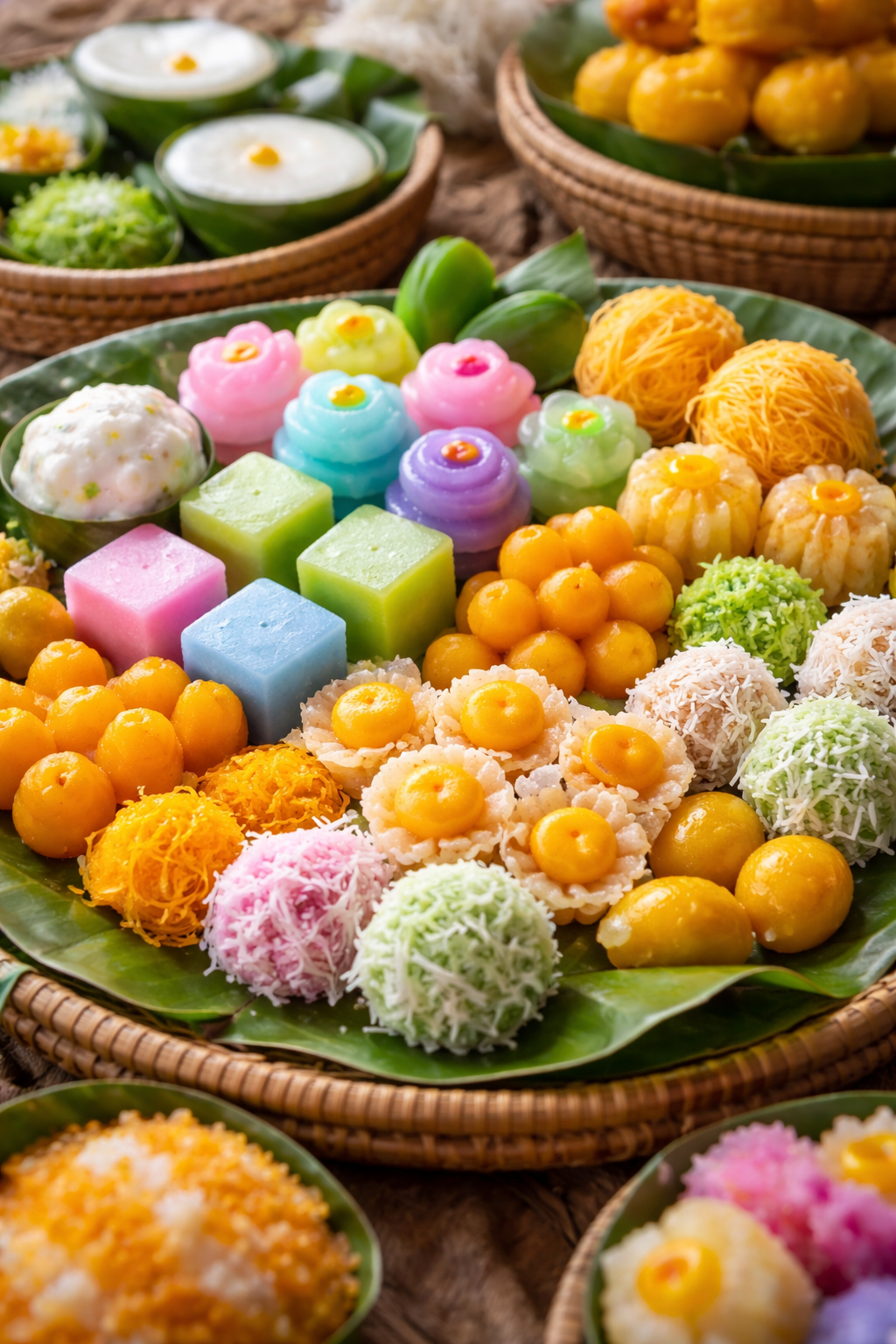
These sweets can be seen everywhere in the Old Town in the days leading up to the holiday.
- Offerings to Spirits and Gods
At home, three altars are prepared: one for the Buddha or a guardian monk, one for Chinese deities, and one for ancestors. The altars are arranged with figurines, images and the names of ancestors, as well as offerings — sweets, fruits, tea, water, candles, and incense sticks.
- Worship and Prayers
The ceremonies usually take place in the morning on New Year’s Day. The head of the household lights incense sticks, recites a prayer inviting the spirits and gods, and places the offerings on the altar.
- Offerings for Ancestors
A particularly meaningful moment is when food is offered to the ancestors. These are not just symbolic offerings: families prepare the favorite dishes of their departed relatives, use one incense stick for each ancestor, and after the traditional ritual meal, the family gathers together to share the food.
The food prepared for the ancestors is considered sacred — it must not be eaten until all the rituals have been completed.
- Paper Offerings and “Sending to the Spirit World”
In specialty stores before the Chinese New Year, you can find special items: paper money, paper phones, clothing, jewelry, paper “plane tickets,” and “passports” for the souls. These items are burned at the altar to “send” them to the spirit world as offerings and care for the ancestors in the new year.
- Gift Exchange in Red Envelopes
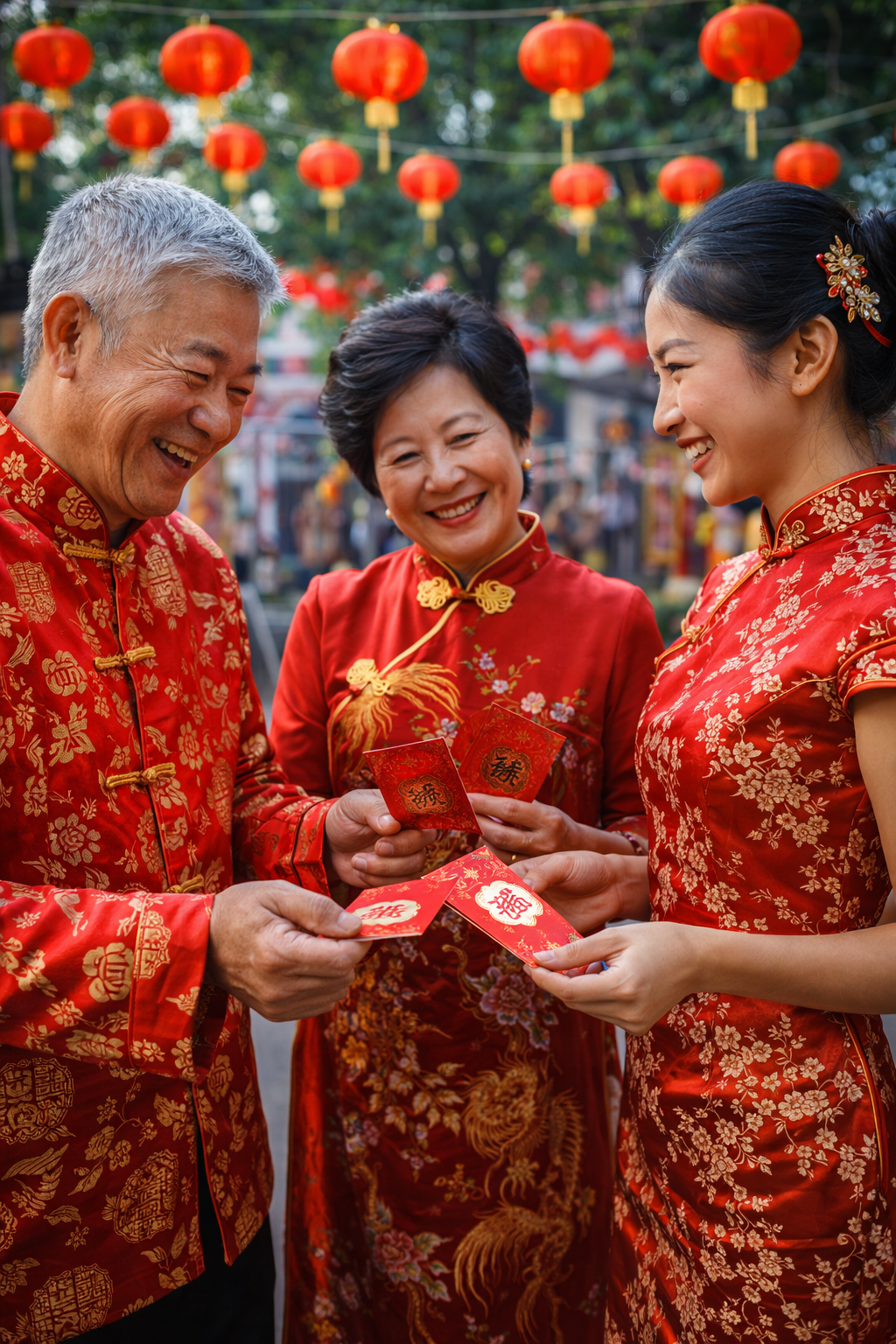
After the rituals and family meal comes a moment everyone loves: adults give children red envelopes with money, symbolizing wishes for luck, health, and prosperity.
- Firecrackers and Sounds to Ward Off Evil Spirits
The celebrations are often accompanied by loud firecrackers, set off at every home. The loud noise is believed to scare away evil spirits. This is one of the most striking elements of the holiday, heard across many neighborhoods in Phuket.
- The Final Stage of Preparation: Street Festivals
After all the home rituals, community life moves to the streets of the Old Town:
- decorations of red lanterns are prepared,
- streets like Thalang Road, Krabi Road, and Soi Rommanee are adorned,
- stages, market stalls, and festive installations are set up.
It is here that family traditions blend with public celebration — from ritual dragon dances to folk performances, music, and street food.
We have compiled the most exciting events in Phuket in our schedule on the Chinese New Year page.
The Main Stage of the Celebration: Old Town
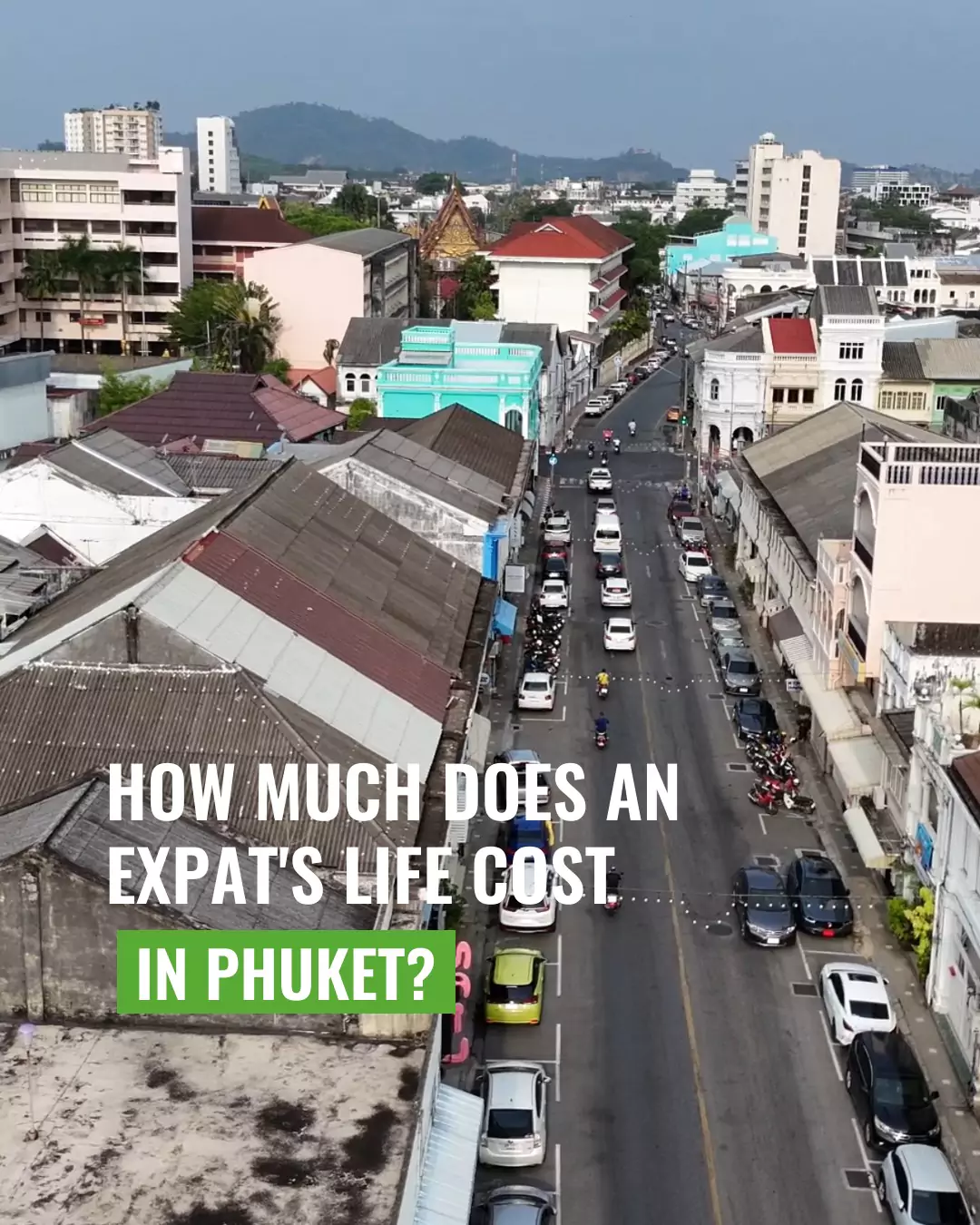
The historic center of Phuket traditionally becomes the heart of the festivities, transforming for a day into an open festival space.
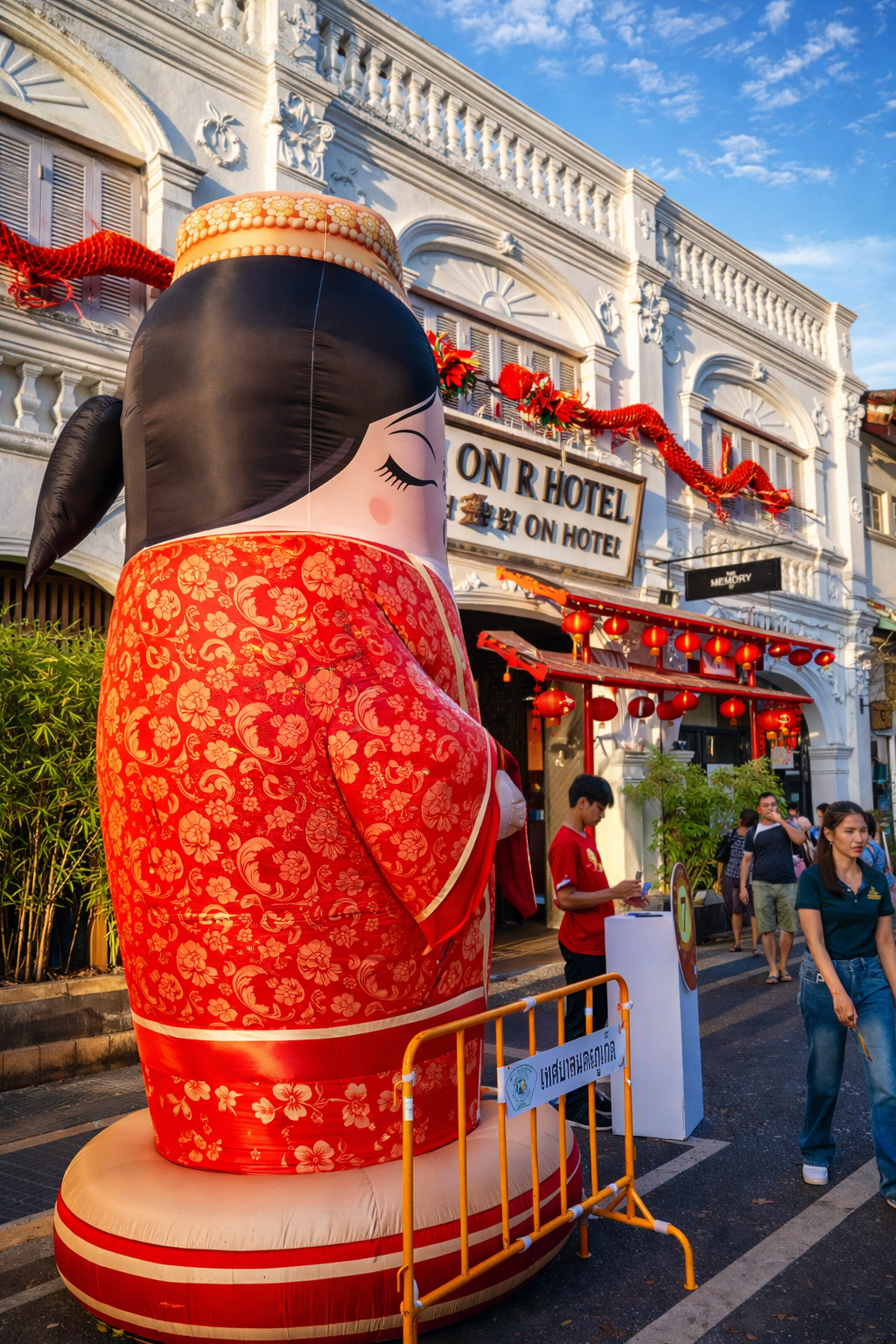
- Thalang Road. This is where the festive transformation is felt most vividly. The facades of Sino-Portuguese buildings are adorned with thousands of red Chinese lanterns, creating the effect of a continuous scarlet canopy over the street.
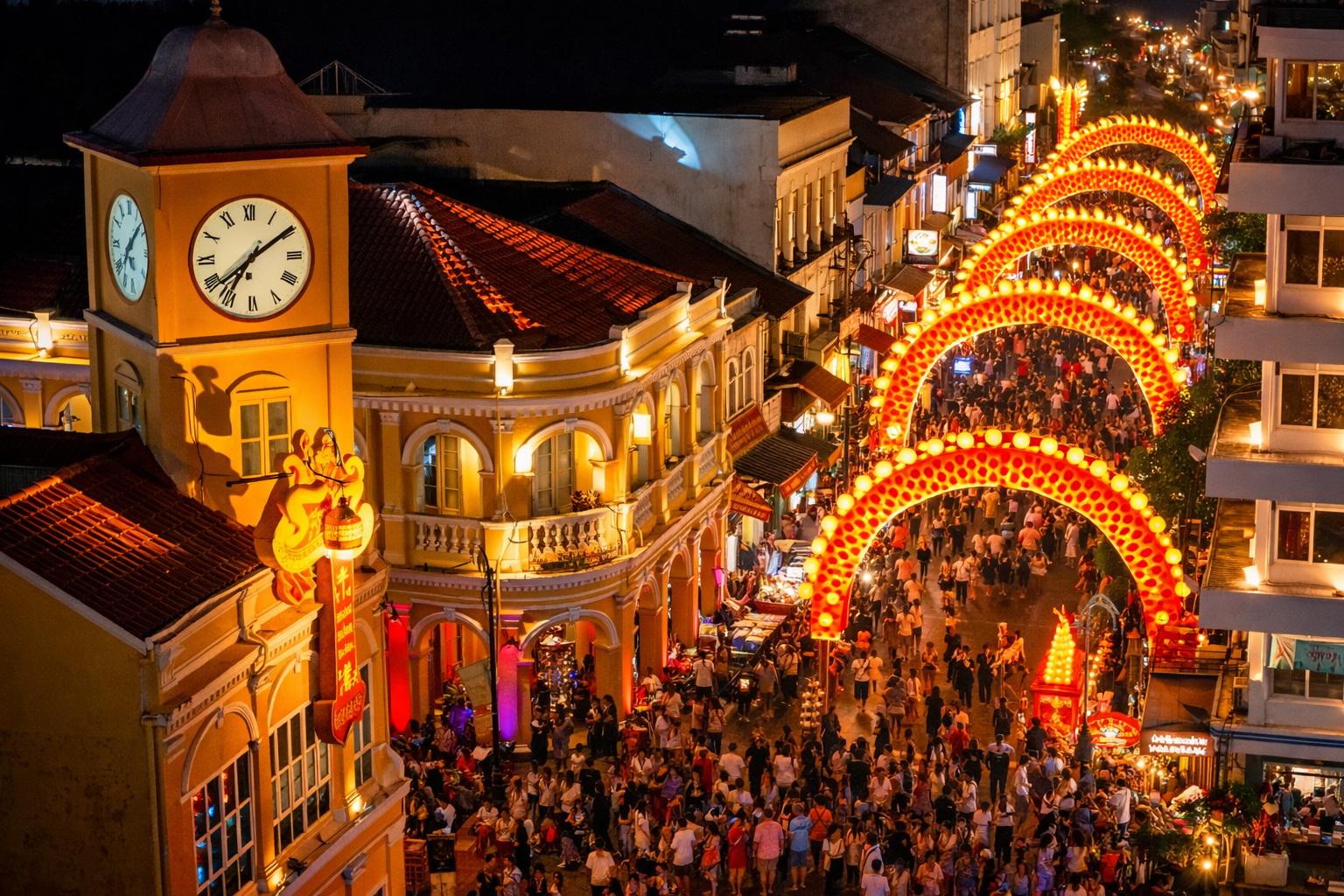
The best time for a walk and photos is from 5:30 PM to 6:30 PM, when daylight gradually gives way to illumination and the city looks especially cinematic.
- Soi Rommanee. This small alley is one of the most photogenic spots in the Old Town. Once known as the Red Lantern Street, it has now become a neat gallery of colorful facades, which looks especially striking during the festive days. Be sure to notice the Kasikorn Bank building and the legendary The Memory at On On Hotel — the oldest hotel on the island.
The Highlight of the Celebration: Seeing the Dragon
The main event is the Dragon parade and dance, which follows a set route and schedule.
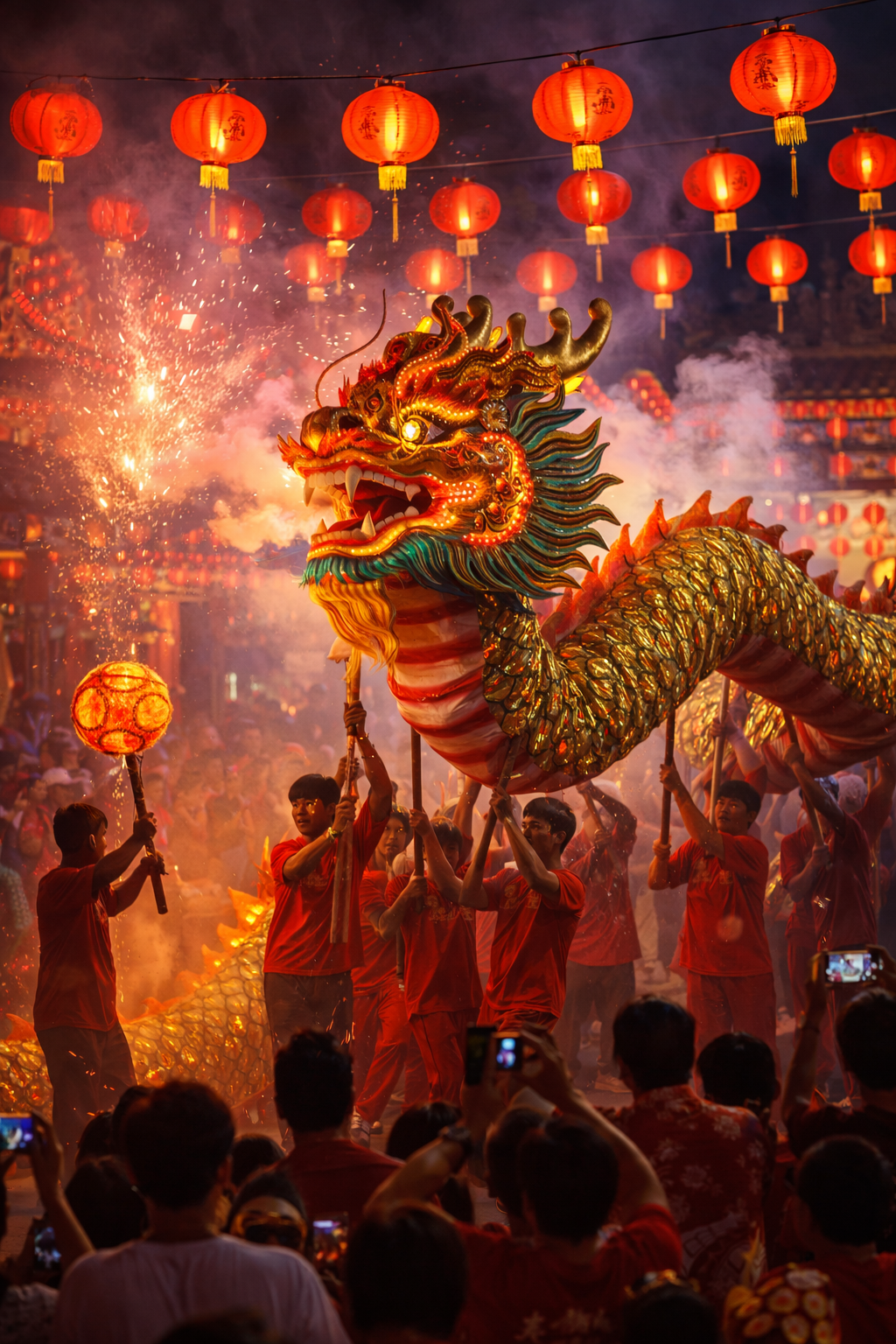
The Dragon Dance is one of the main and most spectacular rituals of the Chinese New Year. It is not just a street performance, but an ancient ceremony connected to beliefs about protection, luck, and prosperity in the new year.
In Chinese culture, the dragon is not a mythical monster, but a benevolent and powerful guardian. It symbolizes strength and vital energy, wealth and success, protection from misfortune, and harmony between heaven, earth, and humanity. It is believed that the appearance of the dragon “cleanses” the space and brings good luck for the entire year ahead.
The dragon consists of a long structure — sometimes 20–40 meters — carried by dozens of performers. The movements are synchronized and rhythmic: the dragon seems to “swim,” twist, soar, and dip, mimicking the motion of water and wind.
Usually, a performer dances nearby holding the Pearl of Wisdom — a ball on a pole. The dragon follows it, symbolizing the pursuit of knowledge and light.
Other Places to Celebrate Chinese New Year in Phuket
1. Temples are the spiritual centers of the celebration. Key locations to witness traditional rituals and offerings:
- Jui Tui Shrine – one of the largest and most active Chinese temples in Phuket Town;
- Bang Neow Shrine, Samkong Shrine – other well-known Chinese temples with colorful decorations and prayers;
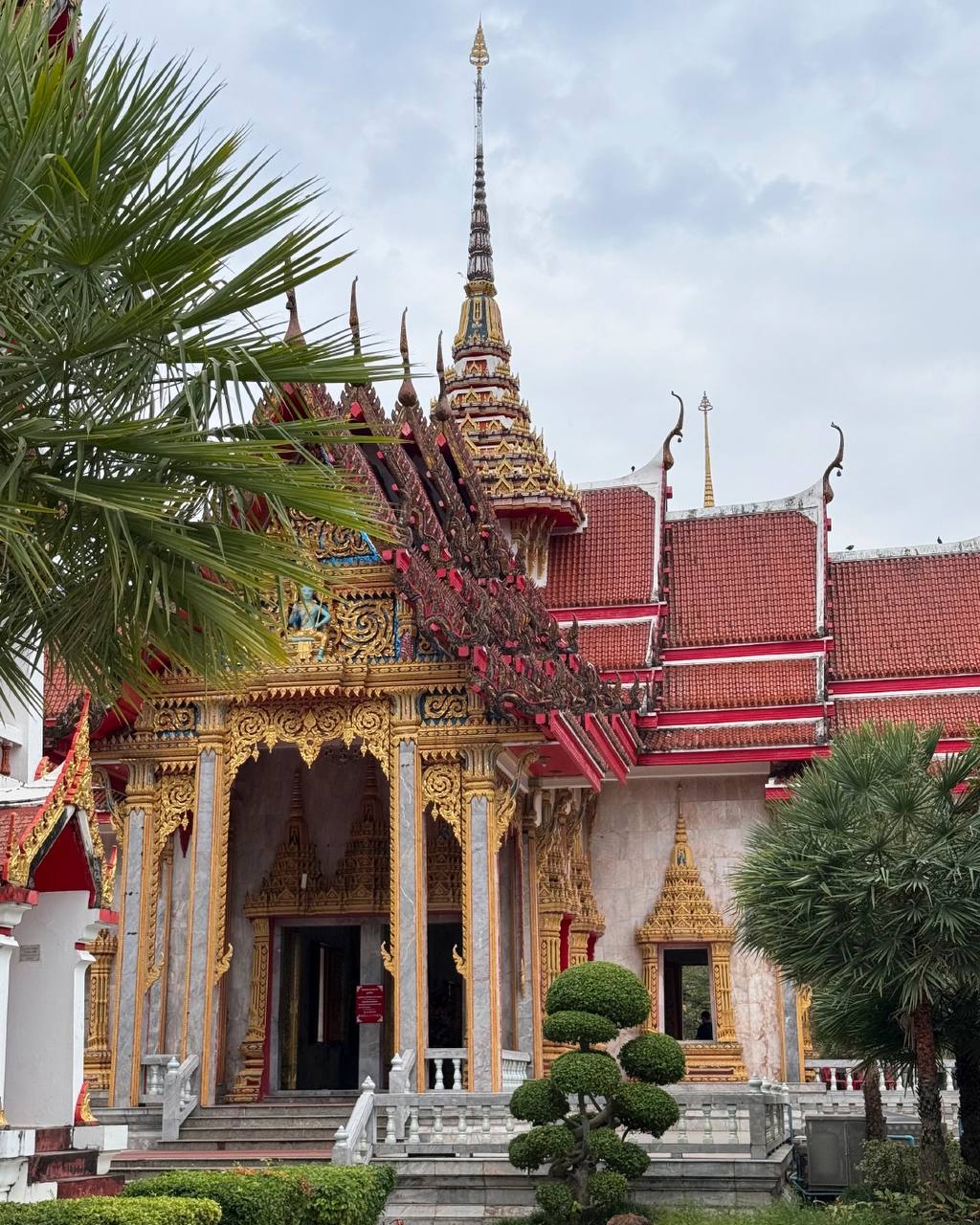
- Wat Chalong – a fair will be held here from February 16 to 22.
During these days, temples are usually crowded, filled with the scent of incense, and offer a true sense of community tradition.
2. Hotels and Resort Parties Across the Island
Many major hotels and resorts organize their own events in the spirit of Chinese New Year: dinners featuring Chinese cuisine, traditional treats, and entertainment programs.
3. Shopping Malls
Many malls in Phuket prepare entertainment programs for Chinese New Year, including contests, performances, and prize draws.
- February 16 and 17 at 2 PM and 4 PM – traditional Chinese dances in the courtyard of the Festival wing.
- February 16–19 at 11:20 AM and 3 PM – underwater Chinese ballet and lion show at Aquaria Phuket.
- February 17 at 6 PM – lion and dragon dance in the courtyard of the Festival wing.
- February 17 at 7:30 PM – dragon show at the fountain.
- February 18 at 5 PM and 6 PM – music on the traditional Chinese instrument guzheng (ground floor).
- February 18–20 at 11 AM, 2 PM and 5 PM – dragon parade (throughout the shopping mall).
Chinese New Year in Phuket is a rare moment when the island reveals itself not just as a resort, but as a cultural city with a deep history. It’s one day when you can see traditions, architecture, and modern tourism converge in one place. If you want to feel the true rhythm of Phuket, February 17, 2026, is the day to be here.