Marriages Between Foreigners and Thais: Pros, Cons, and Nuances
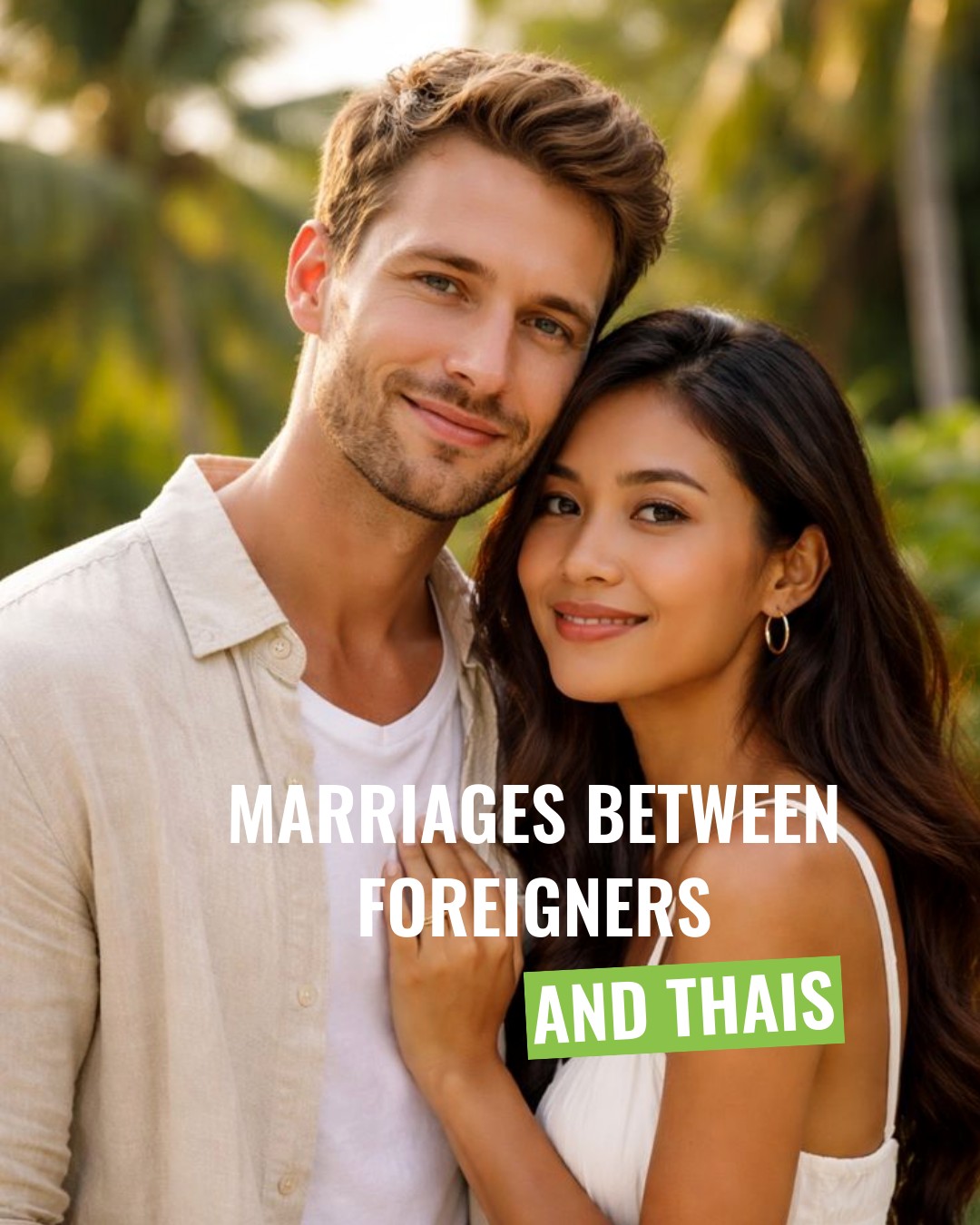
In a world where borders are fading thanks to globalization, tourism, and digital technologies, intercultural marriages are becoming increasingly common. Thailand is no exception. It has long attracted foreigners not only as a tourist destination, but also as a place to find love and start a family.
If you have been to Thailand, you have probably noticed such couples. Marriages between Thais and foreigners are not just a romantic story, but a complex blend of traditions, legal norms, cultural differences, and everyday challenges. Let’s take a closer look at this topic, drawing on statistics and real-life examples.
Cross-cultural unions
Mixed marriages in Thailand have been a growing trend over recent decades. According to statistics, in 2023 more than 10,000 marriages between Thais and foreigners were registered in Bangkok. This makes the capital a true hub for cross-cultural unions.

Over the past three years, more than 11,000 Thai women have married foreigners, while only a little over 1,700 Thai men have married foreign women. That’s quite a gender asymmetry.
In most cases, these unions are formed between Thai women and foreign men. The top nationalities among foreign partners are British, American, and German.
Thailand’s policies encourage the inflow of foreign retirees through long-term stay visas, which in turn fosters romantic connections. In addition, economic factors also play a role: many Thais see marriage to a foreigner as an opportunity to improve their financial situation, while foreigners view it as a chance for a спокойной life in a warm climate with a caring partner.
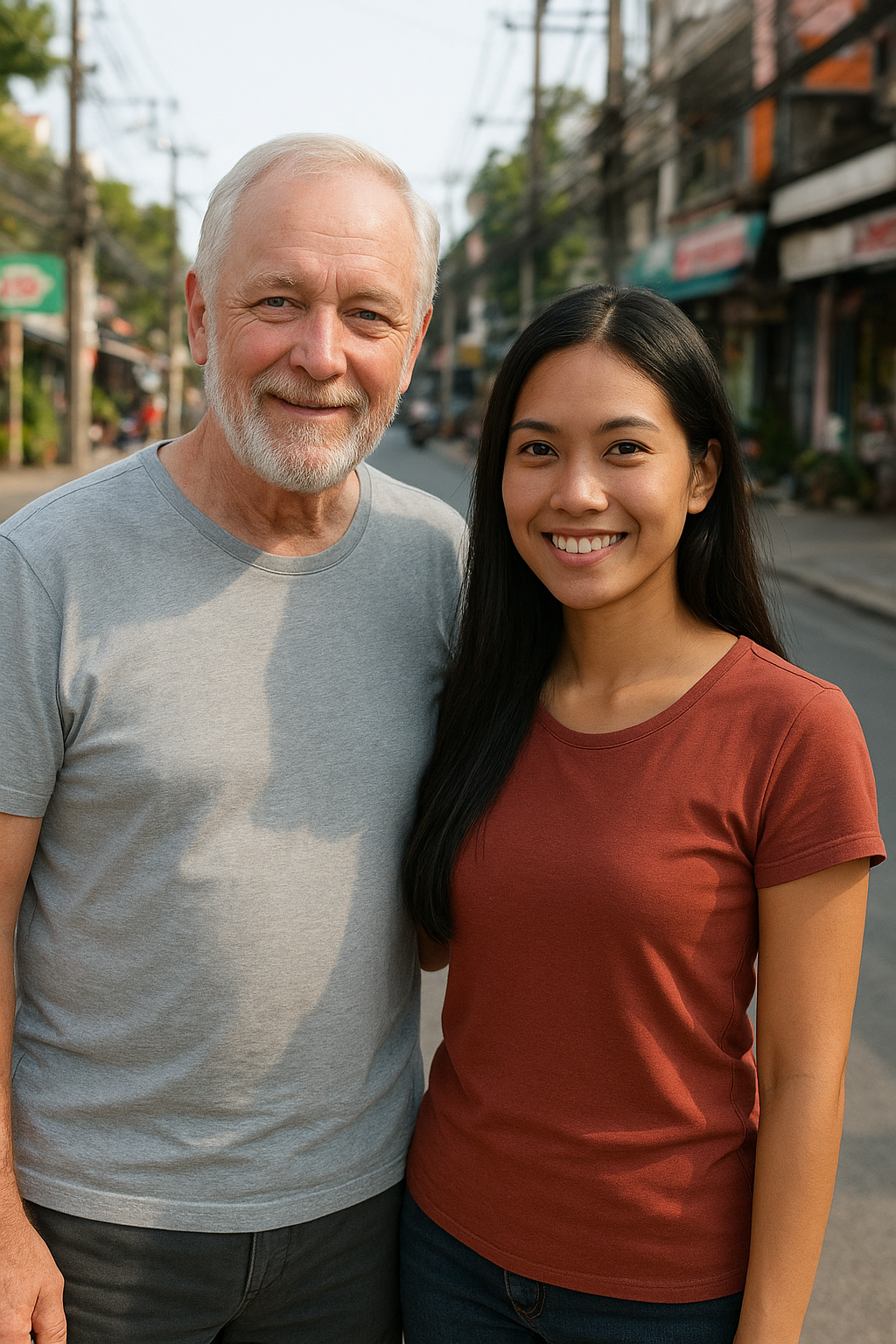
An interesting point: in rural areas such as Isan (northeastern Thailand), these marriages often have an economic dimension. Thai women from poor families marry foreigners in order to support not only their own standard of living, but also their relatives.
But marriages based on mutual love between foreigners and Thais are not uncommon either. Insider spoke with Sergey and Snita — they have been together for six years, currently live in Belgrade, and are raising a daughter. Sergey is from a small town in central Russia, while Snita is from Bangkok. They met through work. At first, Snita worked remotely, then obtained a work visa for Russia, and soon after they moved to Serbia together.

Despite the fact that Sergey and Snita have a child together, they have not officially registered their marriage, partly due to the specifics of Thai documentation.
We are still not officially married. First of all, neither of us felt it was important to organize any kind of celebration. Then there were discussions about where to have a wedding if we did — Thailand would have meant gathering a lot of guests. Russia was also inconvenient at the time. In Serbia, it would have been just colleagues. The main difficulty in registering the marriage is the combination of where we currently live and the specifics of legalizing Thai documents. Since Thailand is not a party to the Hague Convention, its documents require full legalization with stamps from three authorities (the Ministry of Internal Affairs, the Ministry of Foreign Affairs, and the embassy).
Sergey says that overall, this does not affect their family life in any way. When asked whether there are any noticeable cultural traits in the relationship — such as Thais’ tendency to avoid conflict — Sergey responds as follows:
Yes, Thais do tend to avoid confrontation, but that mostly applies to strangers. Within the family, they are quite straightforward and constantly tease each other (a kind of family “bullying”). Of course, Buddhist culture makes itself felt: Thais are more patient, less aggressive, and kinder to one another. Put it this way — I can’t communicate with Snita the way I might allow myself to communicate with a Russian woman. If you show rudeness or disrespect, she might simply get out of the car in the middle of the road.
In all other respects, Sergey and Snita’s relationship is no different from others: they communicate in English, and their daughter — born into a multicultural family — has automatically become not just bilingual, but multilingual. Mia (that’s the girl’s name) understands and speaks Thai, Russian, English, and Serbian. This is where the advantages of such an international union become truly evident!
Legal aspects of marriage registration
For foreigners wishing to get married in Thailand, the process is not complicated but does require preparation. The marriage is registered at a local amphur (district office) and is recognized worldwide, provided all formalities are properly observed.
Main requirements for foreigners:
- Affidavit of freedom to marry: the key document issued by the foreigner’s embassy in Thailand. It confirms that the person is not currently married and is legally eligible to marry. The document must be translated into Thai and certified by the Thai Ministry of Foreign Affairs.
- Documents: passport, arrival card, and copies of visas. If you are divorced or widowed, the relevant supporting documents are required.
- Procedure: after obtaining the affidavit, the couple goes to the amphur with two witnesses. Registration costs around 200 baht. A traditional ceremony can be held separately.
Many couples combine the legal registration with a Buddhist ceremony, during which monks bless the union and guests pour water over the newlyweds’ hands as a wish for happiness. This adds cultural color, but has no legal force.
You can read more about Thai weddings in the article Thai Wedding: Customs and Traditions.
“Sin sod”, or the bride price
In Thailand, there is a deeply rooted tradition in which the family plays a central role in a person’s life. Unlike many Western cultures where individualism prevails, Thai culture emphasizes collective responsibility, especially toward parents and elder relatives. This is reflected in the fact that children — particularly daughters — often take on responsibility for the family’s financial well-being when parents grow older or face difficulties.
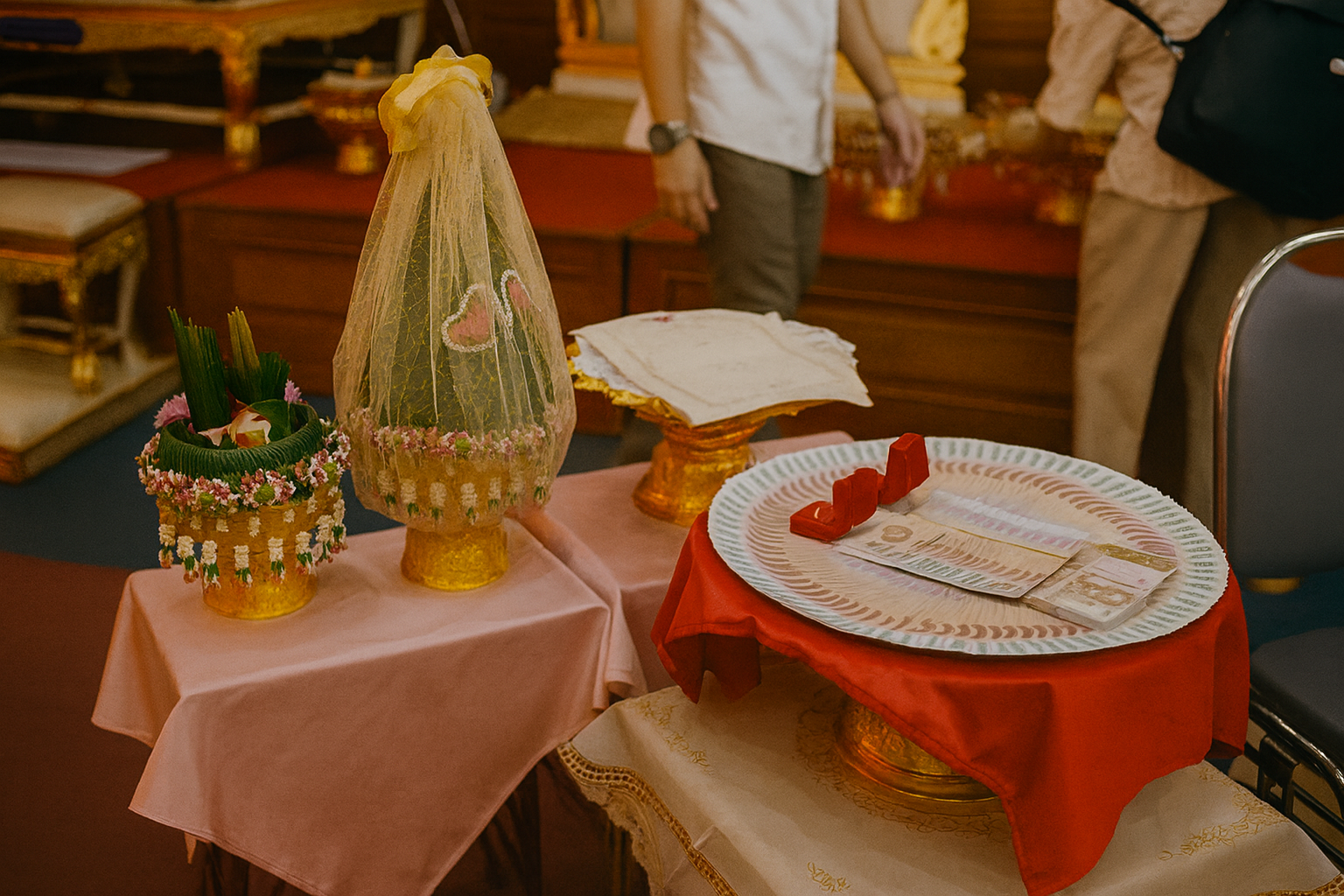
One of the key traditions associated with marriage is sin sod — a bride price that the groom traditionally pays to the bride’s family. This is not merely a financial transaction, but a symbol of respect and gratitude to the bride’s parents for raising their daughter. The amount of sin sod can range from a symbolic sum to a very substantial one, especially if the bride has a high social status (for example, higher education or public recognition).
For foreigners, especially from Western countries, sin sod is often perceived as “buying a bride”, which can cause cultural shock. However, in Thai culture it is more of a ritual that demonstrates the groom’s serious intentions.
In the case of mixed marriages, sin sod may be smaller or even absent if the bride’s family is progressive. However, in rural regions this tradition is observed more strictly, and expectations of financial support for the family may be higher.
The obligation to support the family: myth or reality?
Legally, a foreigner who marries a Thai woman is not required to support her family. Thai law does not impose such obligations on a spouse, whether Thai or foreign. However, in practice, social and cultural expectations can create pressure. In rural areas, where the economic situation of many families is modest, a daughter’s marriage to a foreigner is often seen as an opportunity to improve the financial situation of the entire family.
This does not necessarily mean that the family demands money directly, but a foreigner may encounter regular requests for help: paying medical bills, building a house for the parents, helping with the education of younger siblings, and so on.
How Thai women behave in marriage
For many Thai women, marriage is first and foremost about stability and security, with romance coming second. Thai women generally focus on caring for their partner, household life, and emotional calm within the family. They tend to smooth over conflicts, avoiding open arguments and harsh confrontations — losing “face” is considered highly undesirable.
At the same time, expectations of a man can be quite practical. Financial reliability, the ability to take responsibility, and helping the family are seen as a natural part of the husband’s role.
Thai women are rarely inclined toward strict control or jealousy in the European sense, but they can be sensitive to instability, sudden mood swings, and blunt criticism. Harmony and a respectful tone are often more important to them than frank “heart-to-heart” conversations.
How Thai men behave in marriage
Thai men are generally less emotionally open and rarely discuss problems directly. They tend to view the absence of conflict as a good sign in itself, and therefore may avoid difficult conversations and keep their dissatisfaction to themselves. For foreign women, this often comes across as emotional distance, even though issues may be building up internally.
Thais value calmness, personal comfort, and respectful treatment. Pressure, ultimatums, and public confrontations are perceived very negatively.
Financial expectations in a marriage with a Thai man are usually less pronounced than in the reverse situation, but issues of supporting parents may also arise — in Thai culture, caring for one’s family is considered a duty of adult children regardless of gender.
What advantages does marriage to a Thai man or woman give a foreigner?
Marriage to a Thai citizen is often perceived by foreigners as a quick route to citizenship or permanent status in the country, but in reality, things are much more complicated.
In short, marriage itself does not grant a foreigner Thai citizenship or an automatic right to permanent residence.
Obtaining citizenship is possible only through a lengthy naturalization process.
- For foreign women married to Thai citizens, the mandatory period of residence in the country before applying for citizenship may be reduced to three years. In certain cases, it can be shortened to one year if the marriage includes a child who holds Thai citizenship.
- For foreign men married to Thai women, the minimum period of residence required to apply for naturalization is three years. A shorter period comparable to the “one-year” option does not exist for men.
It is important to understand that even if these time requirements are met, citizenship is not granted automatically. The applicant must have permanent legal status, a stable income, knowledge of the Thai language, pass interviews and background checks, and obtain approval at the state level. In practice, such cases are rare and can take years to be considered.
A separate nuance concerns the issue of a second citizenship. Thailand formally does not recognize dual citizenship for naturalized foreigners, and during the process of obtaining a new passport, the applicant may be asked to renounce their previous citizenship.
In summary, marriage to a Thai citizen does indeed reduce the formal time requirements for naturalization, but it does not make obtaining Thai citizenship a simple or guaranteed process.
A more realistic advantage of marriage is visa options. The main one is the Non-Immigrant O (Marriage Visa), which allows legal residence in Thailand for one year with annual renewals, without the need for constant trips outside the country.

In addition, marriage makes it easier to extend one’s status, reduces visa-related risks, and can serve as a basis for later applying for permanent residence after long-term legal stay.
If you are interested in visa matters in Thailand, consult with specialists.
We’ve selected the three best companies for processing various types of visas. Fill out the form, and we’ll forward your request — they’ll contact you to provide details on the terms and pricing.
In matters of work and business, marriage also does not grant automatic rights, but it significantly simplifies interaction with immigration authorities. Obtaining a work permit usually proceeds more smoothly, and businesses are more often registered in the Thai spouse’s name — although such arrangements have legal limitations and require proper professional support.
If a child is born within the marriage, they automatically receive Thai citizenship, as well as the father’s citizenship, if this is permitted under the laws of his country. For the foreign parent, this does not mean acquiring citizenship, but it can further facilitate visa and immigration matters.
It is important to note that Thailand takes sham marriages very seriously. Immigration authorities may conduct inspections, interview spouses, and request evidence of cohabitation. In the event of divorce, the right to a marriage-based visa is lost.
More nuances in unions between Thais and foreigners
In Thailand, Buddhism, respect for elders, and the concept of sanuk (enjoyment of life) shape everyday life. In mixed marriages, these traits often intersect with Western values.
- Family values. In Thailand, it is customary for the groom to pay the bride’s family sin sod, or a bride price. Western partners often see this as “buying” a bride, but for Thais it is a matter of honor.
- Avoidance of conflict. Thais tend to avoid direct confrontation, and in marriage this can lead to unspoken issues: a Thai wife may never state a problem outright, expecting her husband to understand hints instead.
- Religion and traditions. Buddhism influences everything — from food to holidays. Differences in attitudes toward money (Thais often live in the moment without long-term planning) can also cause friction.
- Financial aspects. Many marriages break down over money. Older foreigners (average age 60+) may marry young Thai women who see them primarily as a “wallet”. Such marriages often end due to infidelity.
- Visa issues. Thai women in Europe may face isolation, depression, and difficulties finding work.
Despite intercultural differences, different upbringings, and language barriers, many couples remain happy together for decades. Such marriages offer many advantages: cultural exchange is enriching — and when children are born, they often grow up bilingual. Each partner takes something valuable from the union: foreigners enjoy Thai hospitality, food, and climate, while Thais gain stability and new horizons. After all, love has no nationality or religion — love erases all borders.
Also read our article 10 Unusual Facts About Thai People to learn even more about the people of the Land of Smiles.