Temple Festival at Wat Chalong – 2026
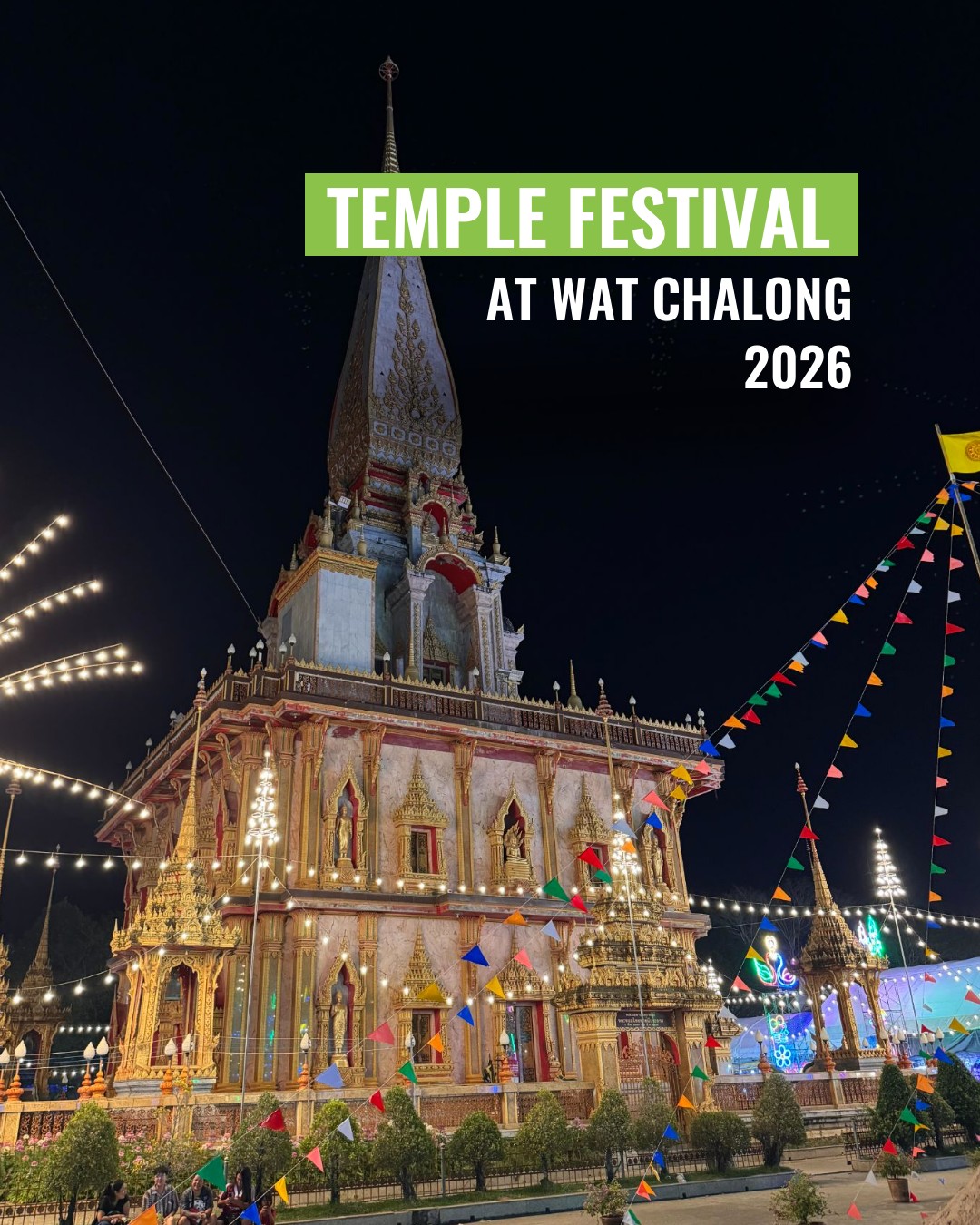
Every winter, during the Chinese New Year period, one of the most colorful and unusual events of the year takes place in Phuket — the temple festival at Wat Chalong, known as the Wat Chalong Fair. In 2026, the event will be held from February 16 to 22 and will once again become a major attraction for both locals and tourists.
This festival is a unique blend of deep Buddhist traditions, Chinese cultural influence, and a vibrant street fair. Here’s a closer look at what it is, where it happens, and what to expect.
What kind of festival is it?
The Wat Chalong Temple Fair is the largest annual fair in Phuket, spreading across the entire temple complex and the surrounding area. Tens of thousands of people gather here — mainly Thais from different parts of the island, members of the Chinese-Thai community, and tourists eager to experience an authentic atmosphere.
The festival takes place during the Chinese New Year, and this detail is important: although Wat Chalong is a Thai Buddhist temple, the celebration is closely connected to the lunar calendar and Chinese traditions, which gives the event its unique, multi-layered atmosphere.
History of the festival and its significance
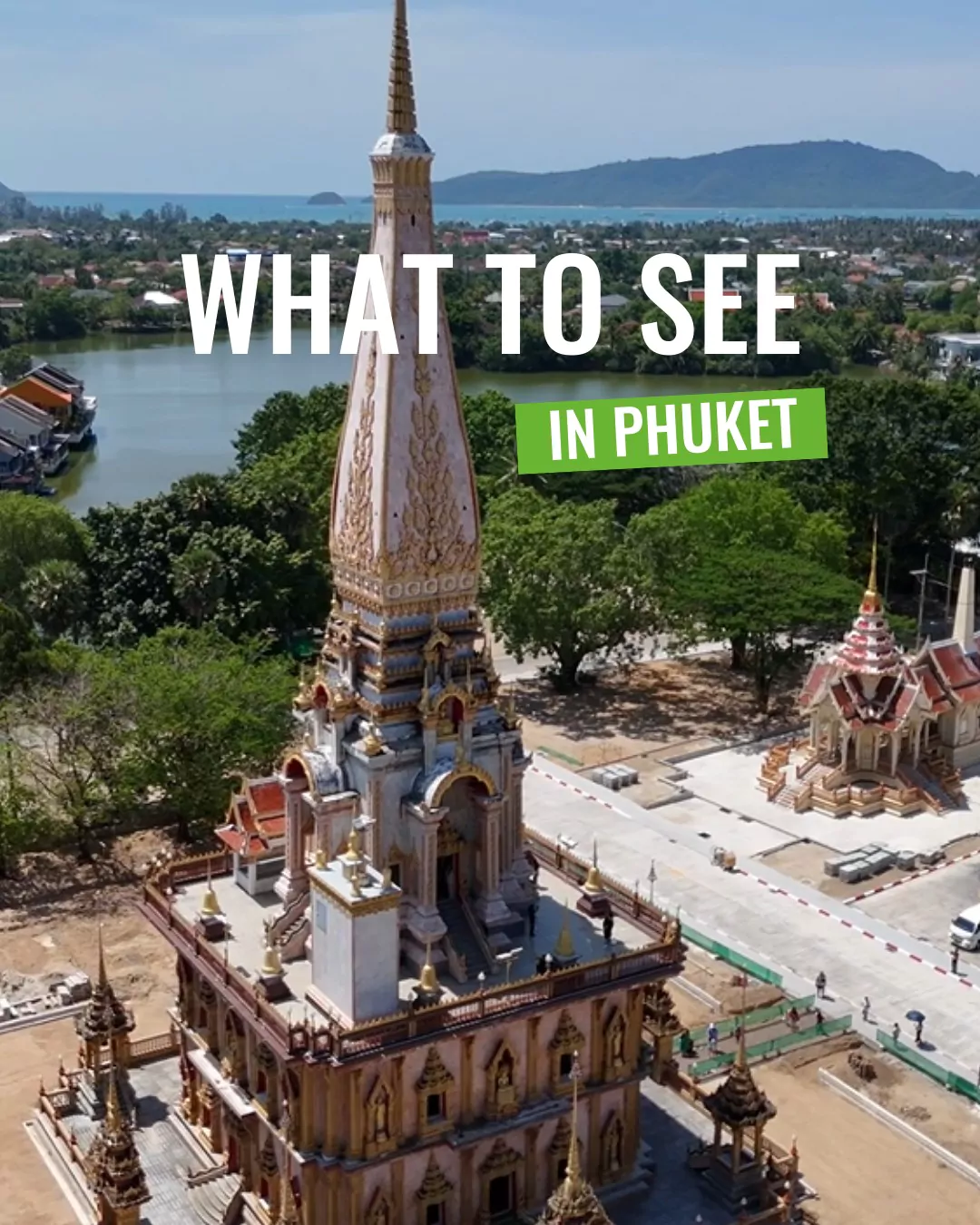
Wat Chalong is the main and most revered Buddhist temple in Phuket. It is known as a spiritual center where local residents come to seek blessings, good fortune, and healing.
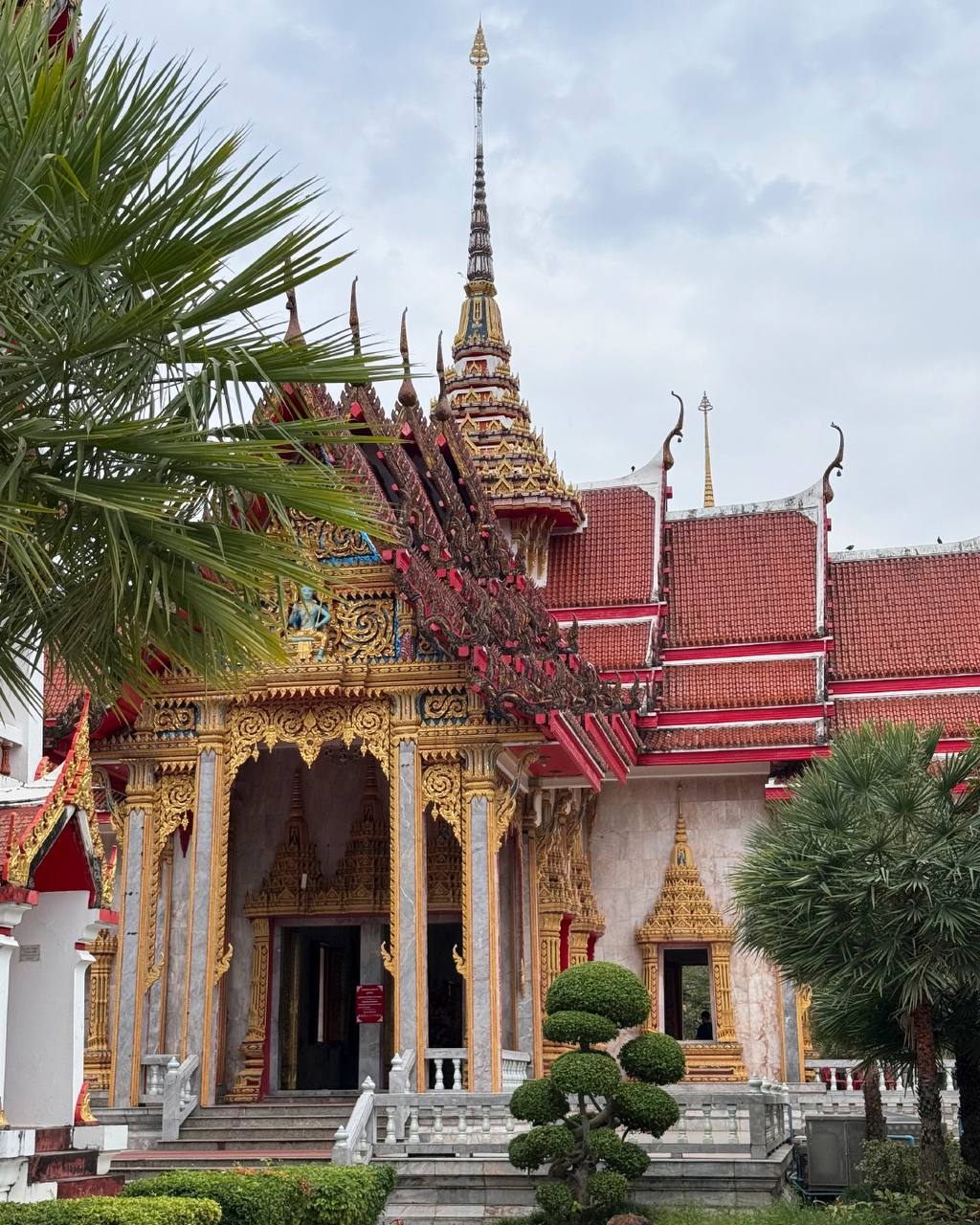
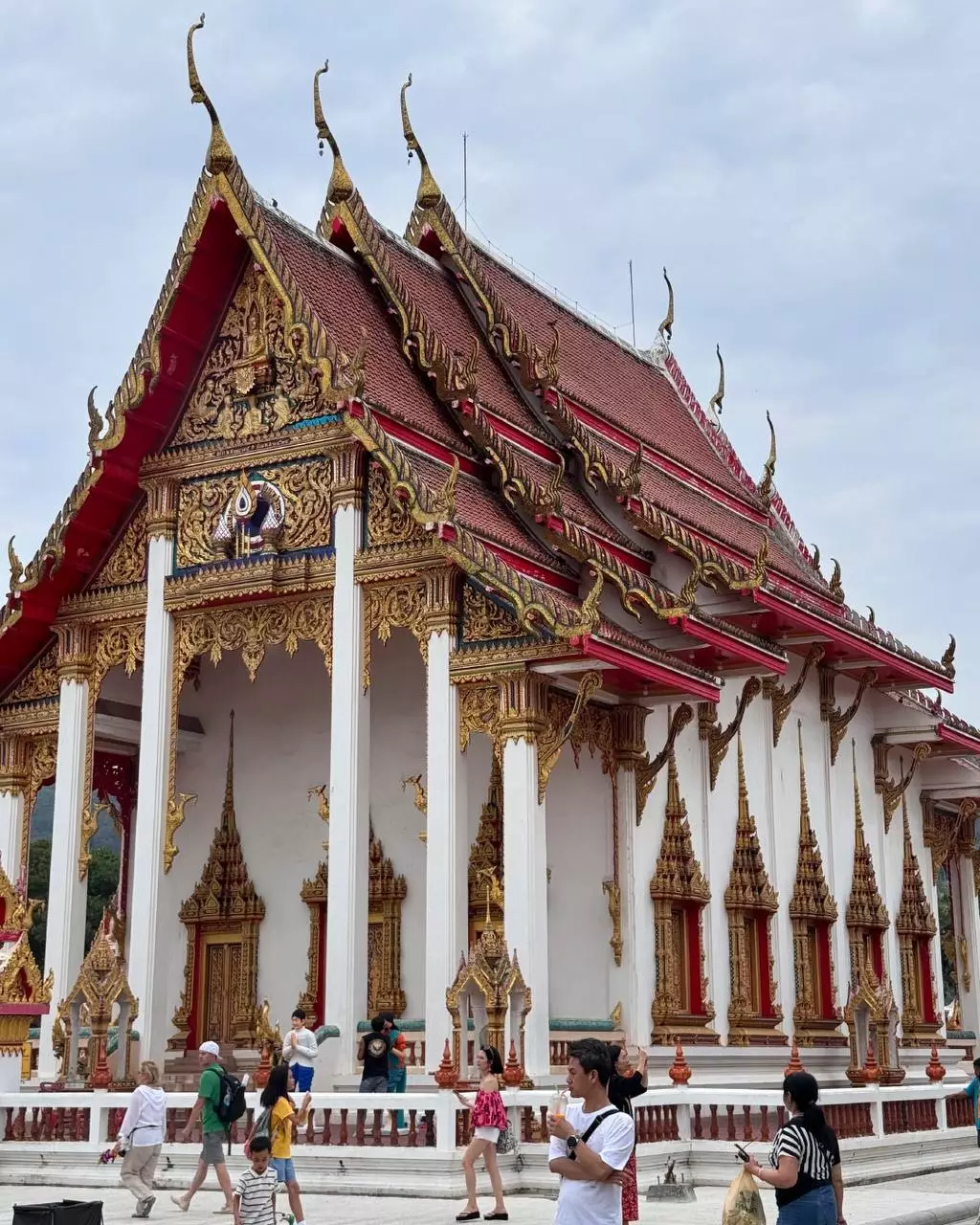
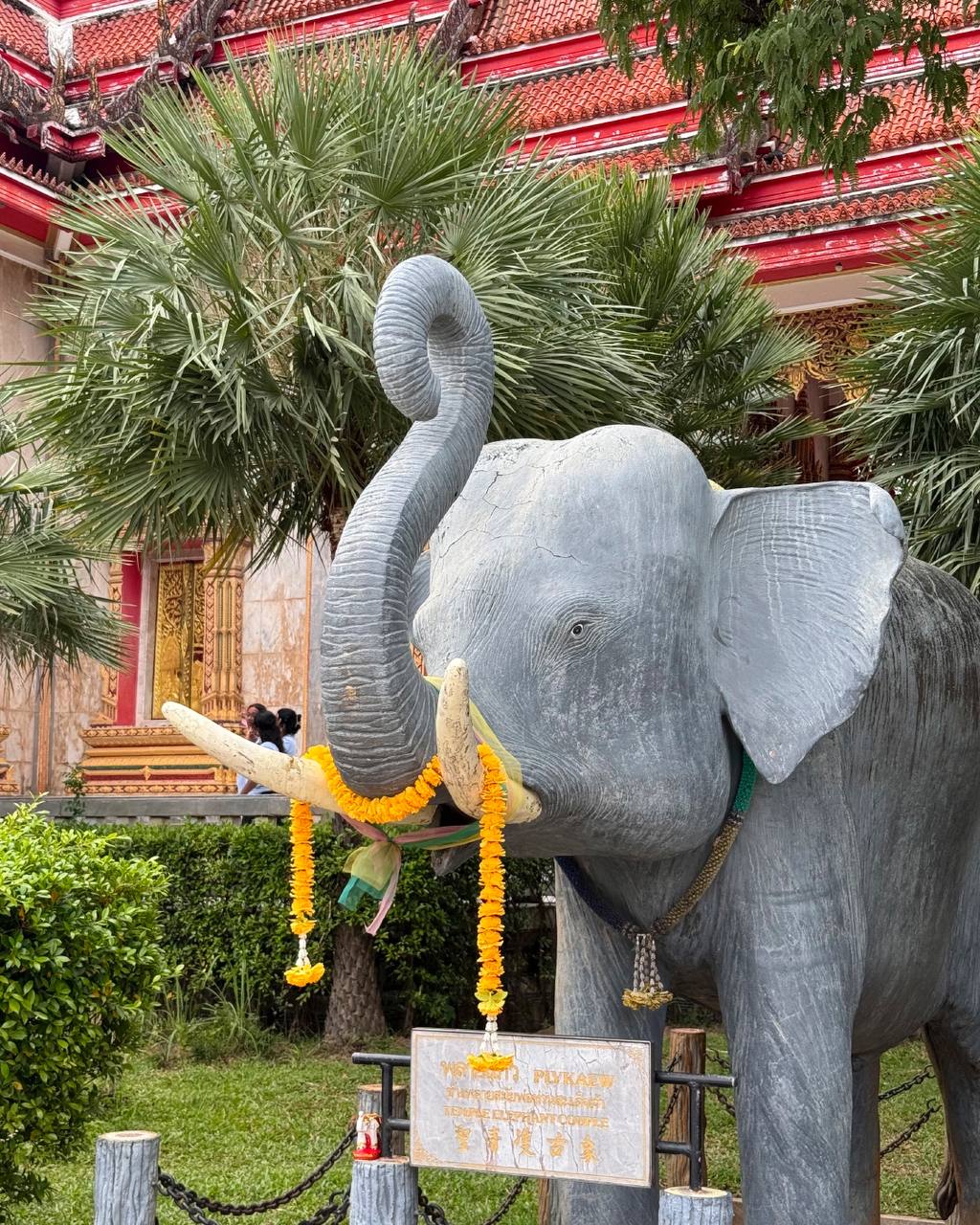
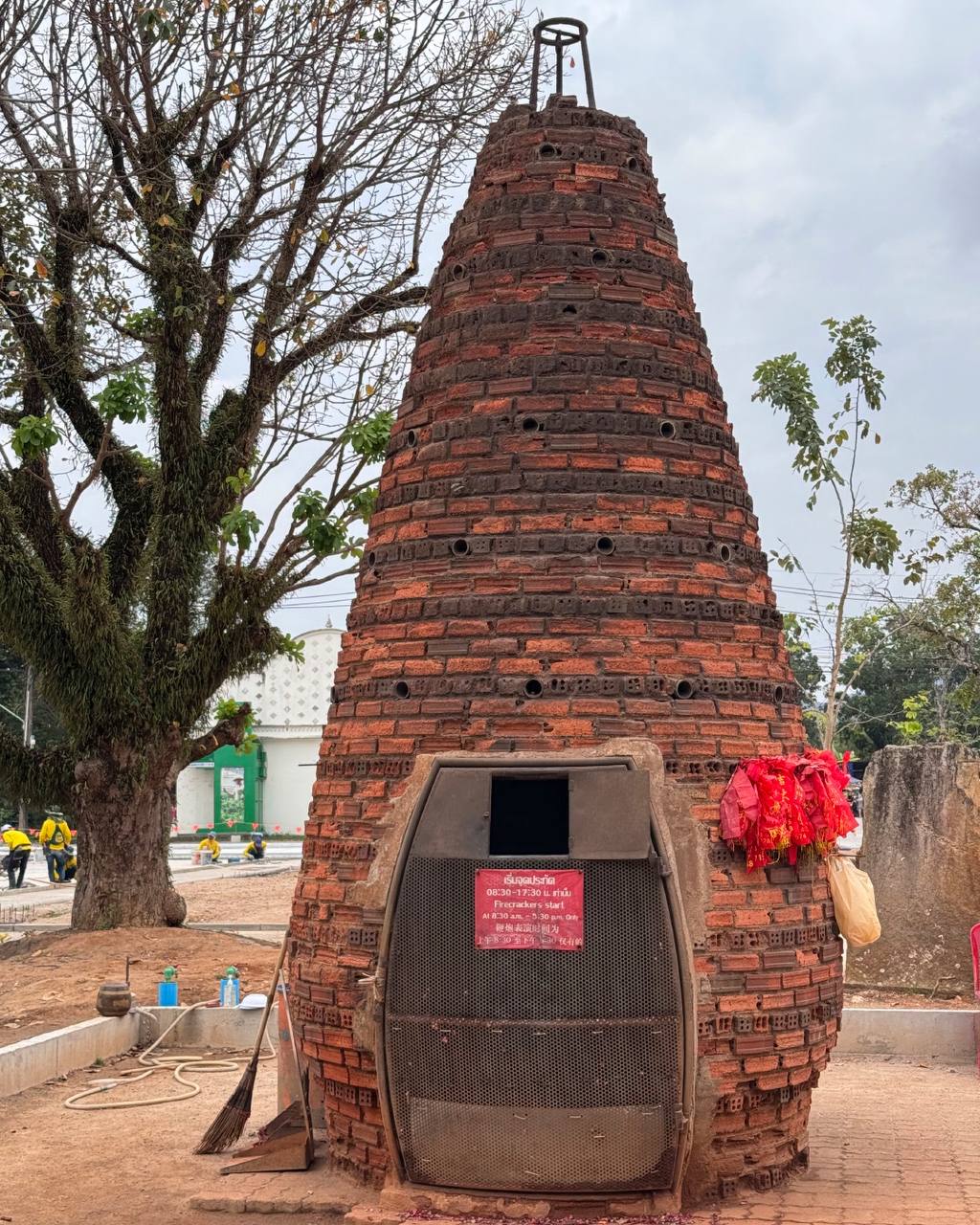
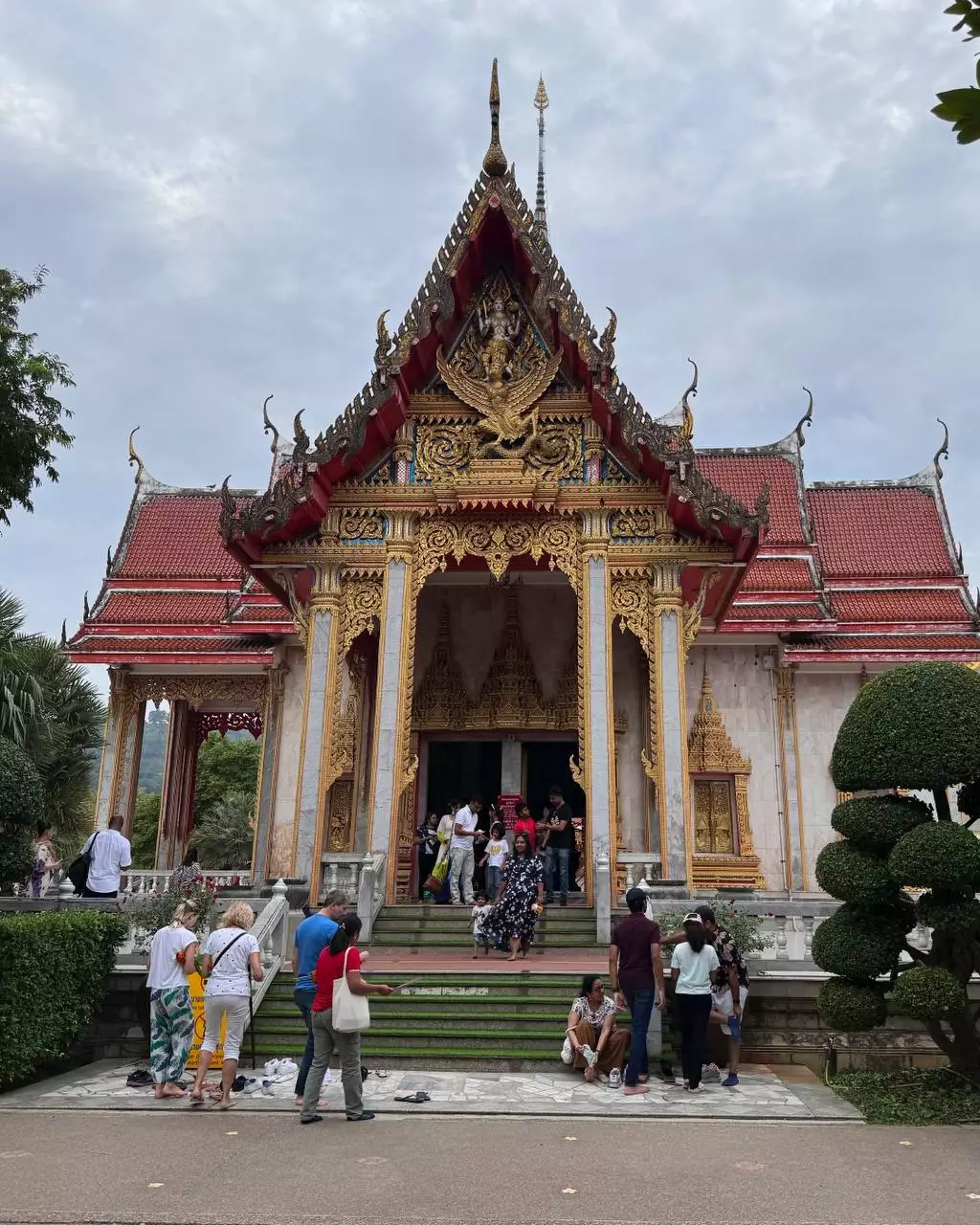
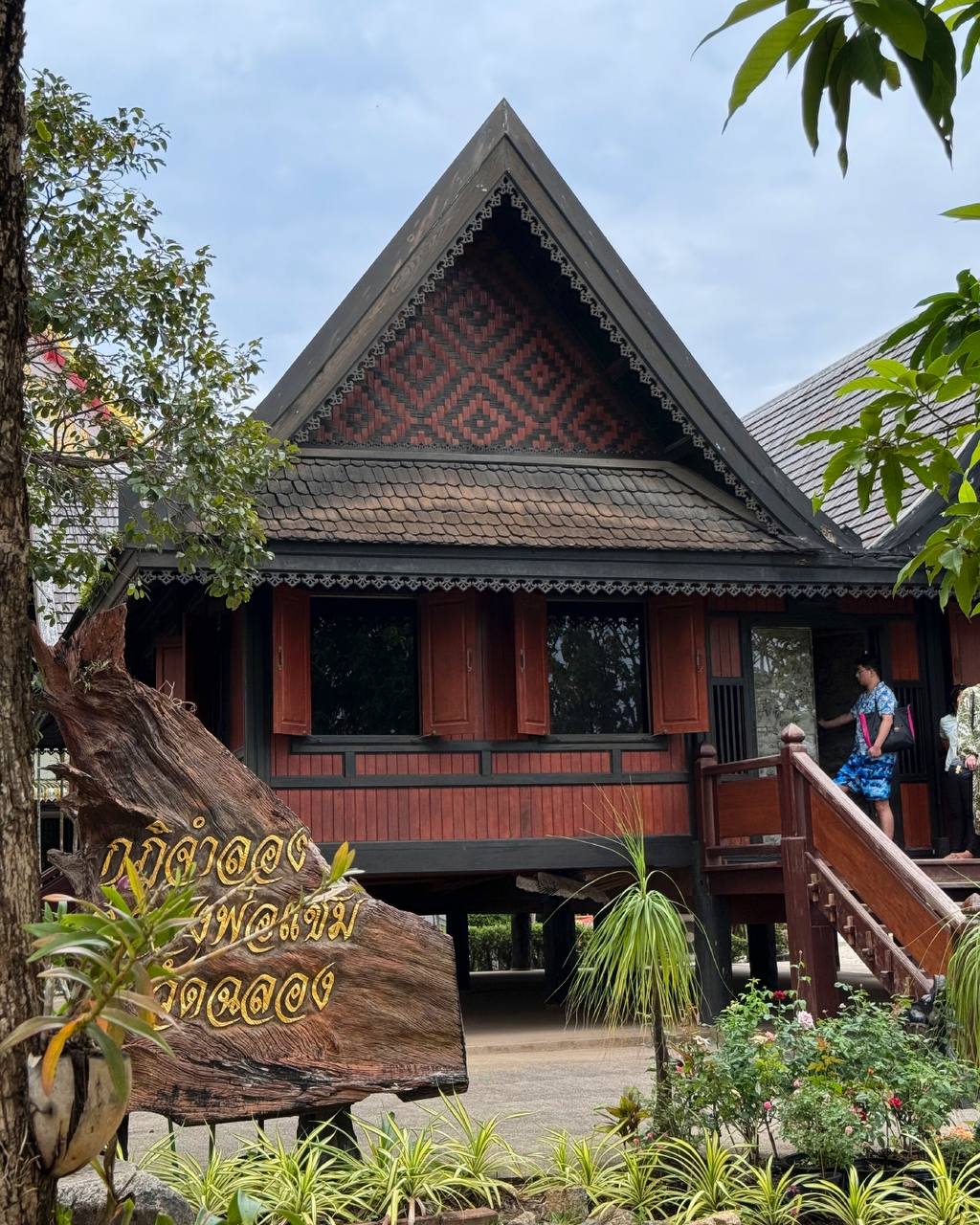
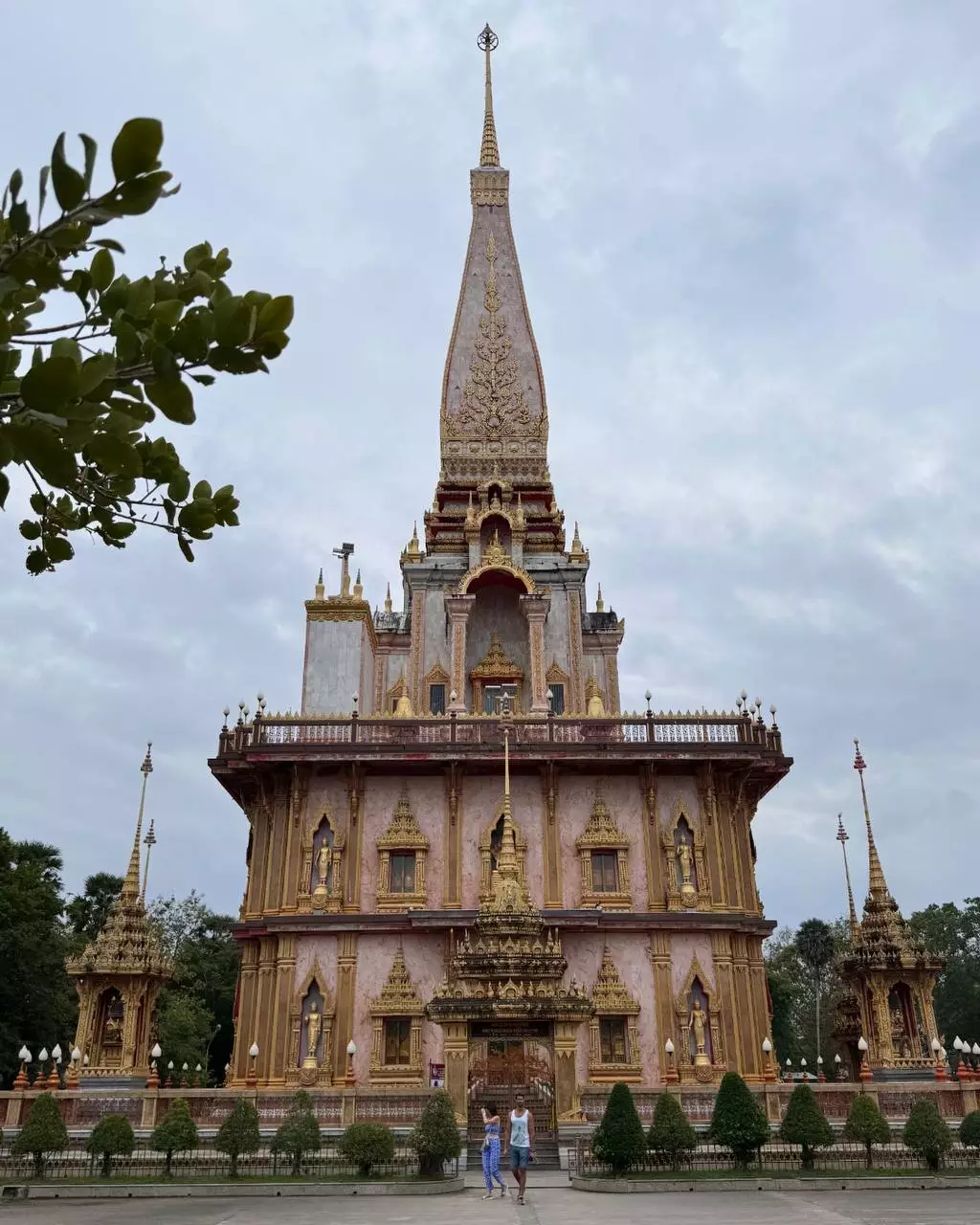
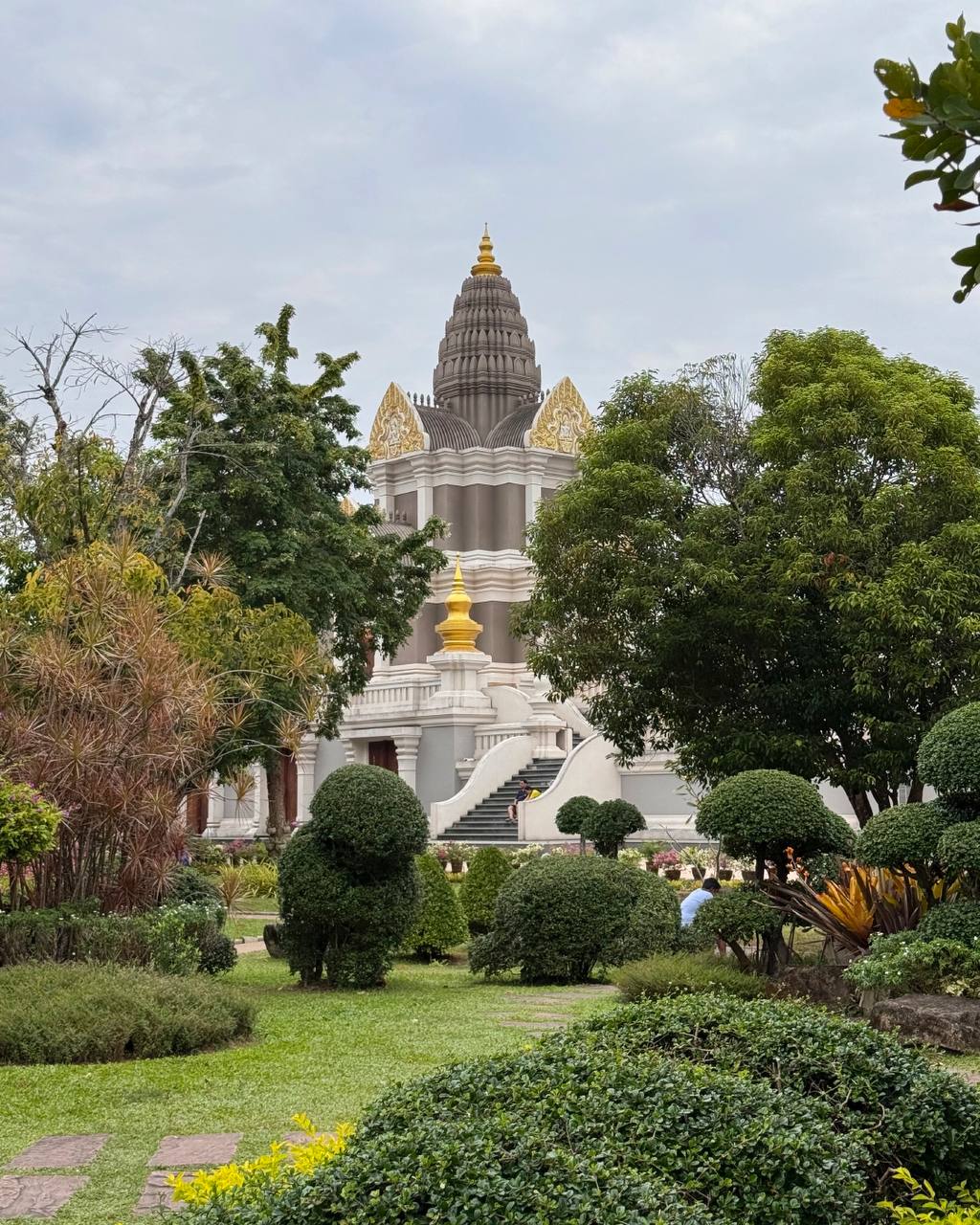
A natural question may arise as to why the temple fair is held during the Chinese New Year, given that Wat Chalong is not a Chinese temple. The answer lies in the sanctuary’s more than 200-year history.
In the 19th century, during the boom of tin mining in Phuket, thousands of Chinese workers arrived on the island to work in the mines.
You can read more about this layer of the island’s history in the articles From Tin Mines to a World-Class Resort: The Transformation of Phuket and Peranakan Culture in Phuket.
In 1876, the tension erupted into an uprising, and it was the abbot of Wat Chalong, Luang Por Cham, who played a key role in preserving peace. He managed to protect frightened local residents, calm the angry workers, and prevent further bloodshed. For these and other deeds, the abbot is still held in deep reverence today. A life-size statue of him stands in one of the halls behind the temple’s main building.
How the festival takes place
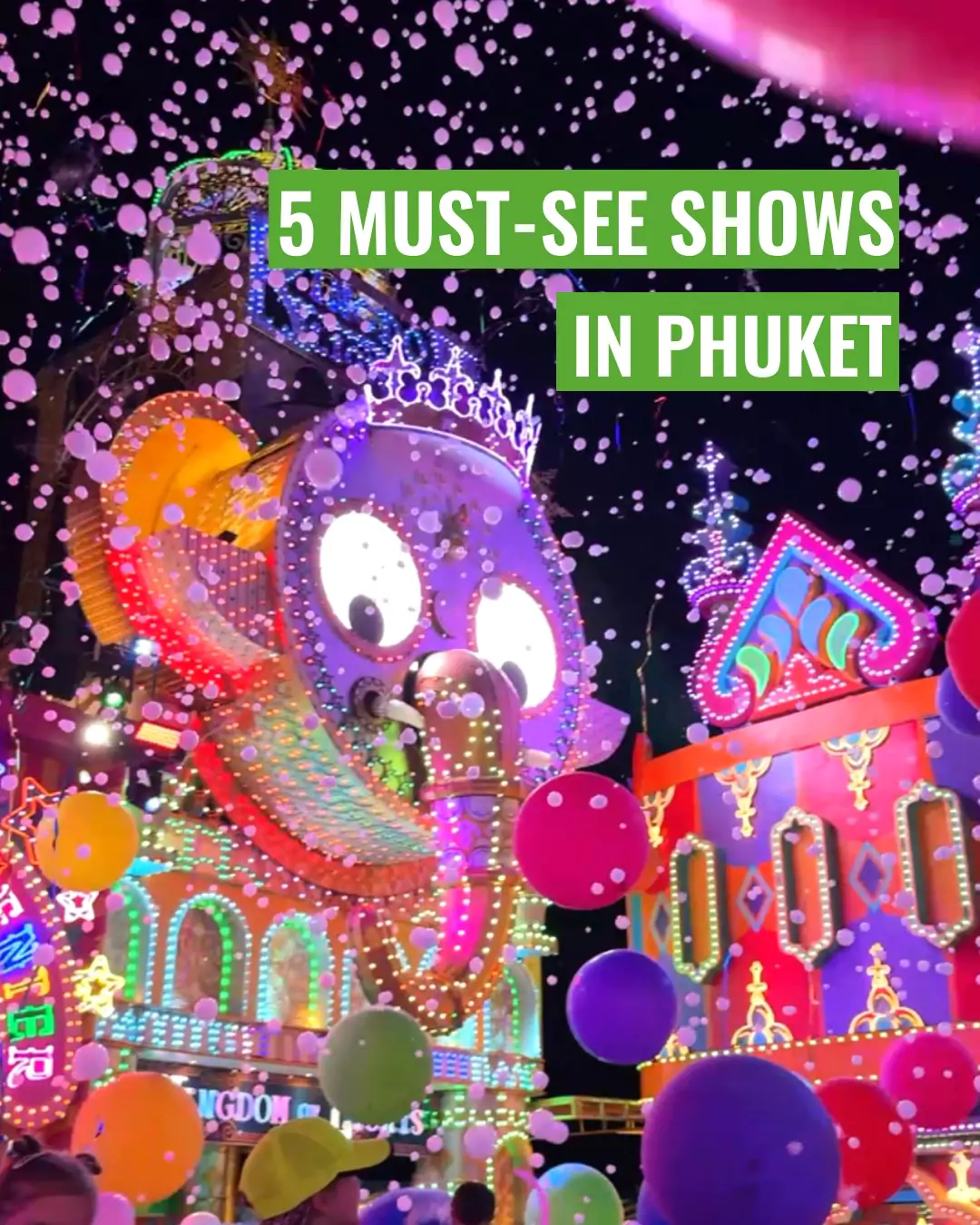
The festival grounds are one of the largest night markets in Phuket. The vast area is awash in lights, illuminations, decorations, and flags — literally everything is adorned, including the temple itself. For foreigners, this spectacle may feel unusual: in the European mindset, religion is often associated with silence and solemnity, whereas here the temple becomes an integral part of the celebration.
Loud music is everywhere, along with rows of food stalls, strolling families and groups of friends, laughter, and joy — a lively, bustling event where the spiritual and the everyday coexist in perfect harmony.
From morning until late afternoon, the temple grounds function as usual. Worshippers come to:
- light incense and candles in the temple halls;
- offer lotuses and flowers to the Buddha;
- apply gold leaf to statues — a traditional way of making merit and showing respect;
- pay homage to the statues of Luang Por Cham and Luang Por Chuang and ask for blessings for the year ahead.
It is a touching time, when one can observe how religious rituals intertwine with sincere care for the fate of loved ones and one’s own future.
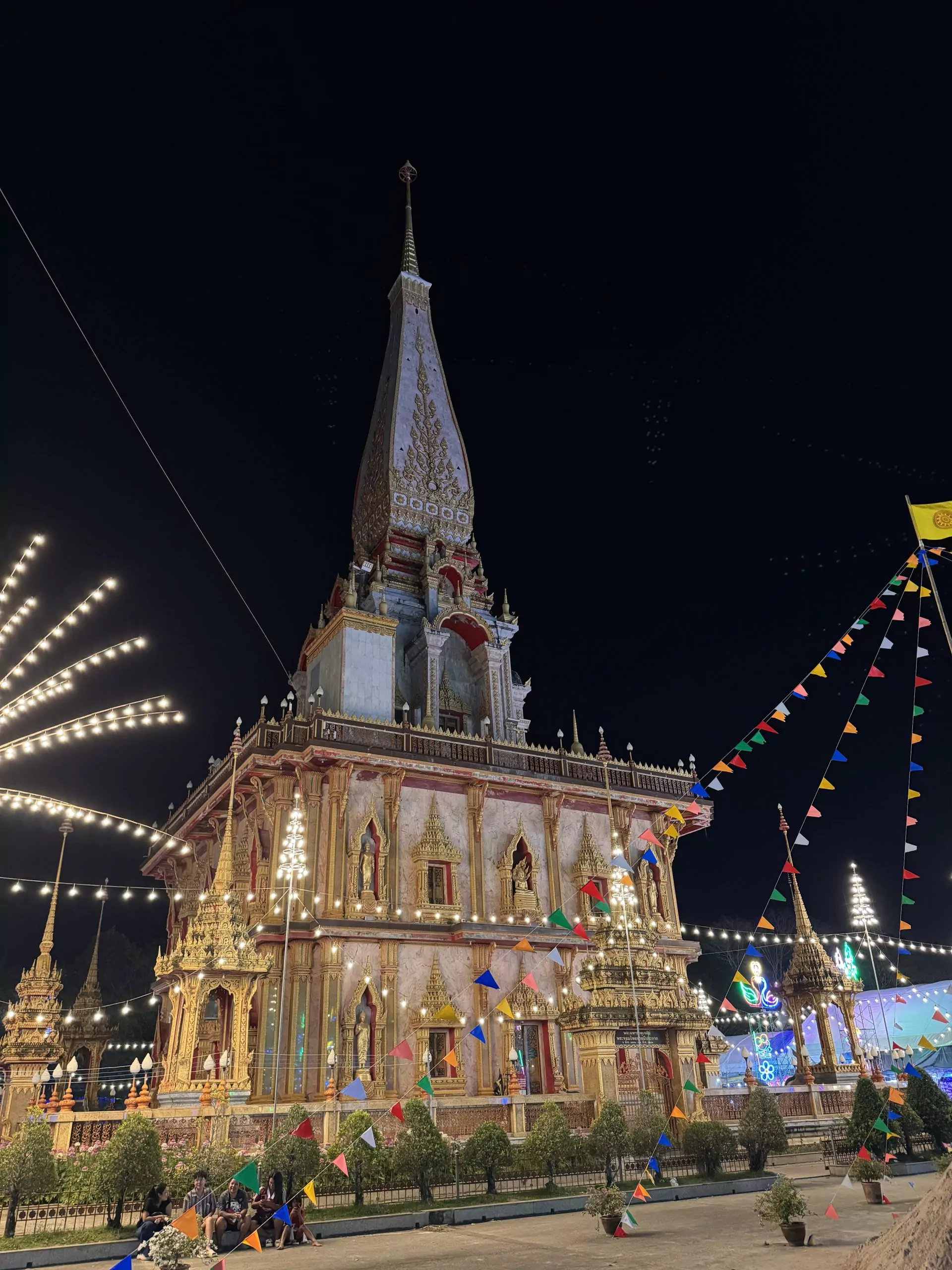
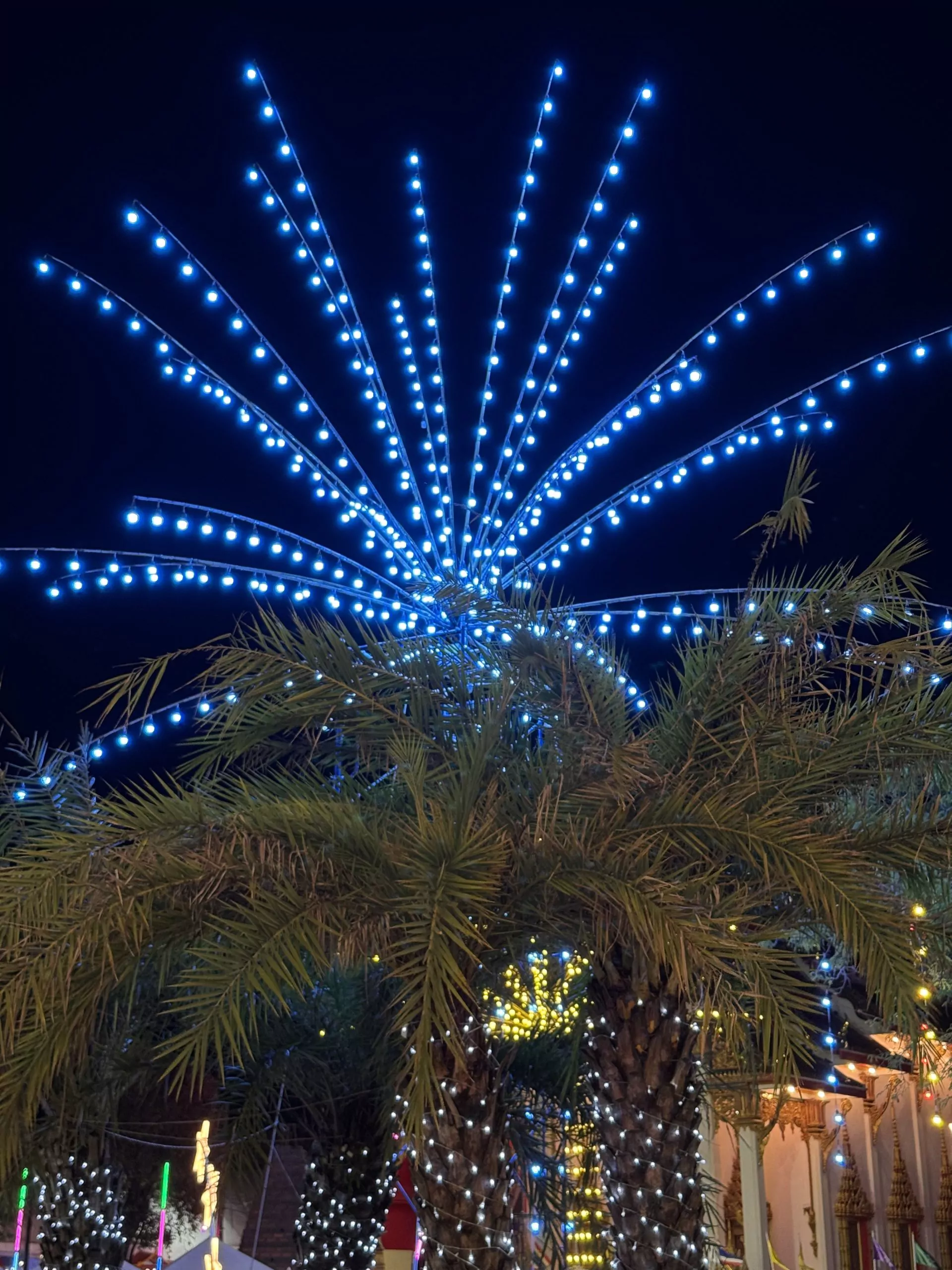
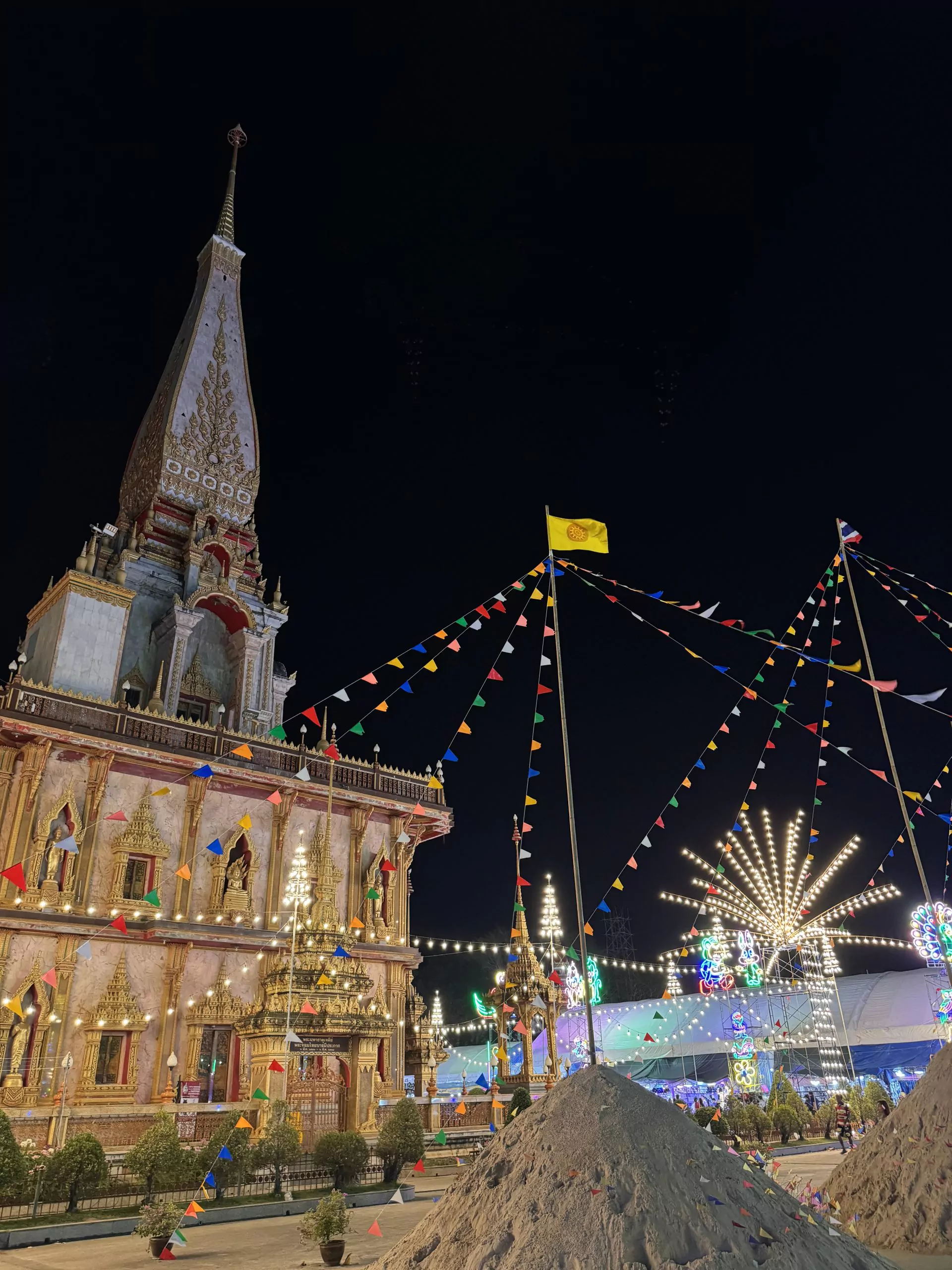
After sunset, everything changes: the area around the temple turns into a large street fair where you can find:
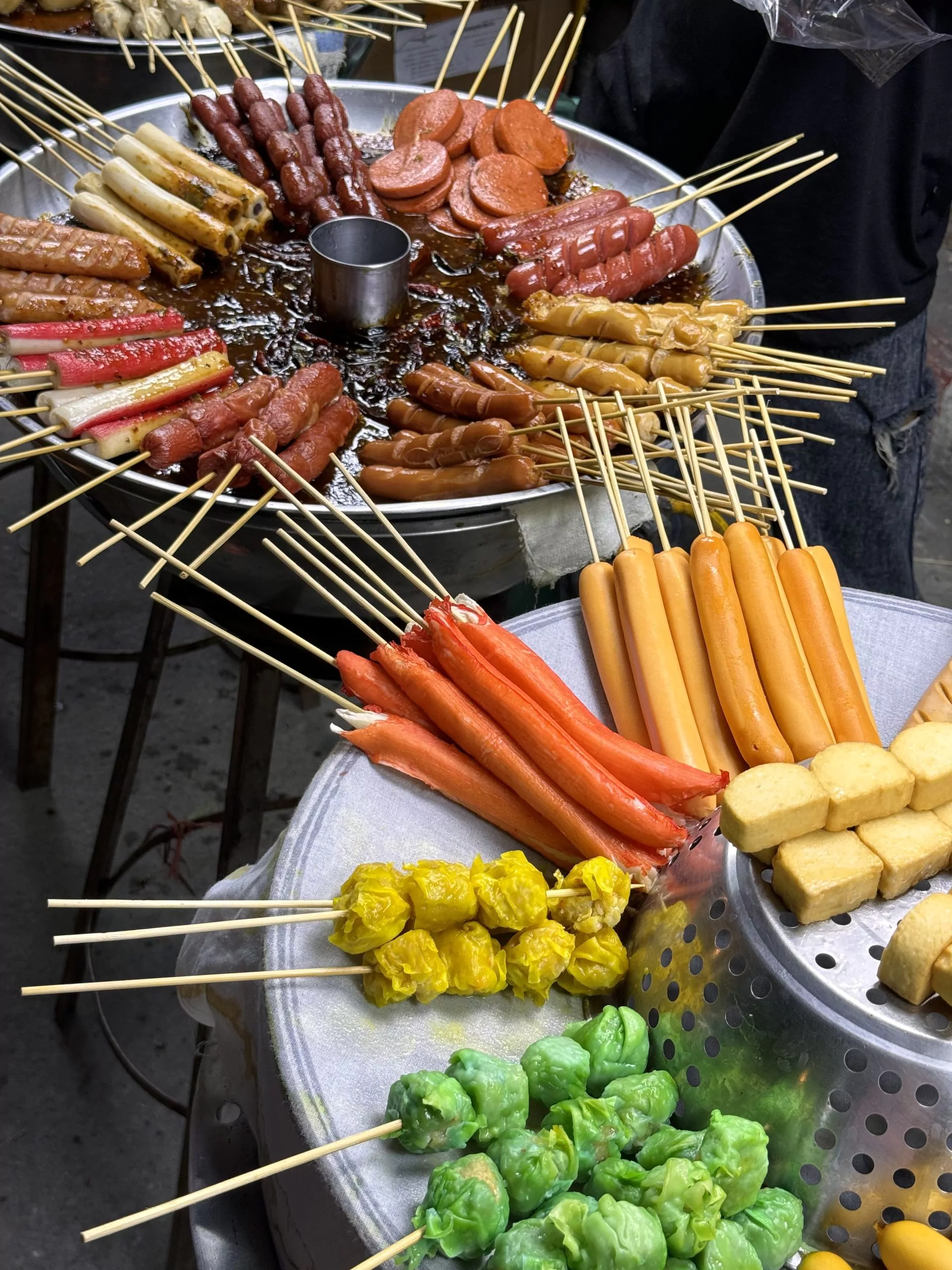
- hundreds of food stalls — from classic Thai delicacies to local sweets and drinks;
- toys, small gifts, and decorative items;
- fairground rides and attractions for children and adults;
- Muay Thai fights;
- traditional games, contests, and entertainment.
There aren’t many souvenirs in the usual tourist sense — this is not the place to come for classic fridge magnets or standard keepsakes. Instead, the fair offers more unusual finds, including handmade items: wooden objects, jewelry, and unique artisan pieces.
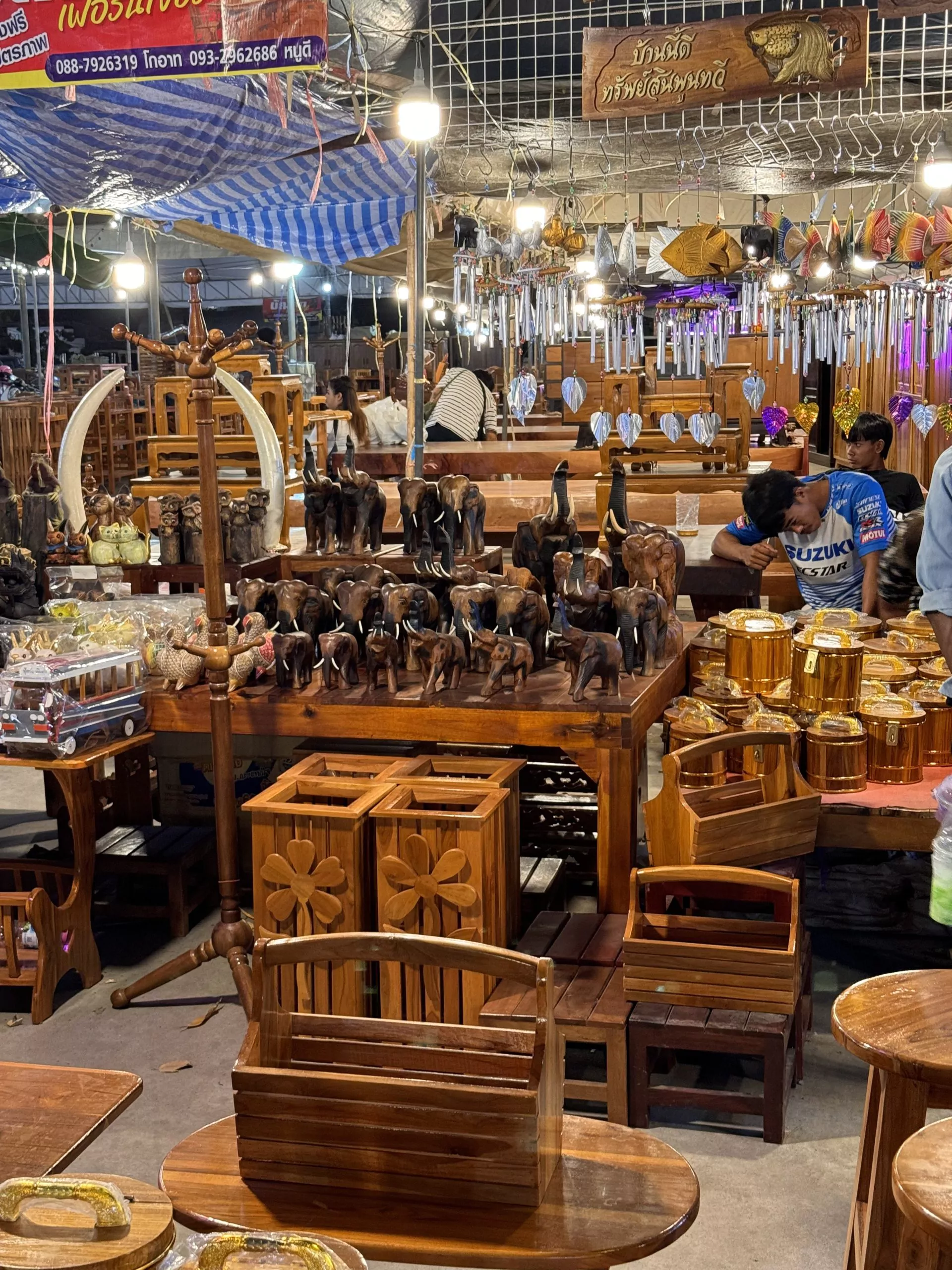
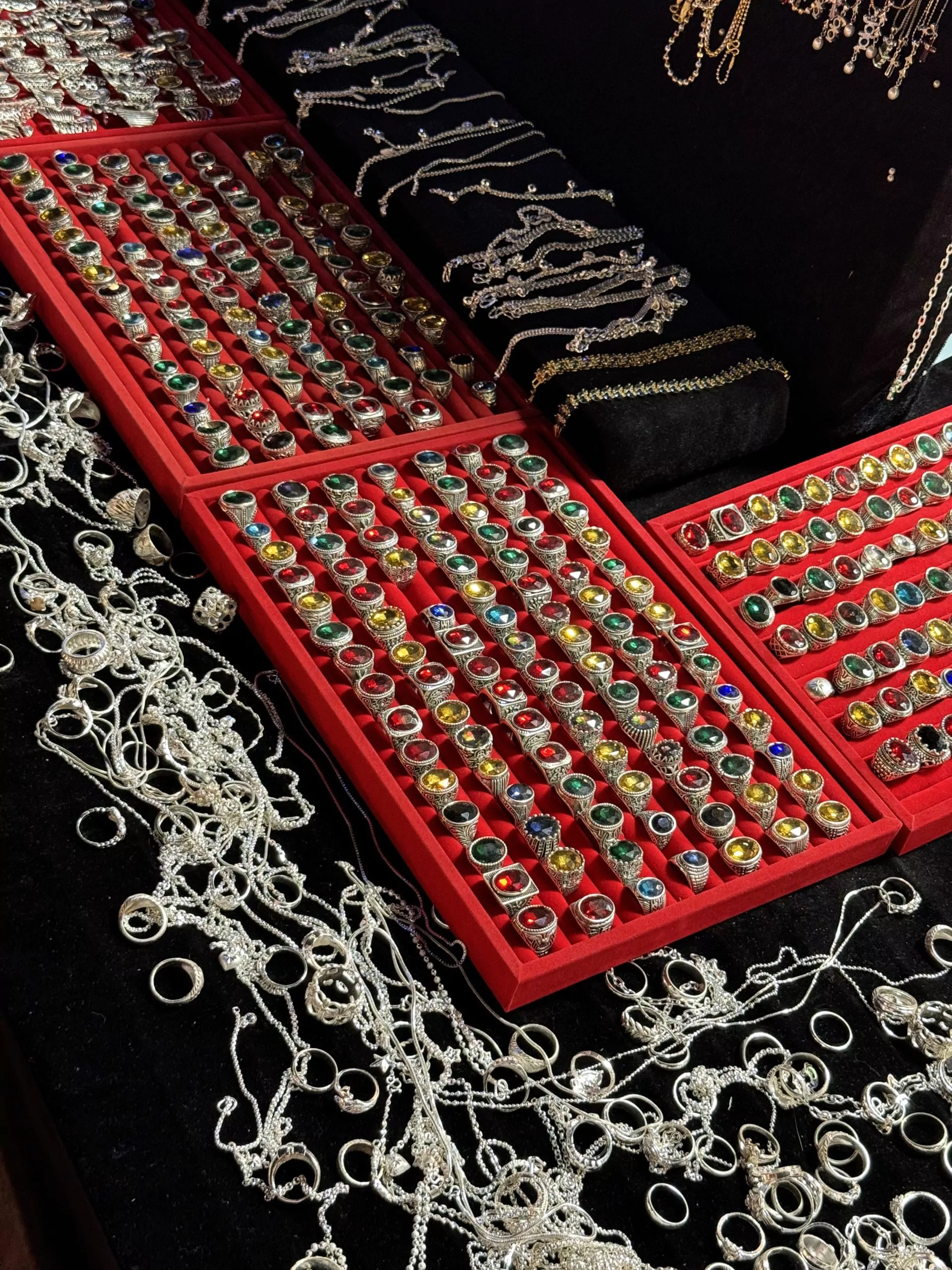
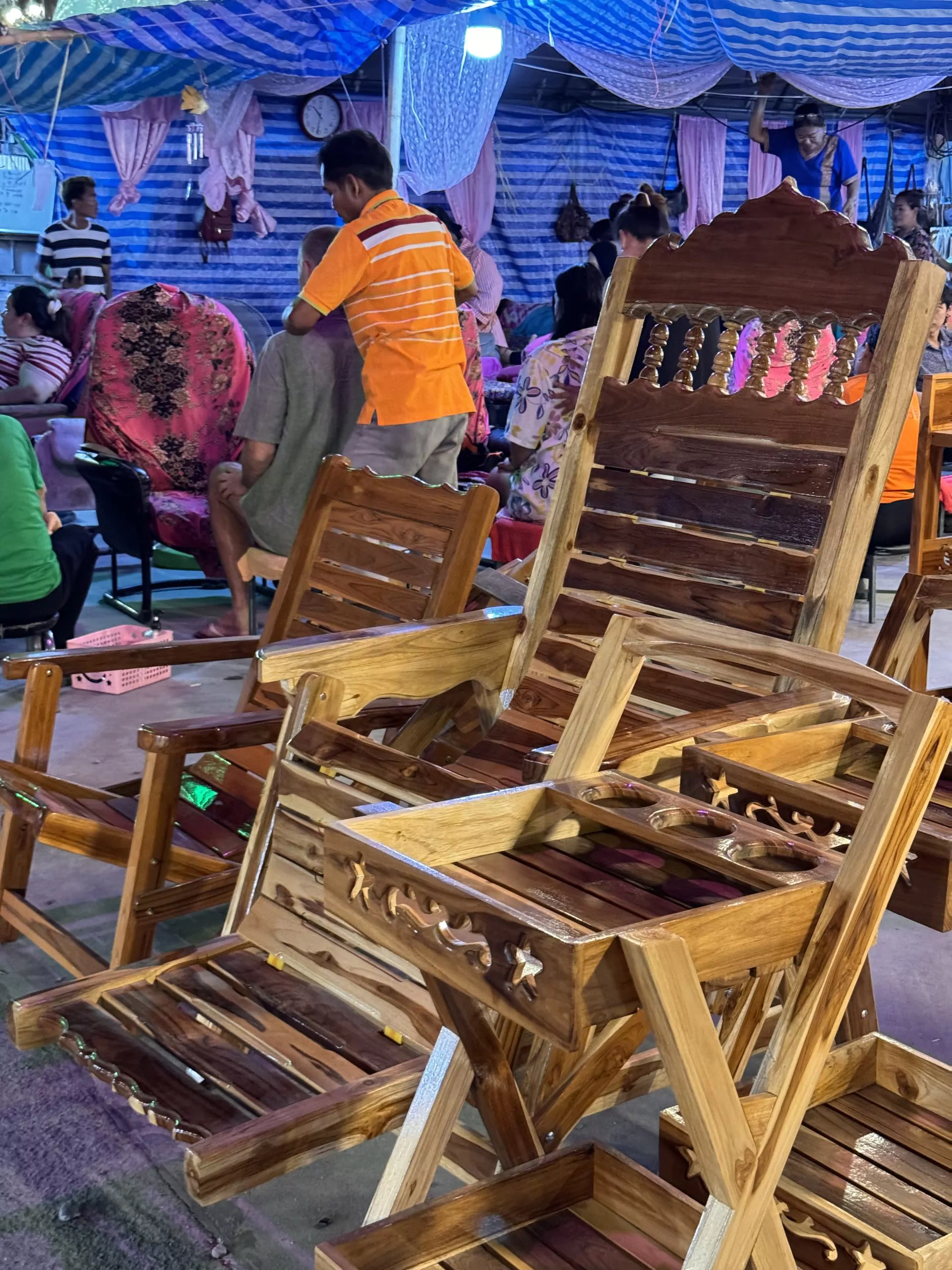
The wide selection of street food is complemented by designated areas with tables and chairs, making it convenient to eat on the spot. It seems that many independent vendors come to the fair, so prices here often come as a pleasant surprise — for example, last year 3 kg of mangosteen could be bought for just 100 baht.
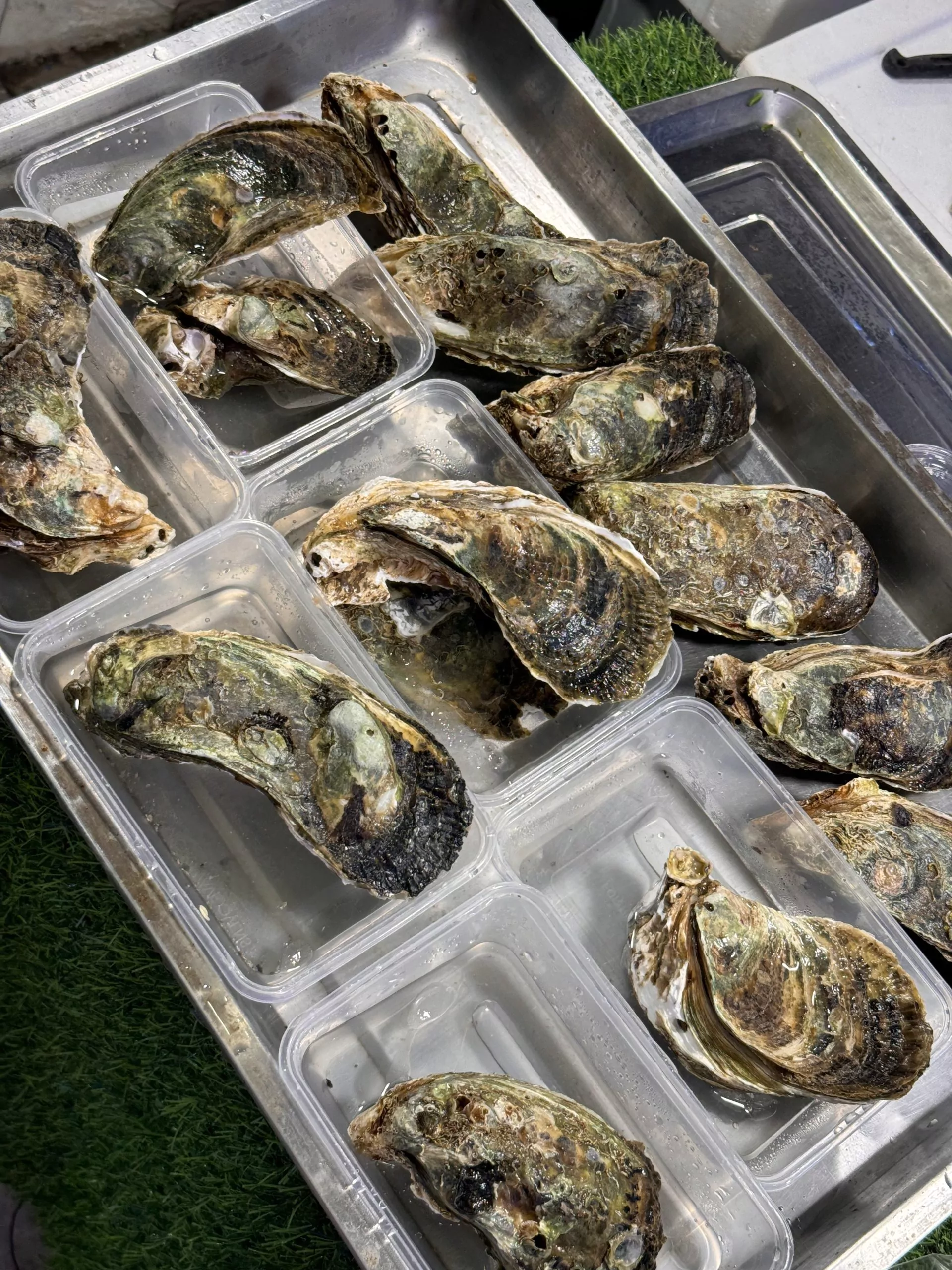
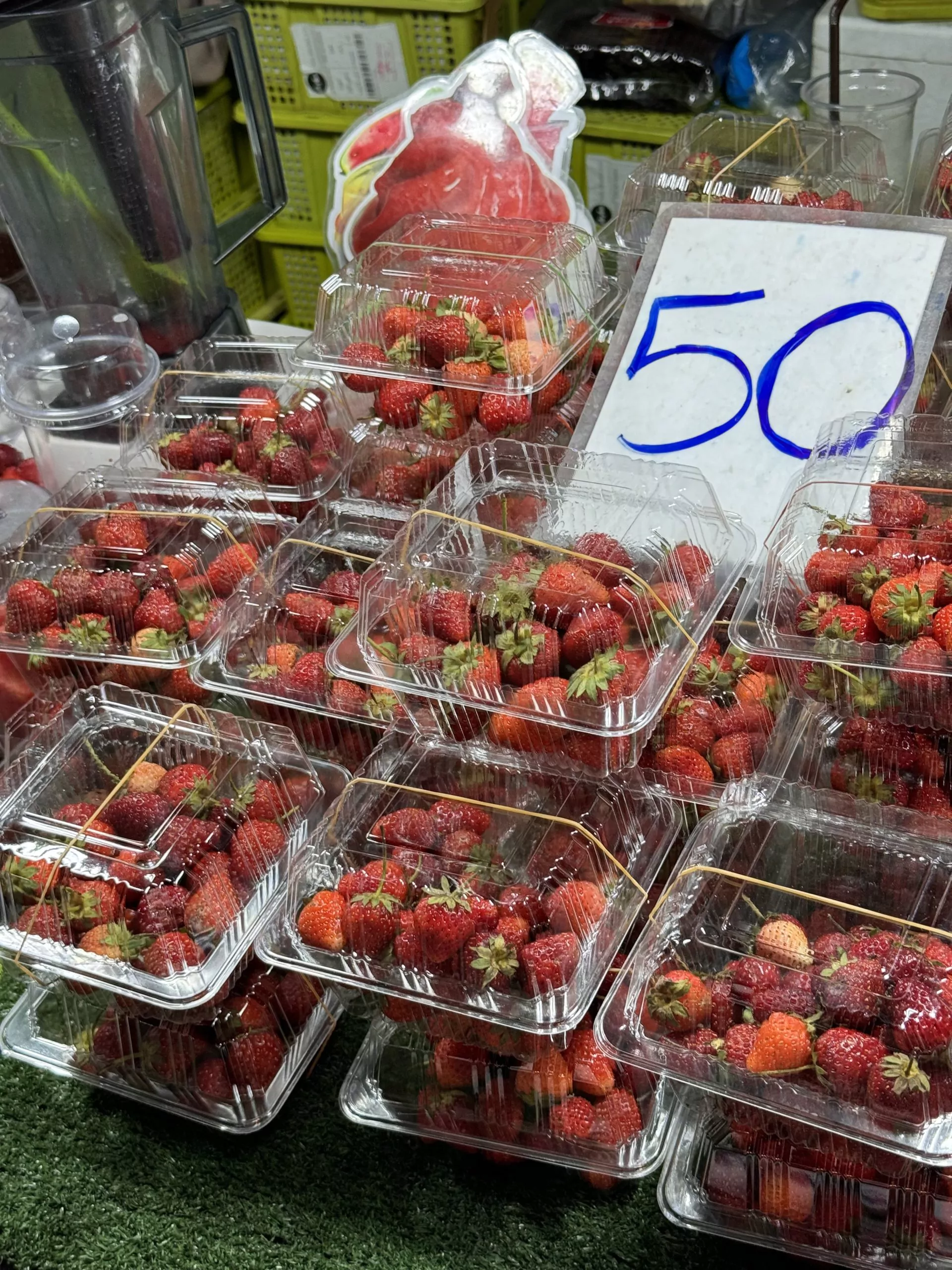
As night falls at the Wat Chalong festival, the main show begins: live folk music, dance performances and Nang Talung shows — traditional southern Thai shadow puppet theatre rarely seen in the island's tourist areas.
Tips for visiting
- Best time: from 6:00 PM until late at night — this is when the festival truly comes alive.
- Money: bring cash — many stalls do not accept bank cards.
- Dress code: if you plan to enter the temple, appropriate dress is required. You can read more about this in the article Etiquette in Buddhist Temples of Thailand. If you don’t plan to go inside, any outfit is fine, though it’s best to avoid overly revealing clothing.
- With small children: the fairgrounds can be quite noisy and crowded, and very young children may get tired quickly. Whether to bring them along is up to you.
- Parking and traffic: parking on the temple grounds is not available, so it’s best to use a taxi or motorbike taxi.
Why it’s worth visiting the festival in 2026
Although the festival takes place every year, 2026 is special: it coincides with the Chinese New Year in the Year of the Fire Horse, which in Chinese astrology is considered a rare and auspicious time. This adds extra symbolism to the event — a year associated with fire and strength, passion and determination.
If you’re interested in Phuket’s temple architecture, consider exploring it as part of a guided tour.
We’ve selected the three best tour companies that offer Phuket Temples tours. Fill out the form, and we’ll forward your request — they’ll contact you to provide details on the terms and pricing.
If you would like to join a tour in a private format, you can book it using the contact details below: