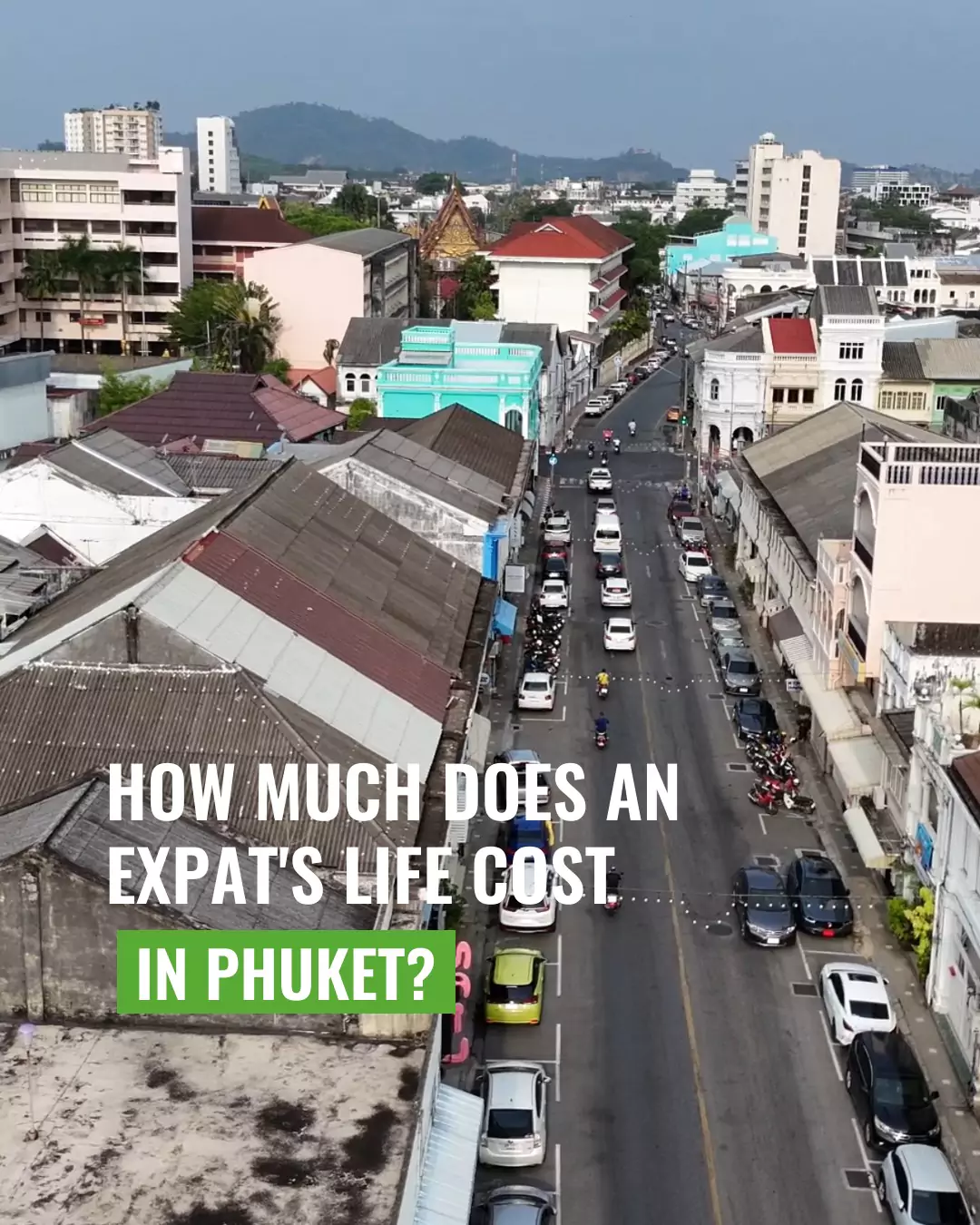
13 Things You Need to Know Before Traveling to Phuket

At first glance, Phuket seems like a simple resort destination: choose a hotel, and you have a beach, cafes, and entertainment nearby. But once you arrive, you quickly realize that the island is organized very differently. There are large distances between areas, the beaches vary significantly, and the weather can change your vacation plans.
In some areas, it is easy to live without your own transport, while in others, getting around without a motorbike or taxi is difficult. That is why, before your trip, it is worth figuring out in advance when to go, which area to choose, where to stay, how to get around, and what to prepare before your flight.
Contents
1. When is the best time to visit Phuket
2. Which area to choose
3. What currency to bring
4. How to get from the airport
5. Where to stay
6. How to get around Phuket
7. Mobile connection and internet
8. Essential apps
9. Insurance
10. What to bring to Phuket
11. Sea and safety
12. Water, food, and hygiene
13. Rules and things to know about Thailand
1. When is the best time to visit Phuket
If the main purpose of your trip is the sea, beaches, and island excursions, the most comfortable period is generally considered to be from November to April.
Phuket is a seasonal island. In November, the southwest monsoon period gradually comes to an end: rainfall decreases, and the sea along the west coast is more often calm.
From December to February, the weather is usually the most comfortable: there are many sunny days, a low chance of prolonged rain, and pleasant temperatures. However, this is also the most popular period, so accommodation and flight prices are higher.


In March and April, it gets hotter. The heat is especially noticeable in April, but it is also a great month for those who want to see how joyfully Thais celebrate Songkran – the local New Year.
The rainy season begins in May. But this does not mean that it rains around the clock. Often, a downpour lasts for an hour or two, after which the sun comes out again. However, the sea becomes more unpredictable, and strong waves are more common along the west coast.


May to October is the low season. There are fewer tourists, accommodation and transport prices are lower, and the island becomes quieter and greener. But if your main dream is to swim in the sea every day, this is not the most reliable period.
You can find more detailed information about the island’s weather in our comprehensive guide Phuket Weather by Month.
Nevertheless, it is important to remember that the weather in Phuket can change even within a single day. That is why it is better to check the forecast shortly before your trip rather than rely only on average weather conditions.
2. Which area to choose
Phuket is not the kind of resort where you can choose any hotel and then easily walk to a different beach every day.
Read our detailed guide 14 Popular Areas of Phuket: How to Choose.
All areas of the island are very different. Here are their main characteristics:
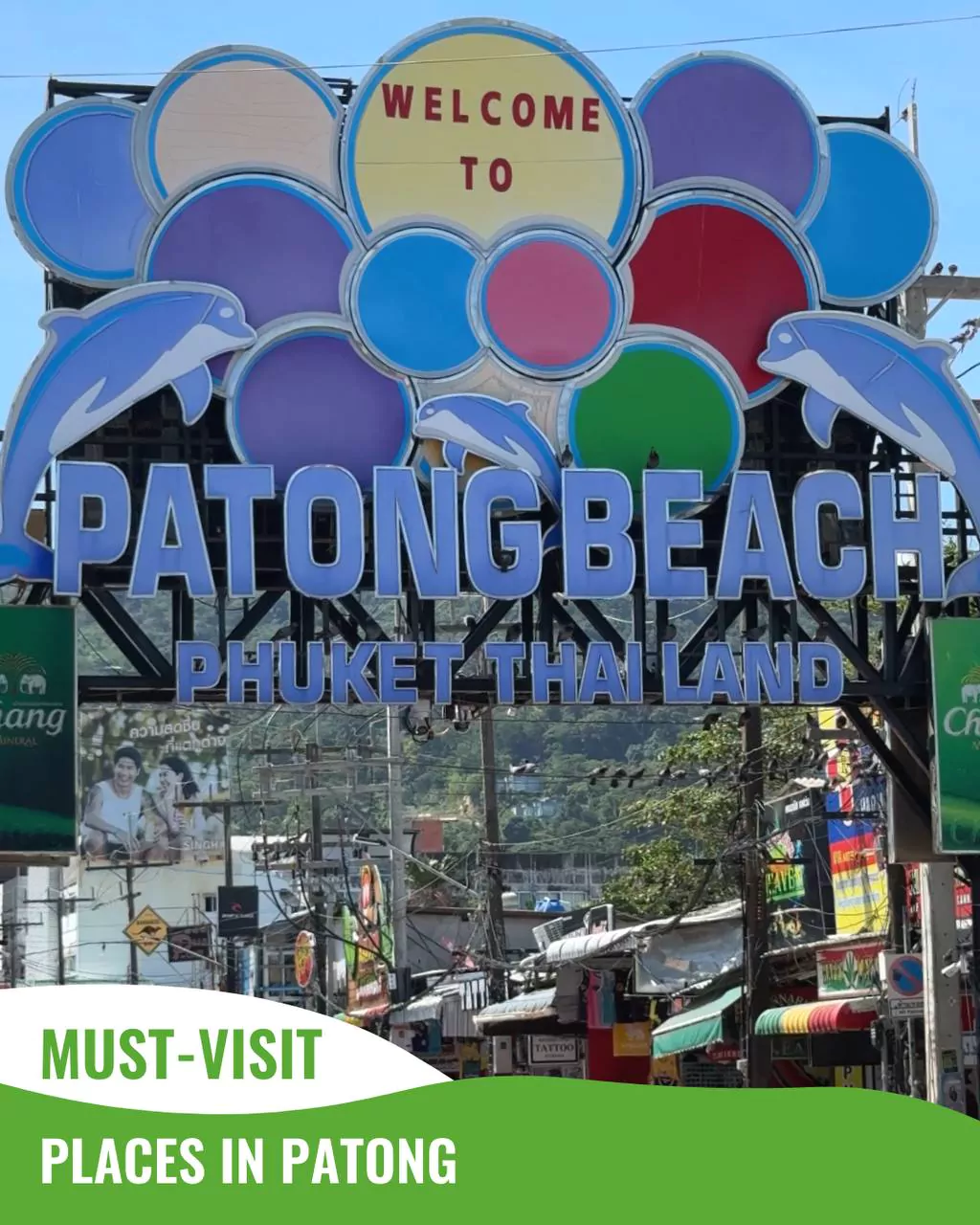
Patong

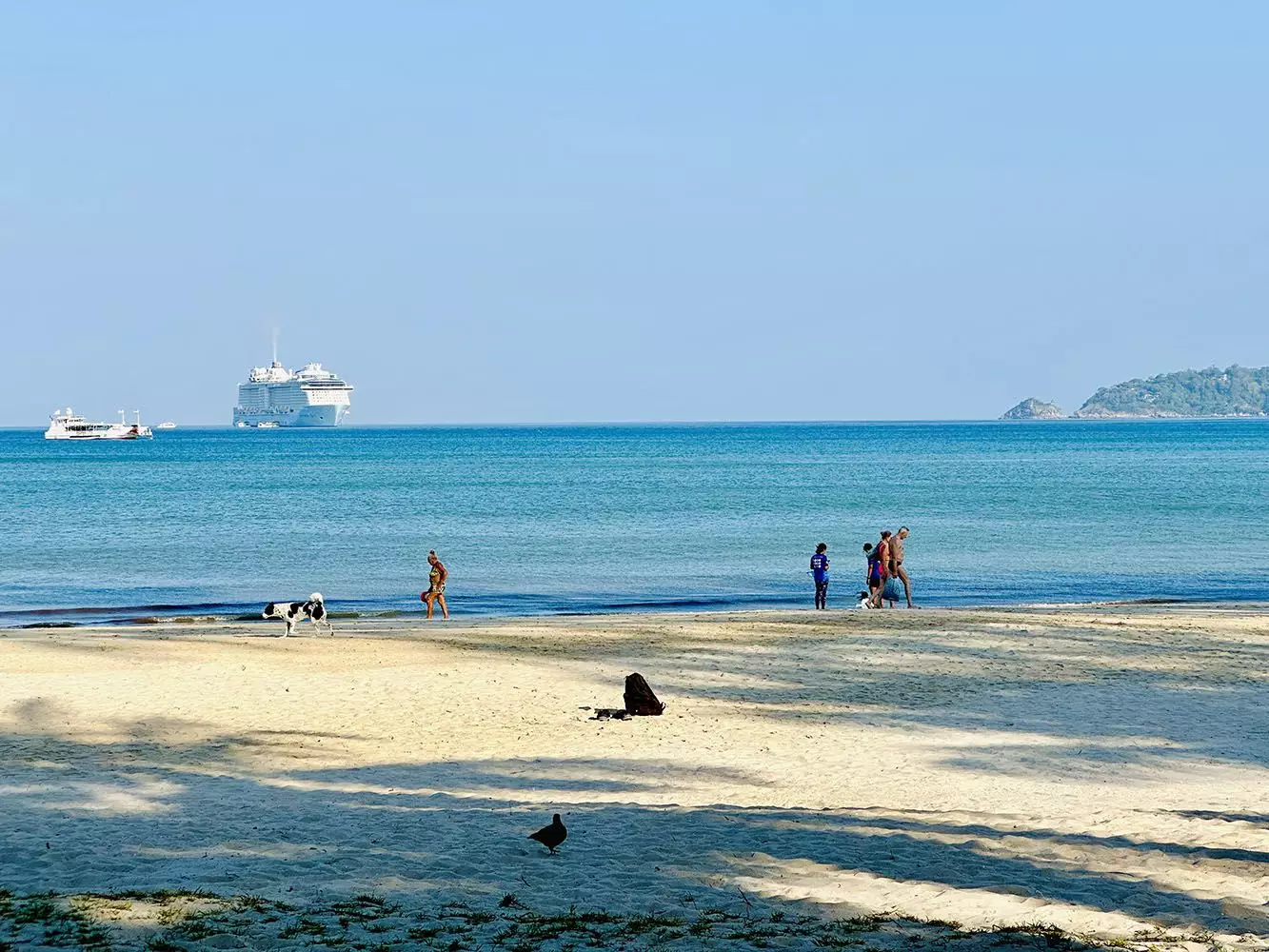


The liveliest tourist area on the island and the center of nightlife. There is a huge number of hotels, restaurants, shops, massage salons, bars, and entertainment venues. The beach is large, but it is also one of the busiest (and not the cleanest).
Ideal for: young travelers, groups of friends, and those who enjoy nightlife, shopping, and an active holiday.
Kata and Karon


Popular areas for a classic beach holiday and among package tourists. There are plenty of hotels, restaurants, shops, and tourist services here, so it is quite possible to get by without your own transport. Kata is more compact and lively, while Karon is more spacious and relaxed.
Ideal for: families, couples, and those who want to combine a beach holiday with well-developed infrastructure.
Kamala


Located between Patong and Surin. There are around two kilometers of beach here, plenty of restaurants, cafes, and hotels, as well as well-known beach clubs and shows in the area.
Ideal for: couples, families, and those looking for a quieter alternative to Patong.
Bang Tao


One of the most developed and prestigious areas in northwestern Phuket. It is home to Laguna Phuket, modern condominiums, villas, restaurants, cafes, and beach clubs.
Ideal for: families, long-term stays, and those who value modern infrastructure and comfort.
Phuket Town


The center of the island, home to the historic Old Town, markets, cafes, restaurants, and shopping malls. Here, you can experience more of everyday life in Phuket and less of the resort atmosphere. You should not expect a beach holiday, but the area is very convenient for long-term stays.
Ideal for: those who enjoy city life, local cuisine, architecture, and plan to explore the island extensively.
Kathu


Located in the central part of the island, this area is more suitable for living than for a seaside holiday. It has shops, schools, hospitals, condominiums, and other everyday infrastructure. Patong and Phuket Town are relatively close, but there is no beach of its own.
Ideal for: long-term stays, expats, and those who do not need to be near the beach every day.
Chalong


A practical area in the south of the island, best known for its pier, where many boat excursions and diving trips depart from. There is a wide range of accommodation, restaurants, shops, and services for everyday living, but there is no good swimming beach. The area is not very convenient for a holiday without your own transport.
Ideal for: those who plan to travel around the island frequently, go diving, or live in Phuket for an extended period.
Nai Harn


A quiet area in the south of Phuket with one of the island’s most famous beaches. There are cafes, restaurants, shops, massage salons, and accommodation in different categories nearby.
Ideal for: couples, families, and those who prefer a peaceful beach holiday.
Rawai


A southern area of Phuket that is especially popular with those who stay on the island long term. There are many condominiums, villas, cafes, restaurants, shops, and services for everyday life. Rawai Beach itself is not suitable for a classic swimming holiday: boats are moored here, and the water level changes significantly with the tides. However, it is a convenient starting point for trips to nearby islands and other sea excursions.
Ideal for: long-term stays, independent travelers, and those who want to experience more of local life.
Surin


A southern area of Phuket that is especially popular with those who stay on the island long term. There are many condominiums, villas, cafes, restaurants, shops, and services for everyday life. Rawai Beach itself is not suitable for a classic swimming holiday: boats are moored here, and the water level changes significantly with the tides. However, it is a convenient starting point for trips to nearby islands and other sea excursions.
Ideal for: long-term stays, independent travelers, and those who want to experience more of local life.
Panwa


Located on the east coast of Phuket, this area is noticeably different from the popular beach destinations on the west coast. It is quiet, green, and home to good hotels and scenic restaurants. The area is suitable for a peaceful holiday, but the tides have a strong impact on the beaches, so Panwa should not be chosen solely for swimming.
Ideal for: those who value peace and quiet, beautiful views, and a relaxing hotel stay.
Mai Khao


A remote area in northern Phuket, not far from the airport. It is home to large resort hotels and Sirinat National Park, but there is little infrastructure outside the hotels. This is also where the famous beach is located, where planes fly very low as they come in to land.
Ideal for: those who want peace and quiet, nature, and a relaxing stay away from the main tourist centers.
Nai Yang


Located very close to the airport, but the atmosphere is quite different from Mai Khao. There is a small resort village with cafes, restaurants, hotels, and a beach, while part of the coastline is within Sirinat National Park. It is a good option for a few quiet days or for those who want to stay close to the airport.
Ideal for: a peaceful holiday, a short stay before a flight, and those who do not like large tourist areas.
3. What currency to bring
There is one important thing to keep in mind when it comes to money in Phuket: it is better not to rely on just one payment method. Cash is still necessary at markets, small cafes, street vendors, in taxis, and at some local establishments. At the same time, cashless payments are widely accepted in hotels, shopping malls, restaurants, and large stores.
Dollars, euros, or rubles? For a trip, the most convenient option is to bring US dollars or euros in cash and exchange them for Thai baht once you are in Thailand.
Remember: the newer and larger the banknote, the better the exchange rate.
In Phuket, there are services that exchange cashless money for cash baht. For example, FastMoney, EX24, Arbi.Exchange, Senate Exchange, and Money Shop Phuket.
Read more about the terms, exchange rates, and fees in our Money Exchange guide.
Some services also work with USDT and other cryptocurrencies, allowing you to receive cash in Thai baht.
4. How to get from the airport
Several transport options are available from the airport: bus, taxi, transfer, and car rental.
Bus
Phuket Smart Bus is one of the most budget-friendly ways to get to the west coast. The bus runs from the airport through Cherng Talay, Surin, Kamala, Patong, Karon, and Kata to Rawai. A ticket on the airport route costs 100 baht. You can pay for the ride in cash or by card.
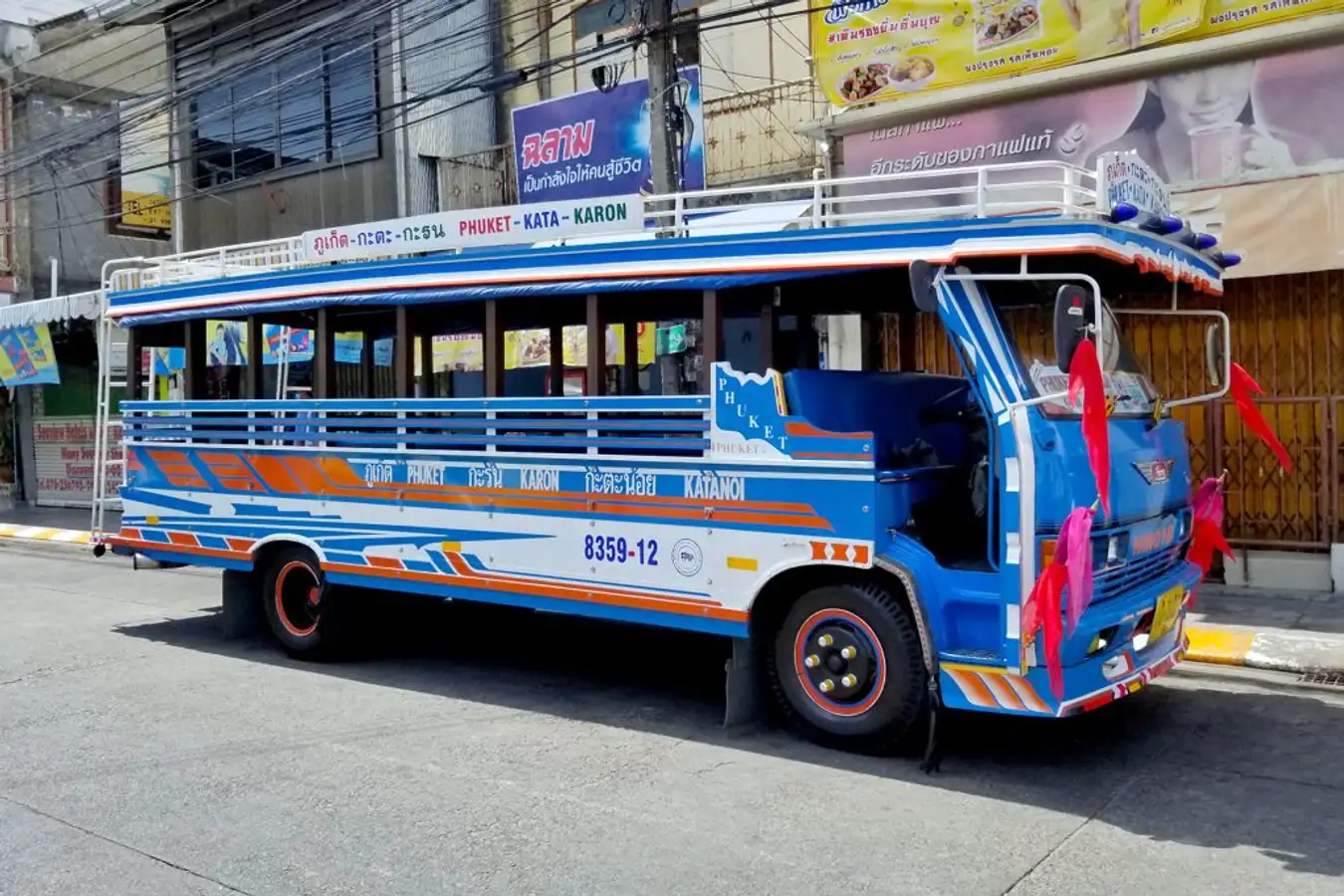
The orange Airport Bus 8411 also runs to Phuket Town. The bus goes to Bus Terminal 1, and the fare depends on the distance; the maximum fare on the route is around 100 baht. You can pay for the ticket in cash or by QR code.
There is also an Airport Bus Express running from the airport toward Patong, Karon, and Kata. This is another budget-friendly option, but it is best to check the current timetable before your trip.
Taxi
If you do not want to wait for a bus and travel across the island with luggage, taking a taxi is easier. Grab, Bolt, and InDrive operate in Phuket, but airport pickup conditions and trip prices may vary.
Important: only Grab taxis are allowed to pick up passengers directly from the airport. If you want to use another taxi service, the car will not be able to drive up to the terminal, so you will need to walk about 300 meters.
Transfer
If you arrive at night, are traveling with children, in a large group, or simply want to get into a car and head straight to your hotel after the flight, it is more convenient to book a transfer in advance. The driver will meet you at the airport and take you to the required address. You can book a regular car or a minivan. The price depends on the area and its distance from the airport.
Car Rental
If you plan to actively explore Phuket, you can book a car in advance and pick it up directly at the airport. This is convenient for trips to remote beaches, viewpoints, and attractions.
5. Where to stay
In Phuket, you can stay in a hotel, rent a private villa, or choose an apartment in a condominium. And it is not just about the price: the type of accommodation has a major impact on what your holiday will be like.
Hotels


For a first trip to Phuket, a hotel is the easiest option. You do not need to think about utility bills, cleaning, internet, check-in, or other everyday details. Good hotels usually have a swimming pool (sometimes even their own water park), a spa, breakfast, housekeeping, and other services.
You can find a selection of hotels for different tastes and budgets in the Hotels section.
For a short holiday, a hotel is especially convenient in Patong, Kata, Karon, Kamala, or Bang Tao, where there is plenty of infrastructure nearby and you do not necessarily need to rent transport every day.
Villas


A villa makes sense if you are traveling with several people or want more privacy. It is usually a separate house with its own grounds, several bedrooms, a kitchen, and a swimming pool. This option is especially popular with families and groups of friends.
But there is one important detail: a villa is not always located close to the sea. Many beautiful houses are situated on hills or in residential communities, where getting to the beach, shops, and restaurants can be inconvenient without a car.
Therefore, before booking, be sure to check not only the photos, but also the location on the map, access to the property, parking availability, and the actual distances to the beach and nearby infrastructure.
Trusted companies can help you find the right option:
We’ve selected the top 3 companies for for villas rental. Fill out the form, and we’ll forward your request — they’ll contact you to provide details on the terms and pricing.
Condominiums and apartments


A condo is an apartment in a residential complex that usually offers shared facilities such as a swimming pool, gym, parking, security, and other amenities. The unit itself can range from a compact studio to a full apartment with a separate bedroom, living room, kitchen, and washing machine.
Find a list of condominiums in Phuket in the Condominiums section.
Apartments are a broader concept. The term can refer to a separate apartment or a small apartment complex that is not necessarily a condominium. Some apartment properties have their own swimming pool and other amenities, while others offer only the apartment itself without any additional facilities.
We’ve selected the top 3 companies for apartments rental. Fill out the form, and we’ll forward your request — they’ll contact you to provide details on the terms and pricing.
What to choose?
- For 7–14 days: a hotel – the fewest everyday hassles.
- For a family or group: a villa – more space and privacy.
- For a month or longer: a condo or villa – usually more convenient for long-term living.
6. How to get around Phuket
Phuket is a large island, so you will not get very far on foot. If you want to see not only the beach near your hotel, but also viewpoints, markets, temples, and other key places around the island, you need to think about transportation.
The most convenient option is to rent a car or motorbike. A car is especially suitable for families and those who value comfort. A motorbike is convenient for short trips and helps you avoid traffic jams, but it is only suitable for confident riders.
Important: to rent a vehicle, you must have an International Driving Permit for the corresponding vehicle category.
If you do not want to drive, use taxis. Bolt, Grab, and InDrive operate in Phuket. It is best to check the fare right before your trip, as it depends on the distance, time, and demand. Tuk-tuks are also available, but they are more of a local experience than a budget-friendly way to get around: the price should be agreed with the driver in advance.
Public transport is available on the island, but it is not always convenient for tourists. Blue songthaews operate between different areas, while local buses run in Phuket Town. However, figuring out the schedules can be quite a challenge.
So, if you plan to travel around the island frequently, renting a vehicle usually gives you much more freedom.
7. Mobile connection and internet
Buying a Thai SIM card at the airport is convenient, but it is usually not the most cost-effective option. Prices at 7-Eleven stores may be similar, and you still need to get to the nearest store.
The easiest option is to set up an eSIM in advance, so you will have internet access as soon as you arrive. Most modern smartphones support eSIM, but it is worth checking this feature in your phone settings before your trip.
Tourists have several eSIM options with different plans and validity periods. For example, Travel Mobile Bot, esim365, AIRSIM, and Airalo. Some services allow you to pay with a Russian bank card or via SBP, while international services usually require a foreign bank card.
Read more about this in our guide Overview of eSIM Options and Prices for Thailand.
If your phone does not support eSIM, you can buy a regular Thai SIM card once you arrive in Phuket. You will need your passport to purchase one.
8. Essential apps
Before your trip, we recommend installing several apps in advance – they will help with navigation, transport, weather, translation, and bookings.
- Google Maps – find hotels, cafes, beaches, and other places, plan routes, check reviews, photos, and opening hours.
- Organic Maps and Maps.me – allow you to download maps in advance and use them without an internet connection. Especially convenient for road trips and hiking.
- Google Translate – translates text, speech, and signs using your phone’s camera. Thai is supported.
- LINE – a popular messaging app in Thailand that is convenient for communicating with locals and some businesses.
- Windy – a detailed weather forecast with information about wind, precipitation, and sea conditions.
- Tides – helps you check high and low tide times, which is especially useful for beaches, walks, and island trips.
- Agoda and Booking – for booking hotels and apartments.
- Airbnb and Facebook Marketplace – options for apartments and houses, including rentals from private owners.
- Grab and Bolt – for booking taxis and delivery services. Depending on the service, you can pay in cash or by card.
- inDrive – allows you to offer your own fare for a ride and negotiate with the driver.
- 12Go – convenient for searching and purchasing tickets for buses, ferries, trains, and flights across Thailand and neighboring countries.
- AirAsia MOVE – search and booking for affordable flights across Asia, including routes to Bangkok, Singapore, and Kuala Lumpur.
- TDAC – an immigration service app for completing the electronic Thailand arrival card.
- Grab Food – food and grocery delivery.
- Lazada and Shopee – local marketplaces where you can order almost anything, from clothing and cosmetics to electronics and groceries.
- SHEIN – clothing, shoes, and accessories with delivery to Phuket.
9. Insurance
Anything can happen in life, and a vacation is no exception. In Phuket, you can always receive qualified medical care – but the bill, especially if you need to stay in a hospital, can come as a shock. That is why it is very important to think about insurance.
It is especially important if you are planning to:
- ride a motorbike;
- go diving;
- take boat excursions;
- do water sports;
- travel with children.
Before purchasing insurance, carefully review the terms and conditions. Trusted companies can help you choose the right package:
We’ve found a reliable insurance company in Phuket for you. Fill out the form, and we’ll forward your request — they’ll contact you to provide details on the terms and pricing.
10. What to bring to Phuket
The main rule for Phuket: do not try to pack a suitcase for every possible situation. On the island, it is easy to buy clothing, cosmetics, hygiene products, medicines, and most everyday essentials.
Documents and money:
- passport valid for at least 6 more months;
- completed TDAC arrival card, either printed or as a QR code;
- bank cards and some cash in US dollars or euros;
- driving license if you plan to rent a vehicle;
- prescription medicines in their original packaging.
There is no need to bring a large first-aid kit: basic medicines and supplies can be purchased at pharmacies and stores in Phuket. Watch our video:
Clothing:
- light, breathable clothing;
- swimwear, a hat, and sunglasses;
- comfortable shoes;
- covered clothing for temples and sun protection;
- a light sweater or hoodie – useful on the plane and in air-conditioned places.
Warm jackets, sweaters, and high heels can be left at home. You do not necessarily need to bring a raincoat either – during the rainy season, you can easily buy one locally. SPF sunscreen and insect repellent can also be purchased in Phuket.
In general, do not worry if you forget something. Phuket has plenty of supermarkets, shopping malls, pharmacies, and stores, so most essential items can be bought locally.
11. Sea and safety
The sea in Phuket is not always calm or safe for swimming. With the start of the rainy season, waves and rip currents become more common, especially along the west coast.
Remember:
- If there is a red flag on the beach, you must not enter the water. Do not judge safety by what other beachgoers are doing: the fact that people were swimming safely yesterday does not mean the sea is safe today.
- A rip current can carry even a strong swimmer away from the shore. It does not pull you underwater, but moves away from the coast toward the open sea.
- If you get caught in a rip current, do not try to swim directly back to shore against the current – this will quickly exhaust you. Stay calm and swim parallel to the shore until you are out of the current, then head back toward the beach.
- Do not swim in areas without lifeguards, especially when the waves are strong.
- Keep a close eye on children and do not let them enter the water on their own.
- Wear life jackets when traveling by boat or other water transport.
And be sure to keep the sun in mind: even when the sky is cloudy, it is easy to get sunburned in Phuket. So always use sunscreen!
12. Water, food, and hygiene
You should not drink tap water in Phuket. Bottled water is sold practically everywhere – from 7-Eleven stores to hotels and supermarkets.
In cafes and restaurants, ice is usually made from purified water, so there is generally no need to worry about it in trusted establishments.
However, it is better not to take risks with street food: sometimes, the ice added to your smoothie can be the cause of serious food poisoning.
Wash fruits and vegetables with bottled or purified water before eating them.

And do not try to sample every Thai dish on your very first day. Local food can be very spicy and unfamiliar to your stomach. Start with small portions and gradually get used to the local cuisine.
13. Rules and things to know about Thailand
To avoid being seen as an “ignorant farang,” it is worth learning a few local rules before your trip – some of them may be very different from what you are used to.
- When visiting temples, choose clothing that covers your shoulders and knees, and remove your shoes before entering.
- Do not touch someone else’s head – in Thai culture, it is believed that the spirit resides there.
- Treat images of Buddha, temple grounds, and symbols of the royal family with respect. Do not climb on statues or use them as a backdrop for inappropriate photos.
- Do not bring electronic cigarettes or vapes into Thailand – they are prohibited.
- Learn the standard greeting “Sawasdee ka/krap” and the phrase “Khob khun ka/krap” for saying “thank you” to locals – they will really appreciate it.
Phuket is much easier to fall in love with when you understand in advance how the island works. Choose the right area, take the season into account, and plan your accommodation, transport, and mobile connection ahead of time.