Jobs Foreigners Are Prohibited from Doing in Thailand
Thailand is a popular destination not only for tourists but also for those who move here long-term. And many have a natural question: how can you legally earn a living here?
Thailand has an official list of jobs that are either completely prohibited for foreigners or permitted only under certain conditions.
The current system covers 40 types of work: 27 are completely prohibited for foreigners, while the other 13 are permitted only under certain conditions. The list was established by a notification issued by Thailand’s Ministry of Labour in 2020.
List No. 1: Completely Prohibited Types of Work
This list includes 27 types of work that foreigners are not allowed to perform in Thailand. These include traditional crafts, service-sector jobs, tourism-related work, and certain professional services.
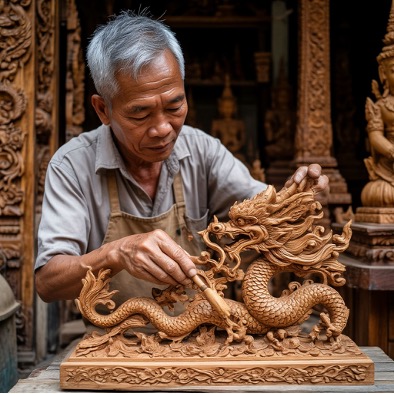
Foreigners are prohibited from performing the following types of work:
- Wood carving
- Driving vehicles within the country, including motorized and non-motorized vehicles. Exceptions include piloting international flights and operating forklifts
- Auctioneering
- Cutting and polishing diamonds and precious stones
- Hairdressing, hairstyling, and beauty services
- Hand weaving
- Weaving mats and making products from reeds, rattan, hemp, straw, bamboo, and similar materials
- Making saa paper from mulberry by hand
- Making lacquerware
- Making Thai musical instruments
- Making traditional nielloware
- Making items from gold, silver, and the traditional nak alloy
- Making traditional bronze ware
- Making Thai dolls
- Making alms bowls for Buddhist monks
- Making silk products by hand
- Making Buddha images and statues
- Making paper or fabric umbrellas
- Brokerage or agency work, except work related to international trade or investment
- Thai massage
- Hand-rolling cigarettes
- Working as a tour guide or conducting sightseeing tours
- Street hawking
- Manual typesetting of Thai characters
- Unwinding and twisting silk thread by hand
- Clerical and secretarial work
- Providing legal services and conducting litigation, except for certain types of arbitration work
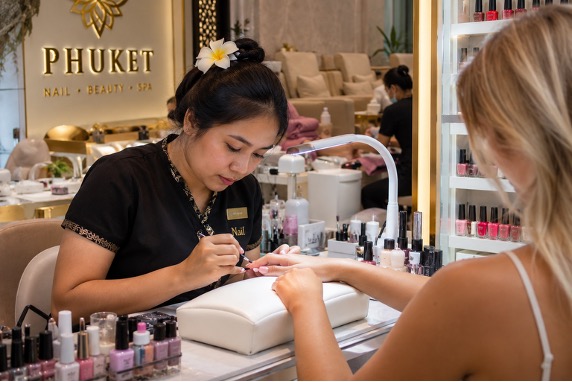
The official document specifically clarifies that beauty services include haircuts, hair coloring, hairstyling, makeup, personal grooming, and manicures.
This means a foreigner cannot simply obtain a work permit and legally work as a nail technician in a regular salon: the work itself falls under a prohibited category.
List No. 2: Professions Permitted Only Under Special Conditions
Three additional professional fields are open to foreigners only if they meet the established requirements, particularly those relating to international agreements, professional recognition, or obtaining the appropriate licence.
- Accounting – supervision, auditing, bookkeeping, and the provision of accounting services. Exceptions apply to occasional internal audits and work under Thailand’s international agreements or commitments, provided that the relevant professional body recognises the individual’s qualifications.
- Professional civil engineering – consultancy, design, calculations, construction management and supervision, research, and testing. Work is permitted, in particular, for professionals covered by the relevant international agreements or mutual recognition arrangements (MRAs), or those holding the required Thai professional licence.
- Professional architecture – design, construction management, supervision, consultancy, and other professional architectural services. Exceptions also apply to professionals recognised under international agreements or holding the appropriate licence in Thailand.
List No. 3: Skilled and Semi-Skilled Work
The following eight types of work are permitted for foreigners only if they involve skilled or semi-skilled work and the foreign worker has an employer:
- Agriculture, animal husbandry, forestry, or fishing
- Bricklaying, carpentry, and construction work
- Mattress or quilt making
- Knife making
- Shoemaking
- Hat making
- Garment making
- Pottery and ceramic production
In other words, these occupations are permitted subject to the conditions established for this category of workers.
List No. 4: Work Under Intergovernmental Agreements
The final category includes just two types of work:
- General labour / manual work
- Selling goods in a shop or retail outlet
However, this does not mean that any foreigner can obtain a standard work permit and start working as a shop assistant. This work is permitted only if the foreign worker has an employer and enters the country and takes up employment under the relevant agreement or memorandum between the Thai government and the government of another country.
Can Foreigners Work as Photographers?
Yes. Photography is not included in either the list of 27 completely prohibited occupations or any of the other restricted categories.

This means that working as a photographer is not in itself prohibited for foreigners. However, to undertake commercial work in Thailand, a person must still have the legal right to work and the appropriate work permit, if required by their immigration and employment status.
What about in practice? In practice, working legally as a photographer in Phuket is very difficult, and it is one of the most common reasons foreigners face fines and deportation.
Penalties for Illegal Work
The consequences are very real.
If a foreigner works without the required work permit or performs work they are not authorised to do, they face:
- a fine of 5,000 to 50,000 baht;
- deportation from Thailand;
- a ban on obtaining a new work permit for 2 years after the penalty is imposed.
An employer who hires a foreigner without the required work permit or allows them to perform work outside their authorised activities faces a fine of 10,000 to 100,000 baht per worker.
A repeat offence is punishable by up to 1 year in prison, a fine of 50,000 to 200,000 baht per foreign worker, or both. In addition, the employer is prohibited from hiring foreigners for 3 years.
Requirements for Foreigners to Work Legally
There are still many professions in Thailand that are open to foreigners. Depending on the role and qualifications, these may include IT, teaching, management positions, photography, and many other fields.
Но здесь важно другое правило: отсутствие профессии в списке запрещенных еще не дает автоматического права работать. Иностранец должен иметь подходящее основание для работы в Таиланде, а сама работа должна соответствовать предоставленному ему разрешению.
Before starting work, foreign nationals must ensure that their immigration status allows them to engage in the intended activity, obtain a work permit if required, and check that the specific job is not on the list of prohibited occupations.
If you are interested in obtaining a visa and working legally in Thailand, we recommend consulting only trusted specialists. You can provide some basic details using the contact form below, and we will forward your inquiry.
Follow the laws of the country you live in, and Insider will help you understand the rules of life in Thailand and make your stay in Phuket easier and more enjoyable!