Riding a Bike in Phuket: a Tourist's Guide to Avoid Fines and Injuries
In Phuket, a bike feels like a part of your body. It's how you get to the shops, the beach, and those famous sunsets — or just cruise around. To rent one, all you need is a passport and money. Next thing you know, you're in the local traffic flow.
We’ve selected the three best bike rental companies. Fill out the form, and we’ll forward your request — they’ll contact you to provide details on the terms and pricing.
Many tourists make the same mistakes. Not out of stupidity, but out of ignorance. Below is a checklist to help you avoid the most common (and most unpleasant) situations.
1. "They Gave Me a Bike — So I Can Ride It"
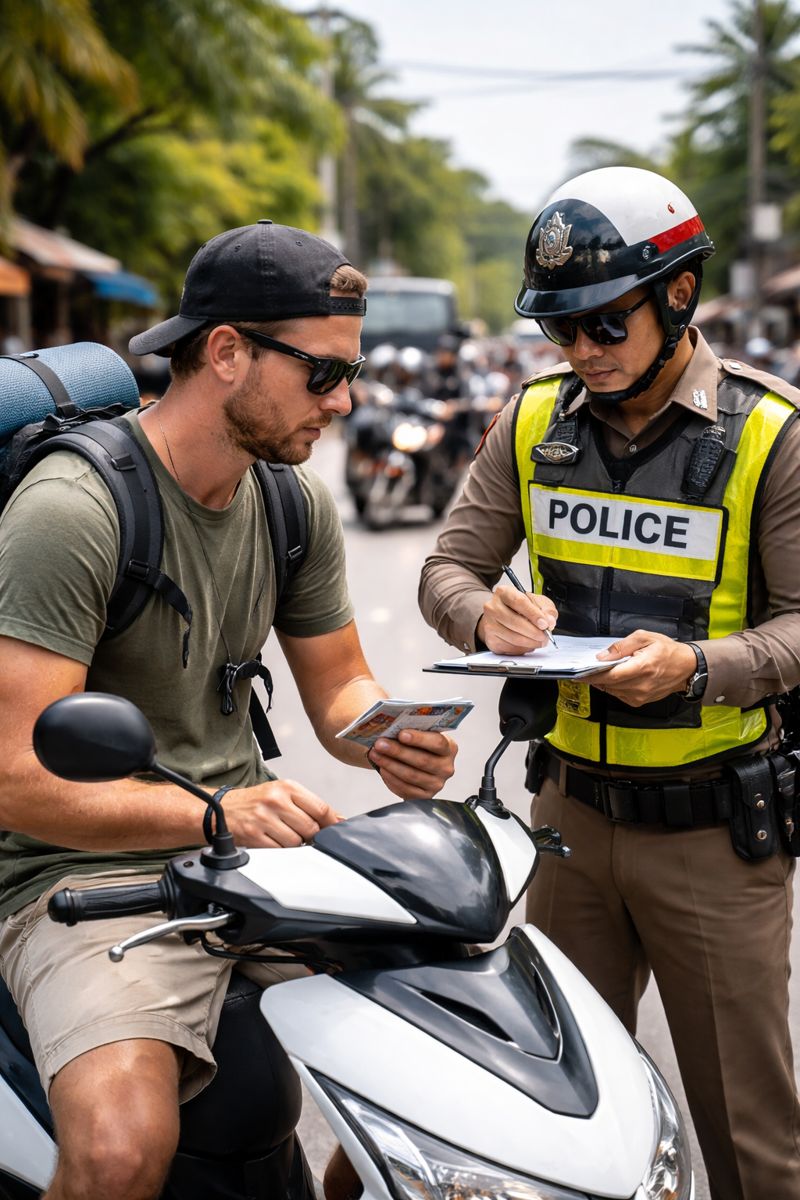
This is the most frequent and the most expensive misconception. In Thailand, what matters is not just the rental itself, but also the category on your driver's license.
Для управления байком в Таиланде вам нужны международные водительские права категории A или тайские права на мотоцикл.
If you only have category B (car) and no motorcycle category (A/A1/A2), then by law you are not allowed to ride a motorbike, even if:
- the bike is 125 cc or under;
- you ride carefully;
- the rental shop gave it to you without asking any questions.
It's important to understand: the rental company is not obligated to check your license categories. Their job is to rent out the vehicle, but the full responsibility lies with the rider.
In practice, this means:
- a fine during a document check (and such checks happen regularly in Phuket);
- problems with your insurance in the event of any accident;
- if an accident occurs, you will have to pay for medical treatment, bike repairs, and any third-party damages out of your own pocket.
This is where the most common shock sets in: "But they rented me the bike, so I must be allowed to ride it." Unfortunately, no.
2. Inspect the Bike Before Renting, Even if It Looks Brand New
Even if the bike looks new and well-maintained, you must inspect it before signing the rental agreement. Here is the essential checklist:
- Brakes: check how the front and rear brakes respond.
- Lights: make sure the headlight, taillight, and turn signals are working.
- Mirrors: ensure the mirrors are intact and properly adjusted.
- Fuel: check how much gas is in the tank.
- Bodywork: look for any scratches, cracks, or chips in the plastic.
We recommend taking a video or photos of the bike from all angles before renting it, making sure to document any existing damage. This isn't paranoia — it's standard practice. Otherwise, a scratch you didn't make is guaranteed to "appear" upon return.
3. The "Complimentary" Helmet: Technically Included, But Practically Useless
When you rent a bike, you will almost always be given a helmet. However, it might be old, damaged, used by who knows whom (and how), and ultimately — uncomfortable and poorly fitting. But wearing a helmet in Thailand is mandatory: police frequently fine riders for riding without one, but far more importantly — it's about your safety.
If you're staying for an extended period and plan to ride a lot, it makes sense to buy your own helmet. Phuket has plenty of motorcycle shops, and helmet prices are quite reasonable.
4. Tunnels are Off-Limits for Motorbikes (and They Actually Enforce It)
One of the least obvious rules for tourists: motorbikes are prohibited from entering tunnels in Phuket. How should you get through? There is always an alternative route (usually via an overpass or a roundabout). Many tourists either miss the sign or think they can get away with it anyway. And it's in these exact spots that police frequently issue fines. So if you see a tunnel, it's best to look for a detour right away.
For more details on all the road nuances on the island, read our article: Traffic Rules in Phuket.
5. Not All Bikes are Created Equal
The word "bike" in Phuket can refer to a wide range of vehicles:
- a light scooter for one person;
- a model comfortable enough for two;
- a bike that locals casually ride with three people and a child.
If you're a beginner, it's best to opt for light, maneuverable models with a low seat and an automatic transmission. If you plan on picking up speed or covering long distances, choose a more stable bike designed for highway riding.
If you're unsure, it's better to be honest about it at the rental shop. Most problems arise not from speed, but from riding a bike that doesn't fit the rider.
To get help choosing the right vehicle, we recommend contacting trusted companies.
We’ve selected the three best bike rental companies. Fill out the form, and we’ll forward your request — they’ll contact you to provide details on the terms and pricing.
6. Fines: not a Rarity, but Part of the Reality
In Phuket, police regularly check for helmets, licenses, and even rule compliance (even though locals themselves often ignore them).
Most often, riders are fined for:
- riding without a helmet;l
- acking the proper license category;
- riding in prohibited areas;
- sometimes — for carrying a passenger without a helmet.
The fines aren't astronomical, but they are unpleasant — especially when they ruin your day or your plans.
7. Rain and Slippery Roads: a Rider's Worst Enemy
This is a crucial point that many people fail to consider in advance. In Phuket, tropical downpours can start suddenly (especially during the low season), turning the asphalt extremely slippery, while sand and leaves become a real trap.
Most motorcycle falls happen on turns and during braking on wet roads. So, if rain is in the forecast and you're planning to ride somewhere, it's best to postpone the trip or take a taxi instead.
For the most detailed weather forecast, we recommend using the Windy app.
8. Open Shoes and Clothing
Another underestimated risk. Many tourists hop on a bike right after the beach — in flip-flops (or even barefoot), shorts, and swimsuits.
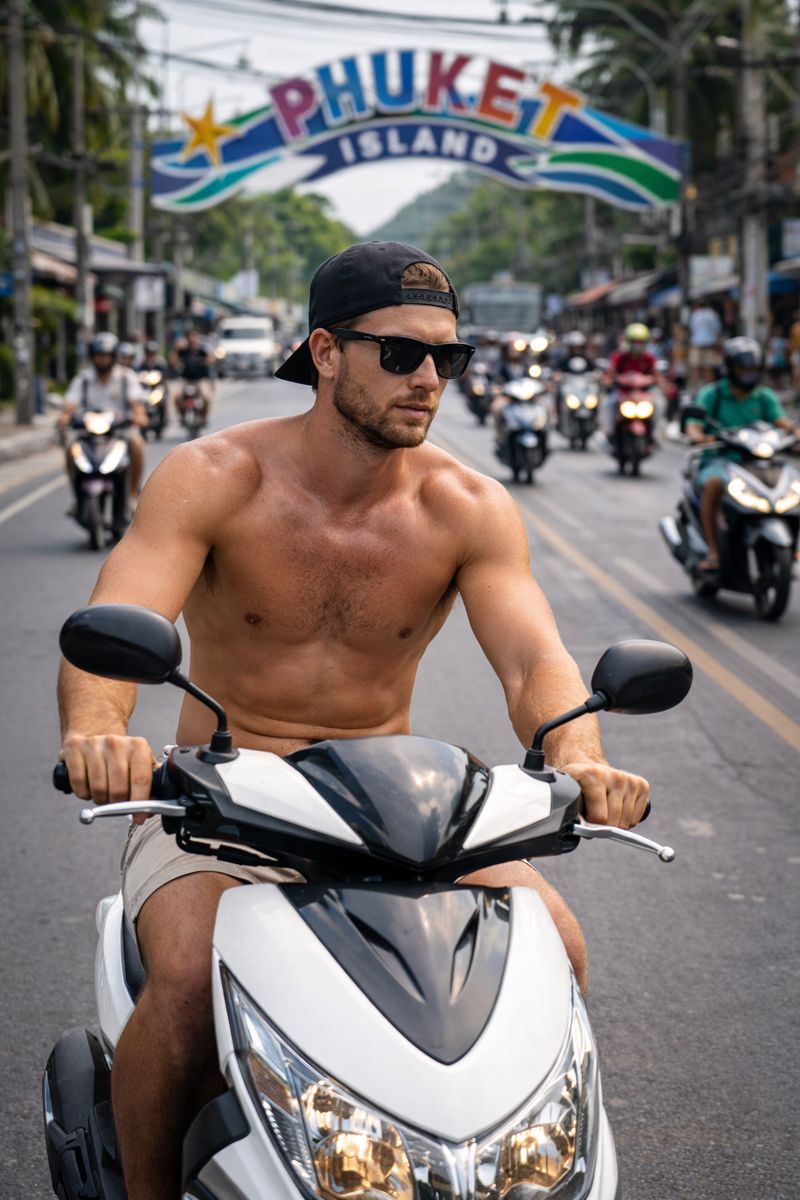
In this case, it's important to understand that even at low speeds, a fall can cause very serious abrasions, and open shoes make your feet slip off the footrests easily.
Additionally, there is a law in Thailand that prohibits riding a motorbike topless. For more details, read our article: What is Prohibited in Thailand.
This isn't about full biker gear, but about the minimum adequate protection that tourists rarely consider.
9. Alcohol and Bikes Don't Mix
This is a crucial point, especially on a resort island. Thailand has a zero-tolerance policy for drinking and driving: the legal blood alcohol limit is minimal, but if you get into an accident, any alcohol in your system will automatically make you 100% at fault, even if that's not what actually happened.
Even a single glass of wine or beer can result in a fine, void your insurance, and worsen the consequences of an accident.
So, if you really feel like having a drink, it's better to opt for a taxi. We wrote about how to use them in Phuket here: https://phuket-insider.com/en/taxi/
10. Parking: You Can't Leave Your Bike Just Anywhere
This is another frequent cause of fines and scooter impoundments in Phuket. Many tourists don't realize that there are quite a few zones on the island where bike parking is strictly prohibited. Most often, parking issues arise near beaches, in tourist centers, and around markets and shopping malls. Visitors genuinely don't understand why they received a fine, reasoning that "well, everyone else is parking here."
Pay attention to the curb markings — in Phuket, they directly determine where you can leave your bike and where you can't.
- Red and white stripes mean a complete ban on stopping and parking.
- Yellow and white markings allow for a brief stop, but you cannot leave your bike there for an extended period.
- Black and white curbs permit parking, provided there are no additional "No Parking" signs nearby.
Avoid parking your bike right up against intersections, at the exits of parking lots, in front of STOP signs, or at pedestrian crossings — the risk of getting a ticket is especially high in these spots. Parking is also strictly forbidden on bridges, at bus stops, at intersections, and in high-traffic areas, even if it seems like the bike isn't bothering anyone.
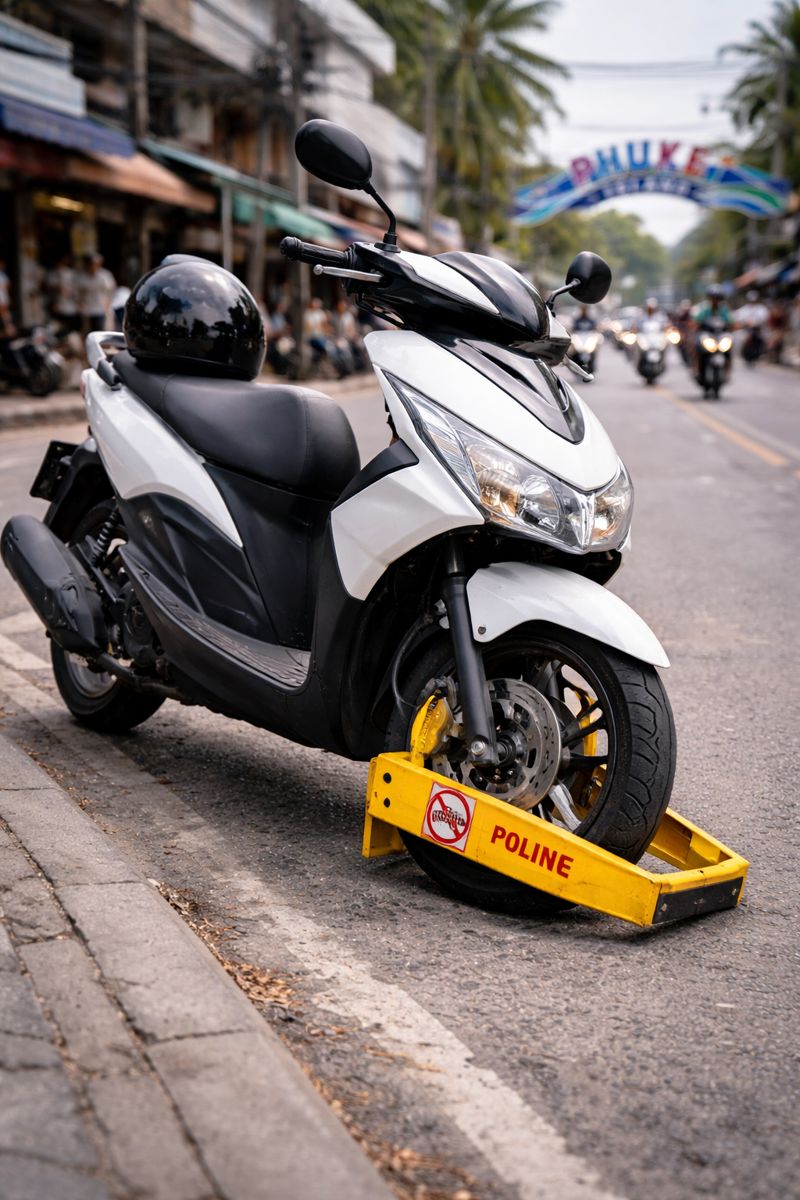
Fines for illegal parking in Phuket range from 500 to 1,000 baht. In some cases, a wheel clamp (a "boot") may be installed on the bike. If you discover a clamp, it means the parking rules were violated: you need to find the nearest police station or call the number listed on the clamp, pay the fine — and only then will it be removed.
A motorbike in Phuket is indeed freedom: the ability to see more, go further, and depend on no one. But there is one condition — you must treat it not as a tourist toy, but as a full-fledged vehicle with its own rules and consequences.
Most tourist problems with motorbikes arise precisely from a lack of knowledge about local nuances. And the better informed you are, the calmer and safer your vacation will be.
If you don't feel confident enough to ride a two-wheeled vehicle, it's better to choose a car.