
Why Thais Leave Offerings to Spirits
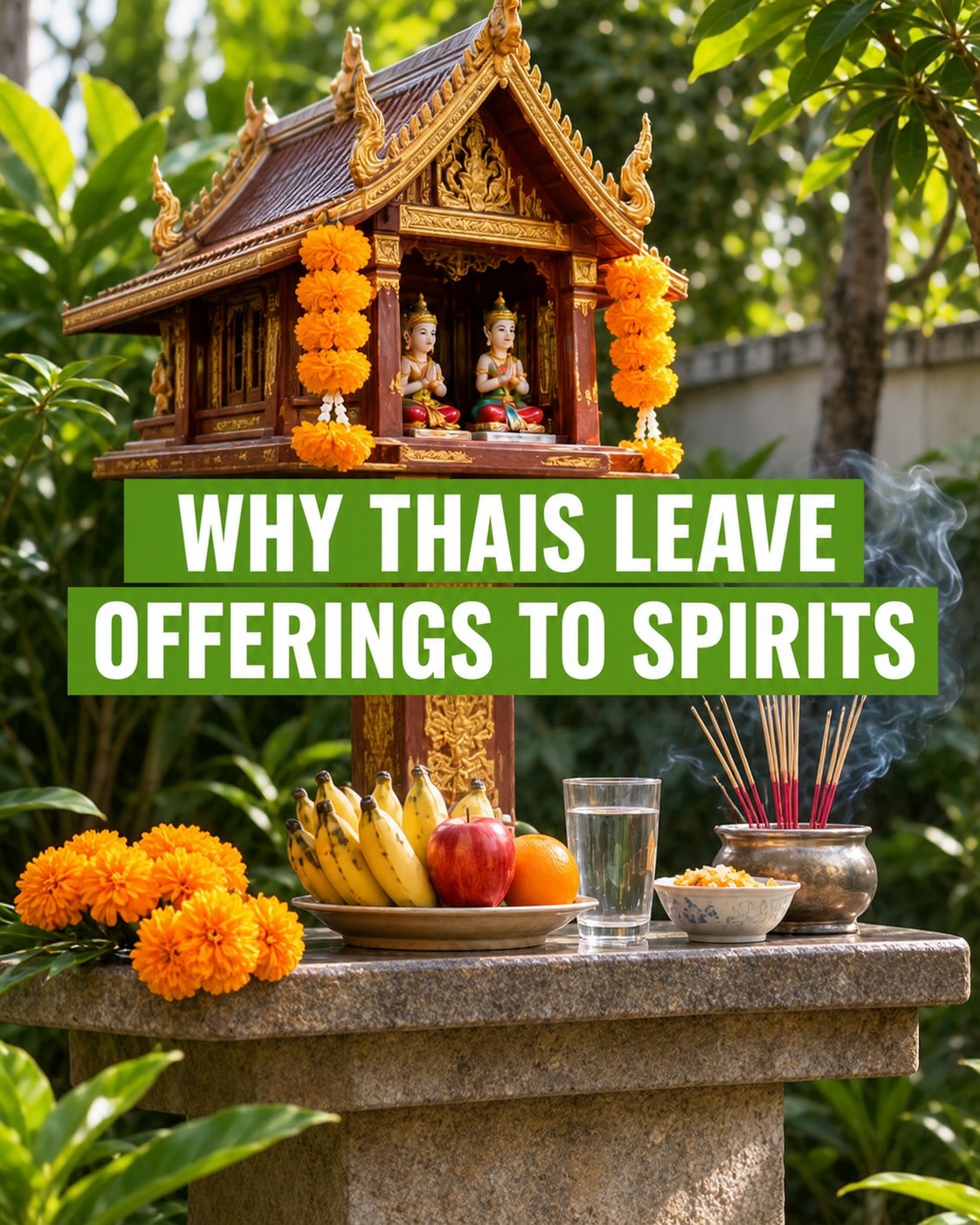
If you spot tiny houses, miniature figurines, and neatly arranged trays of fruit, drinks, and incense in your first few hours on the streets of Thailand, congratulations: you’ve just met your first neighbors. They’re the local guardian spirits. The little house is called a san phra phum, and it’s home to the spirit of the land.
Behind every string of jasmine garlands, cup of sweet soda, and elephant figurine lies a whole culture of delicate agreements between people and unseen forces. Thai people can be thoroughly modern, run businesses, and make TikTok videos while still faithfully leaving offerings for the spirits. It’s a custom shaped over centuries, a way of living in harmony with everyone and everything, both in the visible world and on the other side.
More than a decoration
The san phra phum, or spirit house, is one of the most familiar features of Thai folk tradition. At first glance, it may look like a garden ornament, like a miniature Buddhist temple in a villa courtyard. Its purpose is to house the spirit that protects the grounds. According to Thai beliefs, every piece of land has its own guardian spirit. Before building a house, hotel, or shopping center, people enter into a kind of negotiation with that spirit.
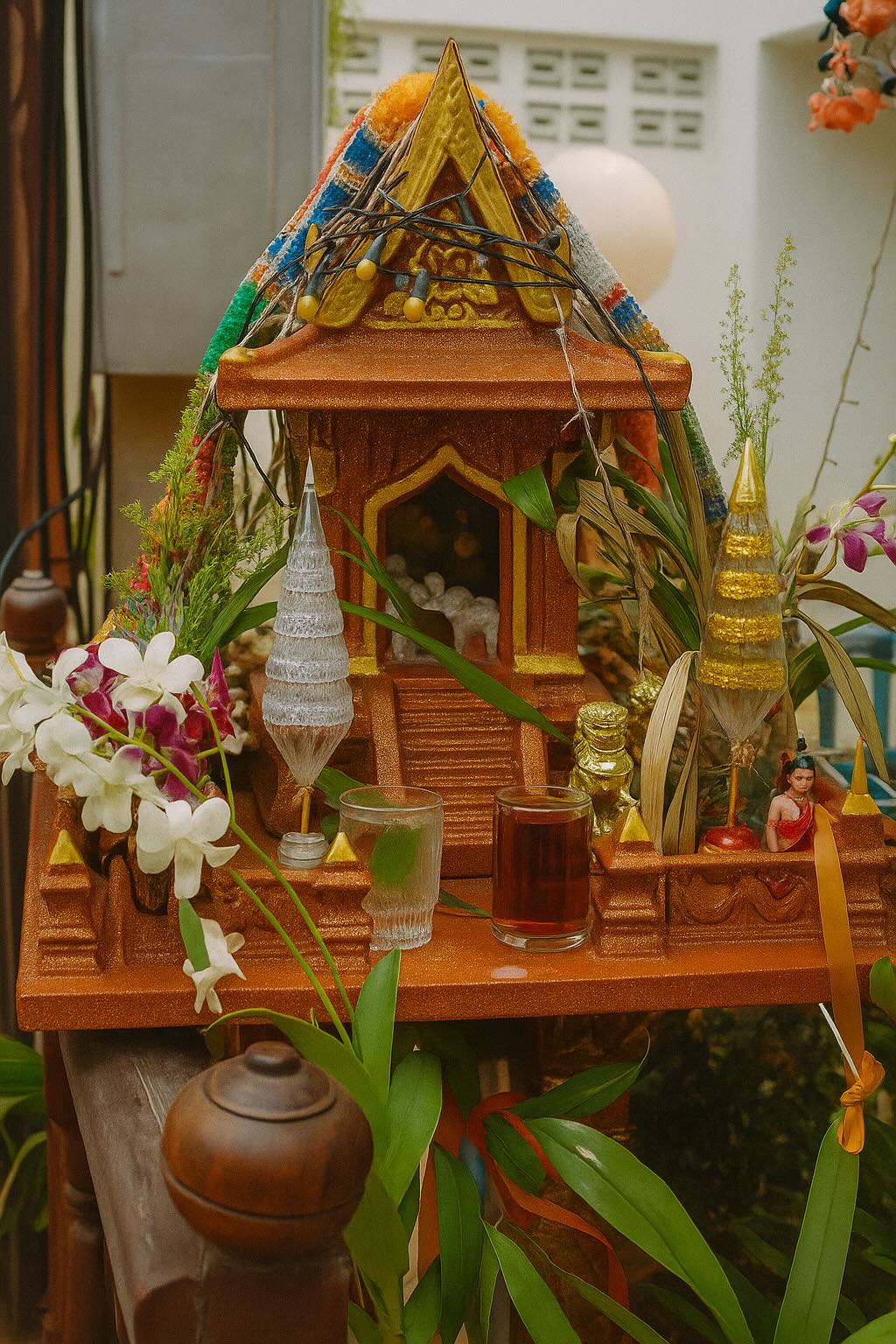
The spirit house is installed according to specific rules. A monk or Brahmin priest chooses the spot, taking into account the dates, the phases of the moon, and the location of the plot. The san phra phum is always raised above ground level, faces an auspicious direction, and is positioned so that the building’s shadow never falls on it.
Spirits don’t like living in the shade. It’s a detail that local architects, developers, and coffee shop owners keep in mind. Ignore it, and the business might never take off.
Once the spirit house is in place, things get interesting. It needs regular offerings of food, drinks, flowers, and sweets. Early in the morning, you can often see hotel or restaurant staff carefully changing the water, straightening the garlands, and lighting incense.
What spirits like
Think of the spirits as guests and one thing becomes clear. They have good taste. They like offerings that are sweet, colorful, and fragrant. These are some of their favorites.
— Red soda (yes, specifically red, because it’s the color of blood and symbolizes good luck and strength)
— Coconuts and bananas
— Fruit garlands, especially those made with mangoes and pineapples
— Boiled rice
— Traditional Thai sweets
— Flowers, most often jasmine and frangipani
— Animal figurines (elephants for good luck, roosters for protection, and zebras simply because the spirits like them)
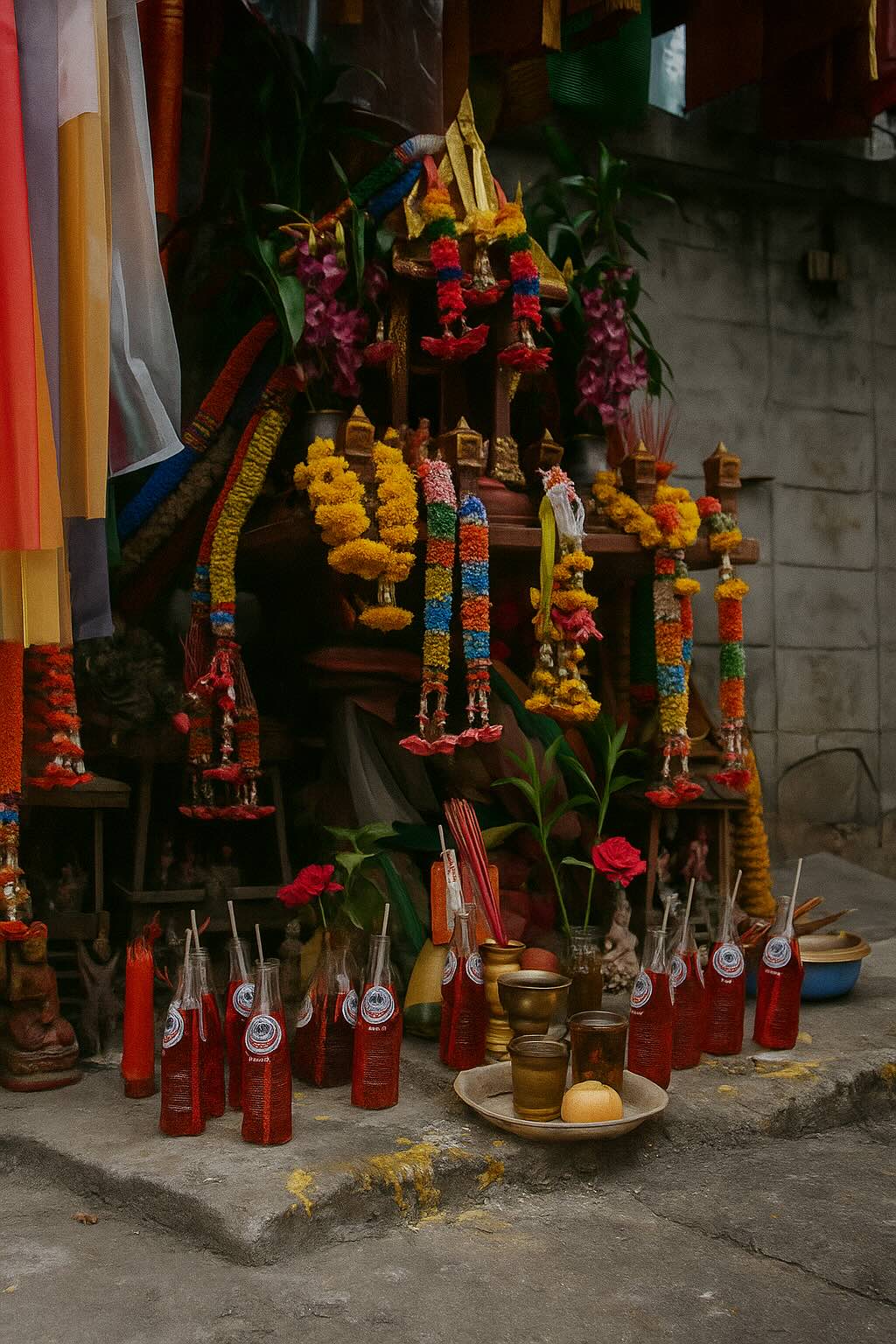
Incense sticks are the most common accompaniment to offerings. By lighting them, Thai people create what you might call an invisible path between two worlds. The smoke shows the way, the prayer affirms the intention, and the fragrance makes the visit feel welcoming.
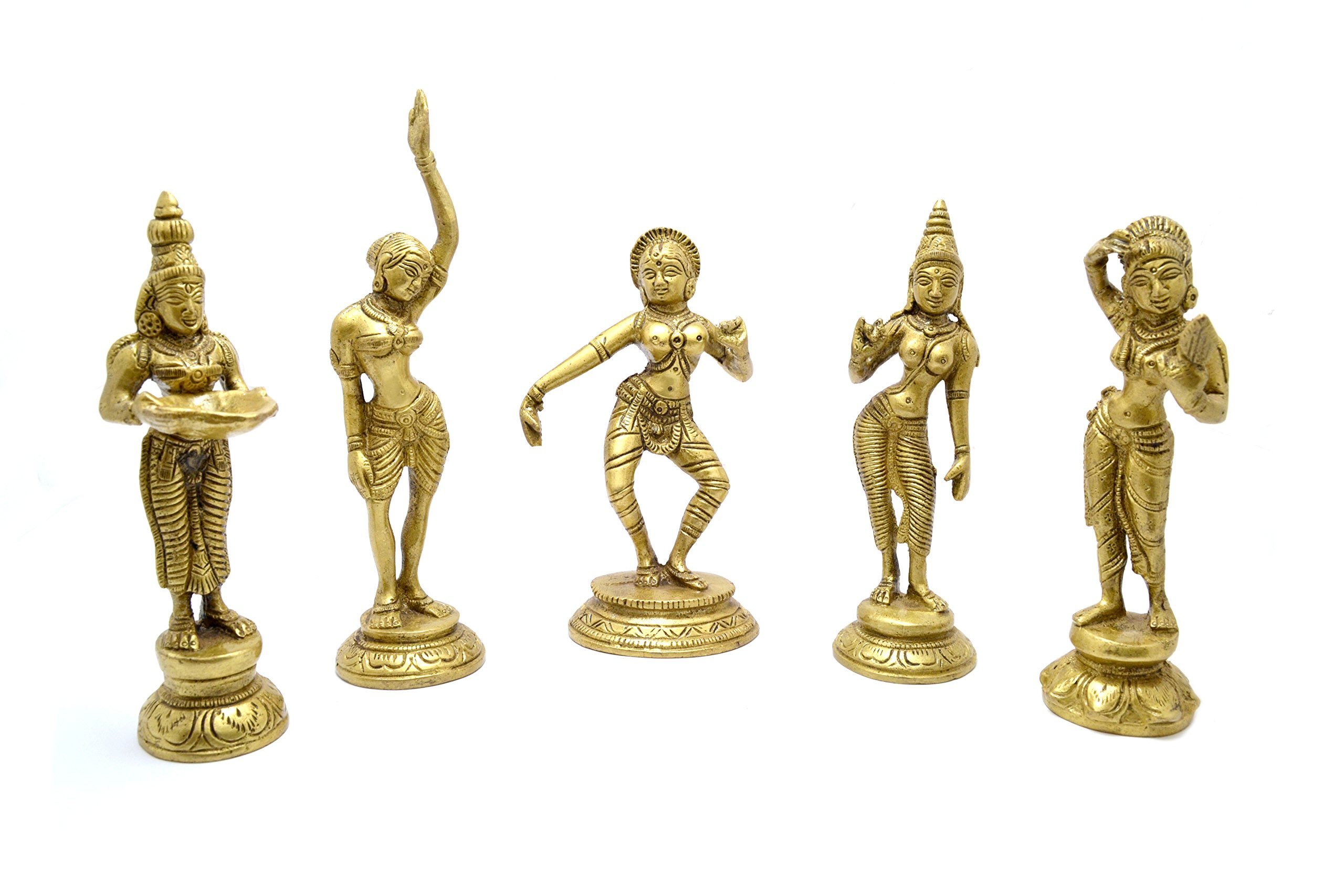
Sometimes you’ll see toys next to spirit houses, such as tiny figurines of dancers. These little figures are meant to entertain the spirits and show them respect. Spirits, like people, enjoy comfort and attention.
Figurines of apsara dancers symbolize beauty, blessings, gratitude, and reverence. Some figurines represent characters from Khon and Lakhon, classical dance dramas traditionally performed in honor of gods and spirits.
Why it matters to Thai people
The idea of “feeding the spirits” may seem strange to Westerners, while for Thai people it’s a straightforward way to maintain balance. Thailand is a Buddhist country, and its folk spirituality draws on older traditions that cross religious boundaries. It incorporates elements of Hinduism, animism, nature worship, and ancestor veneration.
People leave offerings for the spirits close at hand. They believe these spirits can help bring favorable weather, protect the home from misfortune, make fate a little kinder, or simply leave them in peace and lend a hand when they can. It’s a practical partnership. “We respect you, and you protect us.”
Be respectful. Don’t touch the offerings, make fun of the spirit house, blow out the incense, or stand higher than the sala phra phum for a photo.
If a house has been empty for a long time, a business is failing, a child falls ill, or a tourist has bad luck on the road, someone is bound to ask, “When was the last time you made an offering?” The question comes up naturally in conversation, without any hint of mysticism.
Other rituals you’ve probably seen
At dawn on Phuket’s beaches, you can sometimes spot neat little sand pyramids decorated with flower petals. They may look like something children built for fun. They’re offerings to the spirits of the sea. Fishermen take this ritual especially seriously because their lives depend on the sea’s goodwill.
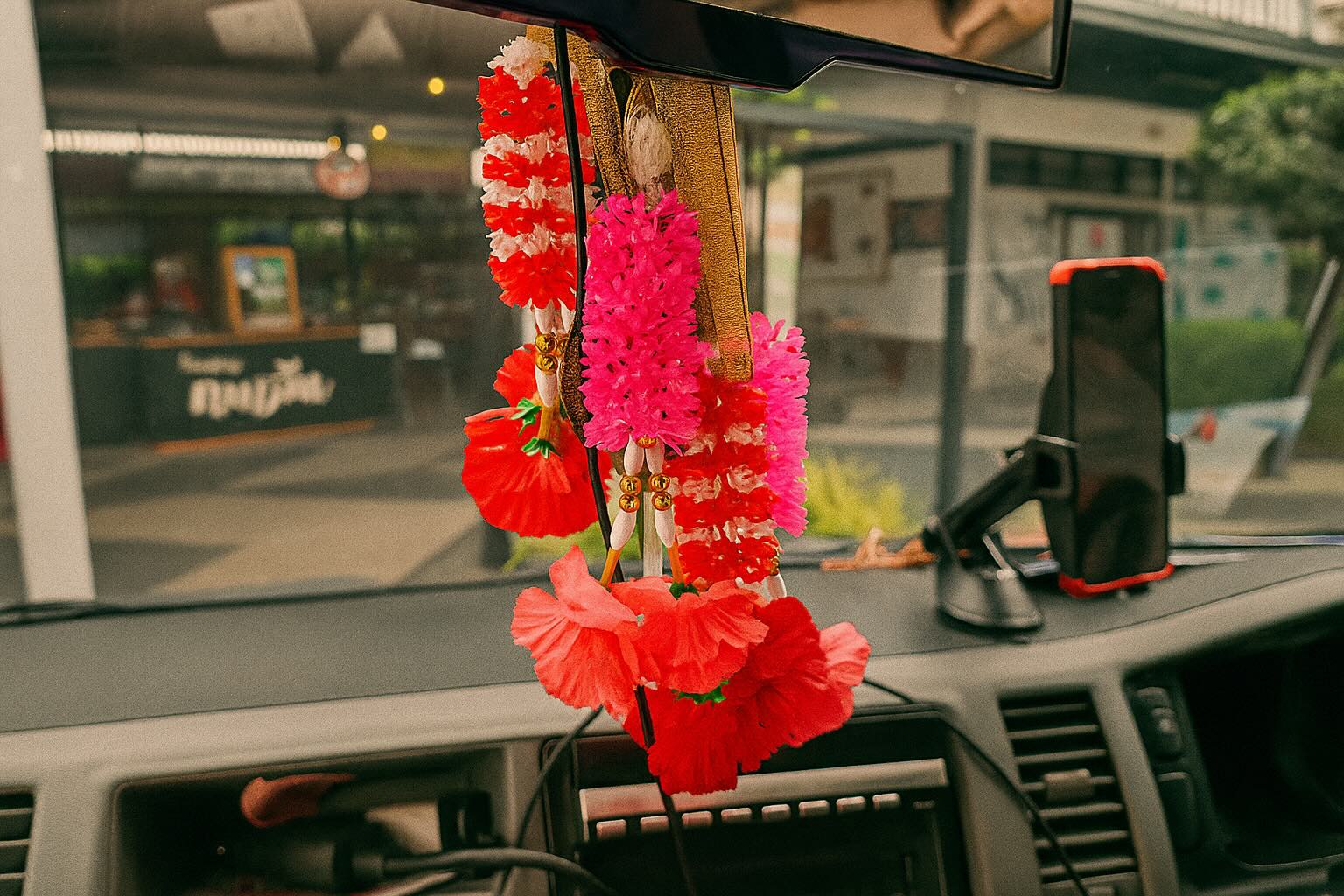
Tuk-tuk drivers hang garlands from their mirrors and on their dashboards in the hope of a smooth ride and generous passengers. In taxis, you’ll often see small amulets, tiny figurines, protective charms, pendants inscribed with mantras, and sometimes even miniature portraits of monks especially revered by the driver’s family. They’re the Thai equivalent of the religious icons that many devout drivers from CIS countries stick to their dashboards.
If you look closely, you may spot an even more unusual sight. The trunks of some large trees are wrapped in bright orange cloth, resembling the robes of Buddhist monks. The cloth serves a ritual purpose, marking a tree ordination ceremony. Members of Buddhist communities perform this ritual to protect nature, especially old trees.
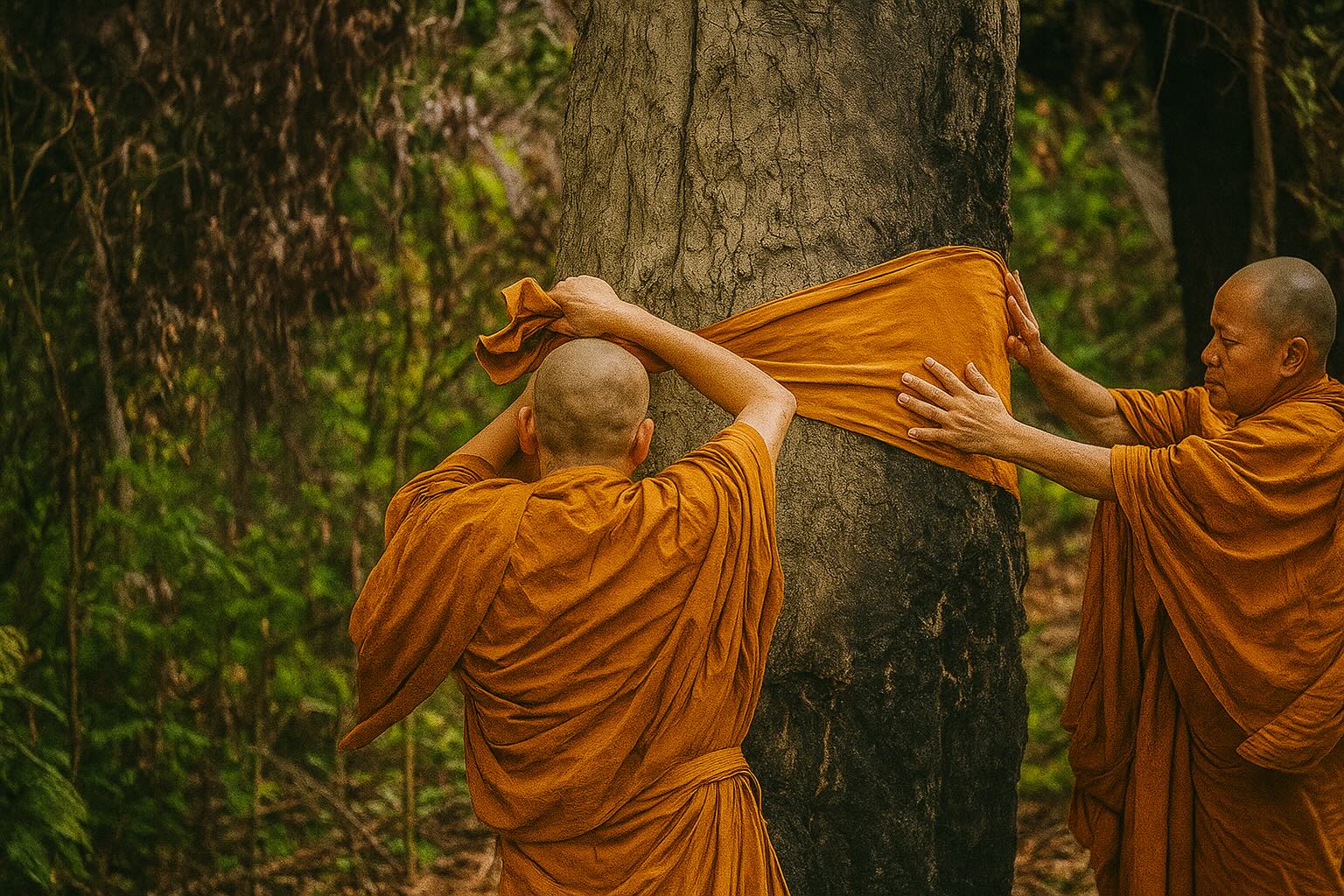
The ceremony includes prayer, a blessing, and symbolic robing. The trunk is wrapped in a saffron-orange robe like those worn by Buddhist monks. From that moment on, the tree takes on a spiritual status. It becomes a “living brother” in a sacred robe, and touching it is considered very bad karma. Harming a monk is considered a grave sin in Buddhism, so cutting down an ordained tree is also forbidden.
During major festivals such as Songkran and Loy Krathong, people make especially generous offerings to the spirits. They float little banana-leaf boats carrying candles, coins, and incense on the water. As the tiny flame drifts farther away, people believe they are letting go of old grievances, misfortunes, and illnesses. Read more about these rituals in Holidays, Festivals, and Major Events in Phuket.
Thai rituals have a mystique of their own, and part of their charm is how little fuss people make about them. People work things out with the unseen world as they would with a neighbor, calmly, respectfully, and with a practical attitude.
For Thais, the earthly and the spiritual are part of the same life. A spirit can live under a tree, and happiness can be found in a plate of curry shared with friends. Read Mai Pen Rai, Sanuk, and Sabai to learn more about the Thai philosophy of life. And of course, visit some Buddhist temples, perhaps on a temple tour.


