Muay Thai: More Than a Martial Art
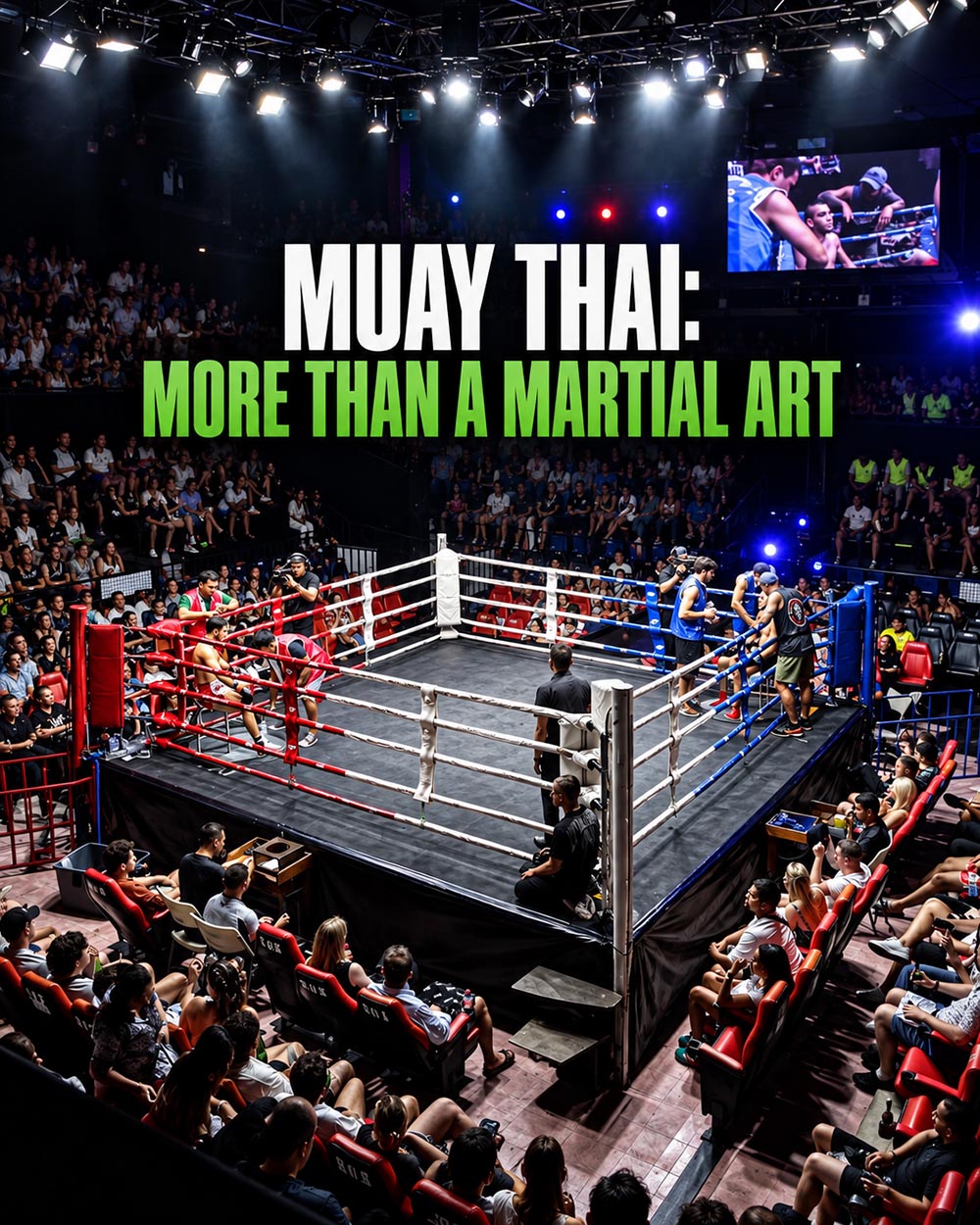
Muay Thai, also known as Thai boxing, is more than just a martial art — it is a cultural phenomenon and a source of pride for Thailand. Muay Thai combines skilled strikes using fists, elbows, knees, and shins, making it one of the most spectacular combat sports in the world.
Make sure to watch a Muay Thai fight — you’ll experience an incredible rush of excitement! For example, at Patong Boxing Stadium. You can book via WhatsApp or Telegram.
History
Muay Thai has a history spanning more than 700 years. This martial art originally developed as a system for defending the Thai kingdom against invasions. Warriors used Muay Thai techniques during the Burmese–Siamese wars in 1767.
Legend has it that after the Burmese captured the Siamese capital of Ayutthaya, a captive Thai fighter named Nai Khanom Tom defeated 10 of the best Burmese fighters in a single encounter. He impressed the Burmese king so much that he was granted his freedom. This episode became a symbol of national pride, and Nai Khanom Tom is considered the “father of Muay Thai.”
The Art of Eight Limbs
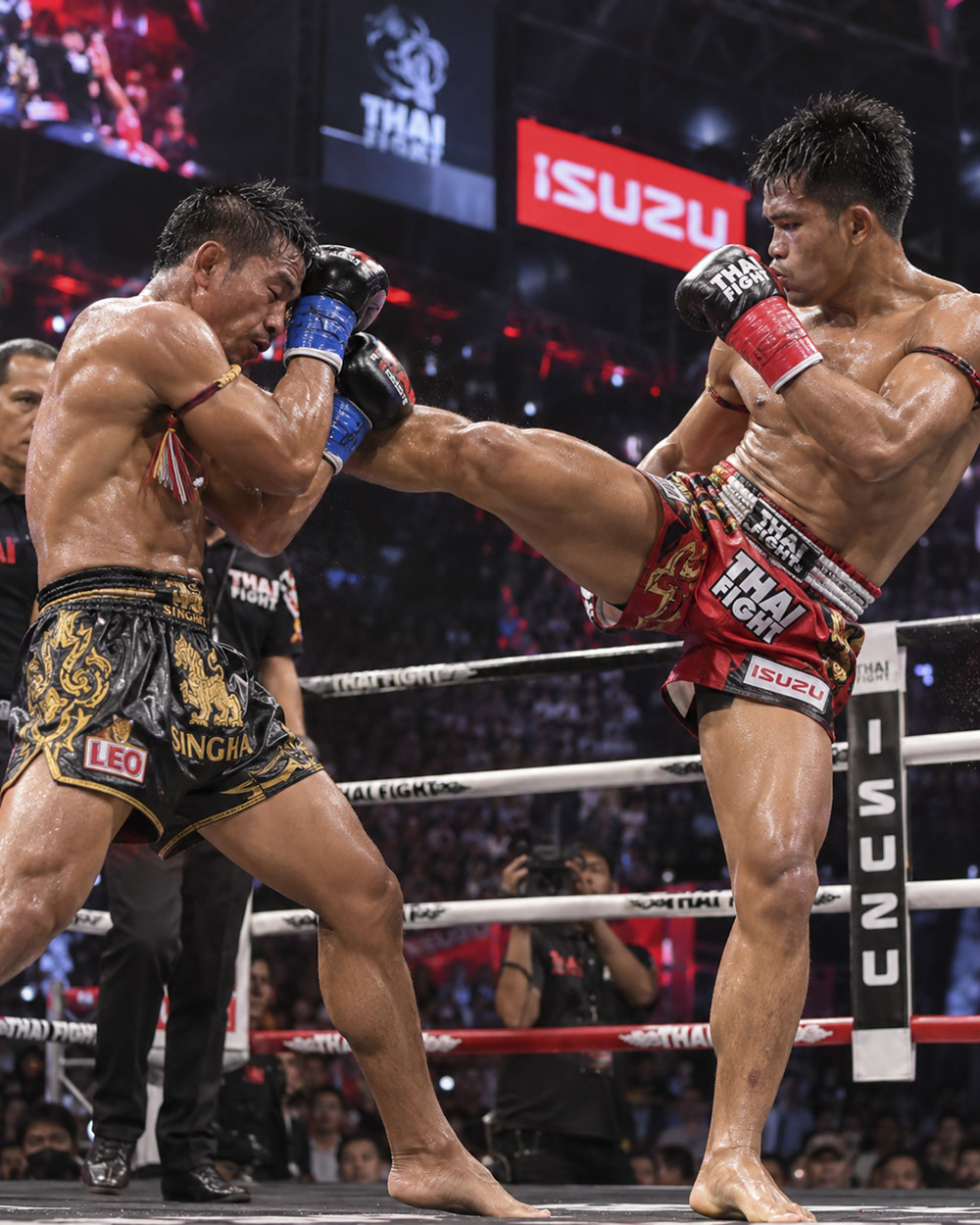
Muay Thai is known as “the art of eight limbs” because of its unique fighting technique, which uses eight main striking points of the body:
- Two fists – for straight punches, hooks, and uppercuts
- Two elbows – for slashing and circular strikes
- Two knees – for strikes to the body and head
- Two shins – for low and high kicks
The concept of “eight limbs” is a fundamental philosophy of this martial art, reflecting the Thai people’s holistic approach to fighting techniques. Unlike Western boxing, which uses only fists, or karate and kickboxing, which primarily use fists and feet, Muay Thai makes full use of the human body’s natural “weapons.” This makes it particularly effective both in stand-up fighting and in the clinch (close-range combat).
Rituals and Spirituality
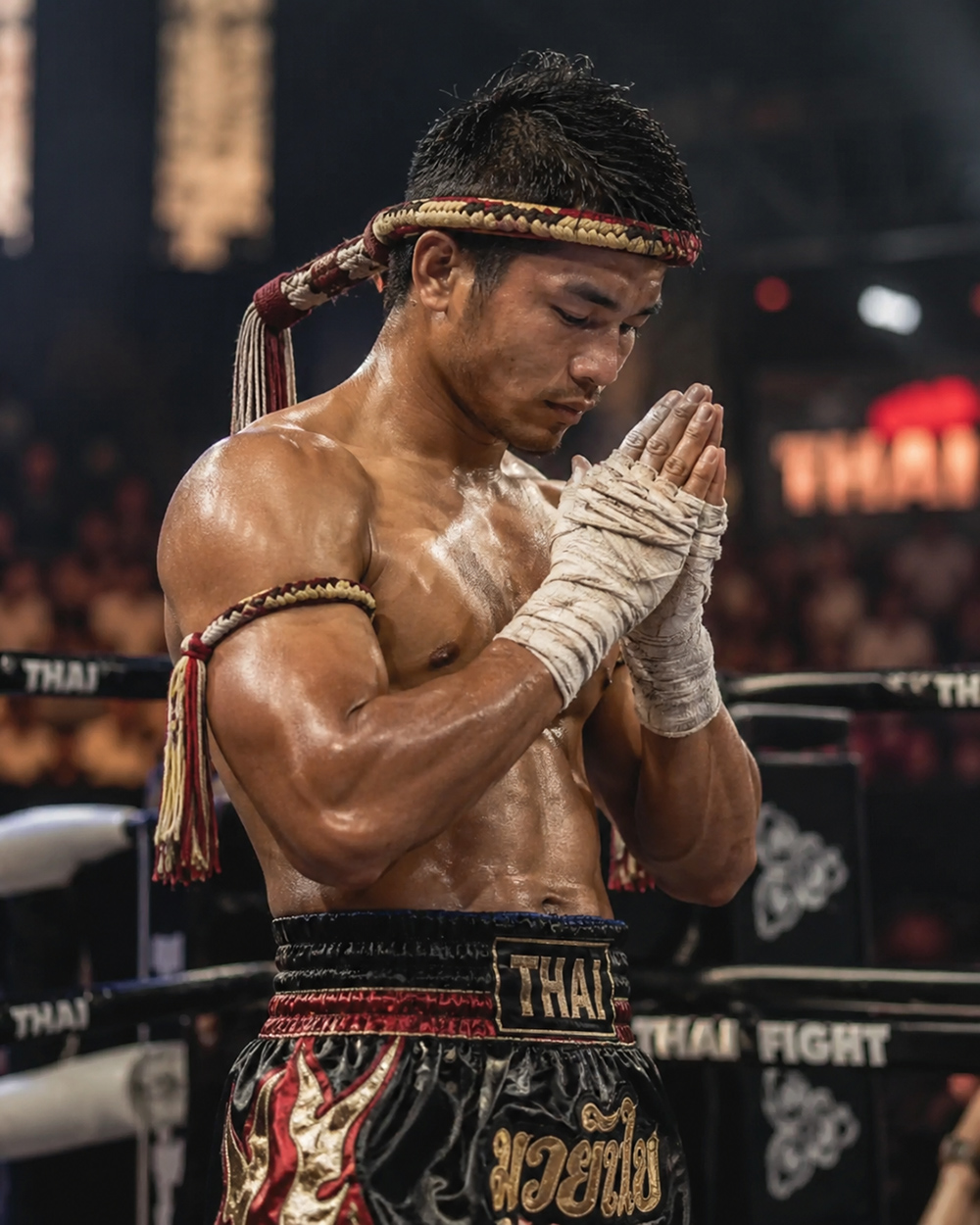
Rituals are an essential part of Muay Thai. It is not a brawl, or even just a sport — it is a philosophy. Before each fight, fighters perform “Wai Kru” and “Ram Muay” — a special ritual dance that combines prayer, respect for teachers, and mental preparation for the fight. Each Muay Thai school has its own unique movements, passed down from teacher to student through generations.
Muay Thai fighters wear a “mongkhon” on their heads — a special headband blessed by monks and regarded as a protective amulet. They also often wear a “prajiad” on their upper arm — an armband believed to bring good luck and protect against injury.
Rules of Muay Thai
Fights take place in a standard boxing ring. Duration: 5 rounds of 3 minutes each, with 2-minute breaks between rounds. Weight divisions are similar to those in boxing (from flyweight to heavyweight), and fighters must wear gloves, a groin protector, Muay Thai shorts, and a mouthguard.
Permitted techniques include punches, as in conventional boxing, as well as elbow strikes, knee strikes, kicks, clinching (grappling), throws, and sweeps. Strikes to the groin, back of the head, and spine are prohibited, as are striking a downed opponent, grabbing the ring ropes, holding an opponent’s leg for longer than one second, eye attacks, biting, spitting, and attacking during a break or after the bell.
Victory is awarded on points (the judges’ decision), by knockout, technical knockout, or the opponent’s disqualification.
Unusual Facts About Muay Thai
- In ancient Siam, Muay Thai fighters wrapped their hands in hemp rope, which they dipped in glue and then coated with broken glass or crushed seashells, making their strikes deadly. This practice, called “Muay Kard Chuek,” was banned in the 1930s with the introduction of modern boxing gloves.
- Traditionally, musicians accompany fights on traditional instruments — a Java pipe (similar to an oboe), small cymbals, and drums. The tempo increases as the action in the ring intensifies, creating a unique atmosphere.
- Historically, fighters began training in early childhood. Many boys from poor families saw Muay Thai as their only way to escape poverty and support their families.
- Cambodians would dispute the Thai account of this martial art’s origins. They claim that their fighting style, “Pradal Serey,” formed the basis of Muay Thai, rather than the other way around.
- Women’s Muay Thai only began to develop actively in Thailand in the 1990s. For a long time, women were not allowed to compete. A breakthrough came in 2017, when Lumpinee Stadium permitted women’s bouts for the first time.
Cultural Significance in Modern Thailand
For Thai people, Muay Thai is a powerful symbol of national identity and pride. Great Muay Thai fighters are revered as national heroes. To this day, Muay Thai remains a path to upward social mobility for children from poor provinces. Successful fighters can support their families and obtain an education.
However, this system also has a dark side: fights involving children raise serious safety and ethical concerns.
Today, Muay Thai has spread beyond Thailand’s borders and become a global phenomenon. Muay Thai techniques are incorporated into the training of mixed martial arts fighters around the world.
Muay Thai in Phuket
Phuket is a popular destination in Thailand for those who want not only to watch fights but also to try Muay Thai themselves. Here, you can find both comprehensive training camps for professionals and schools offering classes for beginners.
You can attend a single training session, take several classes, or sign up for a full training camp. No special level of fitness is required for your first class: the trainer will adapt the intensity to your ability.
You can find Muay Thai schools in Phuket in the Martial Arts section of our website.
And if, after training, you feel like seeing Muay Thai in a real fight, you can head to one of Phuket’s stadiums and watch the bouts live. You can do this at Patong Boxing Stadium Sainamyen or Bangla Boxing Stadium.