First Time in Thailand: Fears, Myths, and Reality

Here's how to prepare for your first trip to Phuket to make the most of it from your very first day.
Contents
1. Fear №1: “It’s Asia — it must be unsafe”
2. Fear №2: “I won’t understand anything — the language, the food, the rules”
3. Fear №3: “It’s too hot in Phuket, I won’t be able to handle it”
4. Fear №4: “What if I get food poisoning? Thai food is too spicy, and there’s poor hygiene everywhere”
5. Fear №5: “I’m afraid of insects, snakes, and other exotic creatures”
6. Fear №6: “What if I get sick? Isn’t the healthcare system different?”
7. Fear №7: “What if I’m traveling alone and feel lonely?”
8. How to prepare for a trip to Thailand
For most people, a first trip to Thailand begins the same way — with excitement mixed with a bit of anxiety. An exotic country, a different climate, unfamiliar food, unusual customs, and a language you don’t understand. Questions keep running through your mind: “Is it safe there?”, “What if I get sick?”, “What if I get scammed?”, “How am I supposed to figure everything out?” Spoiler alert: you will. And most likely, by the second day, you’ll catch yourself thinking, “Why didn’t I come here sooner?”
This article is for first-time visitors to Thailand. We’ll address the most common concerns, explain how to prepare for your trip, and show why Thailand is one of the most comfortable and beginner-friendly destinations for a first journey to Asia.
Fear №1: “It’s Asia — it must be unsafe”
Many travelers, especially from Europe and North America, arrive in Thailand with the impression that Asia is somehow a “different planet” when it comes to safety. This perception is shaped by a variety of factors.
For one, movies and TV shows often portray Asian cities through the lens of crime and impoverished neighborhoods, creating the impression that danger lurks around every corner.

Second, news reports and stories about scams or political protests in certain countries sometimes reach potential travelers and are perceived as the norm. Our brains tend to generalize: if a crime happens somewhere in Asia, it can create the impression that the entire region is unsafe.
The country's exotic appeal also plays a role. An unfamiliar climate, a different culture, a language you don’t understand, and unusual food can all heighten the feeling of being in a foreign environment. For first-time visitors, even small things may seem like potential threats. Persistent street vendors, inflated taxi fares, or occasional reports of theft can create the impression that you need to stay on guard at all times.
In reality, Thailand is one of the safest countries for tourists. According to the Global Peace Index, Thailand typically ranks in the upper half of global safety rankings and performs significantly better than many popular tourist destinations when it comes to violent crime. In addition, tourist regions — Phuket included — depend heavily on tourism and work hard to maintain their reputation.
We also have a detailed article on this topic: “Thailand: A Third-World Country or a Safe Haven?”
Yes, as in any tourist destination, pickpocketing can occur in crowded areas. Minor scams, such as taxis refusing to use the meter or charging inflated fares, are also common. However, these issues can usually be avoided by following a few simple rules: don’t leave valuables unattended, and avoid carrying large amounts of cash.
Phuket can also present risks related to real estate scams or unfavorable currency exchange practices. To avoid these problems, use only trusted and reputable services:
Fear №2: “I won’t understand anything — the language, the food, the rules”
Good news: Thailand has long been adapted for foreign visitors. In tourist areas, English is widely spoken. Communication is not an issue in hotels, cafes, spas, or shops, and even if you visit a very authentic local cafe, the menu will usually be translated or at least include pictures.
Thais are aware that their language is complex and not widely spoken outside the kingdom. That’s why tourists are not expected to know Thai. At most, a few polite words are enough. For that, you can use our Thai phrasebook for tourists in Phuket.
In general, Thai people are very calm and friendly, but there are a few things worth remembering:
- you should not touch people on the head
- it is not customary to raise your voice or engage in confrontation
- respect for the King and religion is an absolute rule
That’s the basics. There are also other rules that should be followed in Thailand to avoid unpleasant situations. We covered this in detail in our article “What Is Forbidden in Thailand.”
Fear №3: “It’s too hot in Phuket, I won’t be able to handle it”
Yes, it is hot here. Sometimes very hot. And it is also humid. But the weather depends directly on the time of year you visit Phuket. To stay informed about the average temperatures and rainfall, read our article “Phuket Weather by Month.”
Most tourists come to Phuket during the high season, when the island is at its hottest, so in the first few days you may experience an adjustment period: drowsiness, a “foggy head” feeling, and quick fatigue. This is normal.
The body adapts within 2–3 days. Drink more water, don’t plan an active itinerary for your first day, and treat the heat as part of the journey rather than as an enemy.
And besides, all hotels have air conditioning. And if it gets too hot outside, you can step into any 7-Eleven store — it’s always cool inside.
Fear №4: “What if I get food poisoning? Thai food is too spicy, and there’s poor hygiene everywhere”
Thai cuisine is one of the best in the world, and also one of the most flexible. It’s important to understand that spicy food in tourist areas is not the default, but an option, and the phrase “no spicy” is understood everywhere.
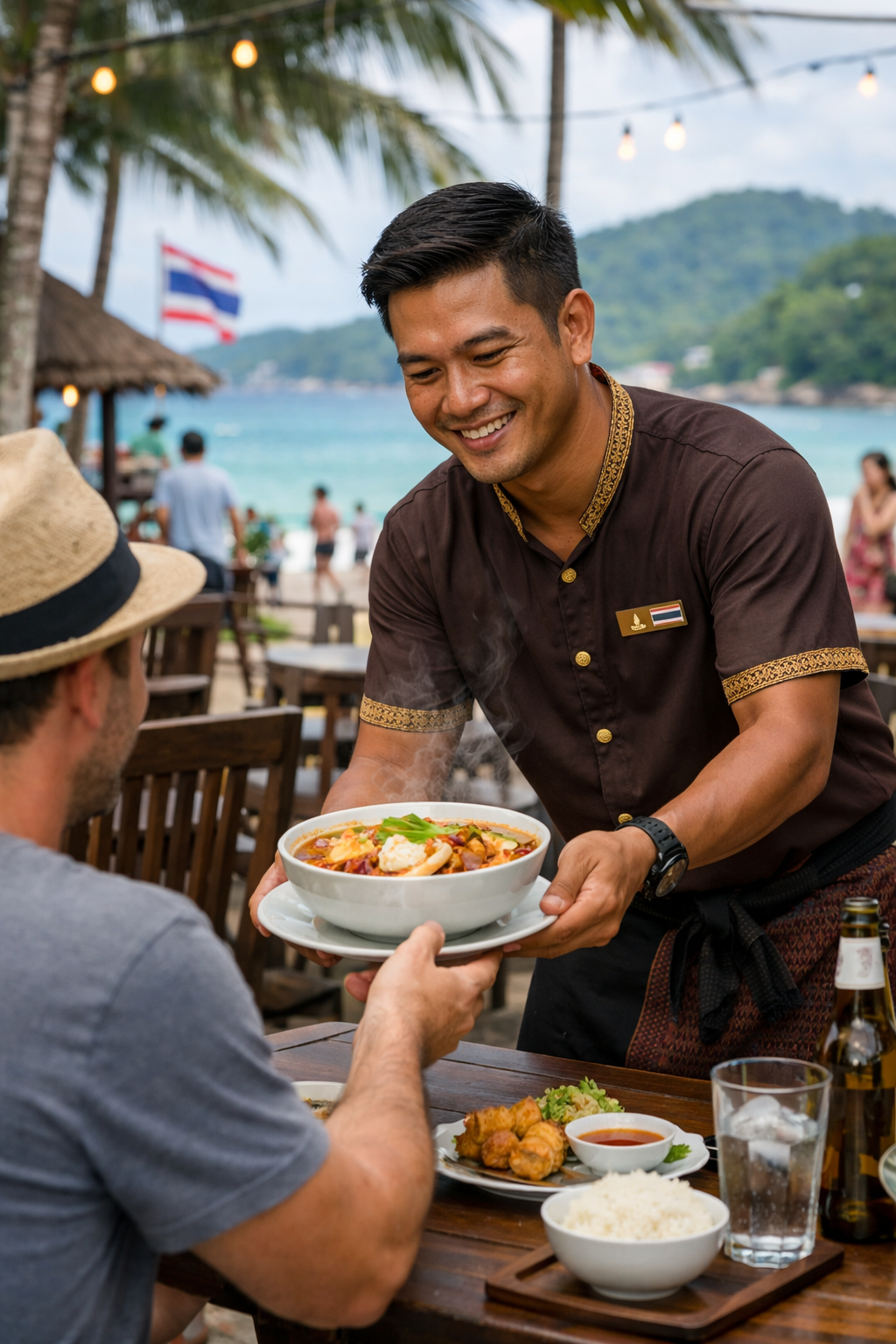
Tips for first-timers:
- don’t start with street food on your very first day
- choose cafes with a good flow of customers
- drink only bottled water
- avoid adding ice to drinks in questionable places
And if Thai cuisine doesn’t agree with your stomach at all, there is a solution: Phuket has plenty of restaurants offering other world cuisines — European, Italian, Russian, Turkish, and more. Check out our “By Cuisine” selection and choose what suits you.
Fear №5: “I’m afraid of insects, snakes, and other exotic creatures”
This point scares almost everyone — especially those who have never been to the tropics before. But in reality, there is nothing to worry about: hotels and condominiums are regularly treated for insects, and you are very unlikely to encounter venomous snakes on the beach or in the city.
For the brave: we also have articles such as “The Most Dangerous Venomous Snakes in Phuket,” “Dangerous Insects in Phuket,” and “Dangerous Marine Creatures of Phuket.” However, these informational materials are meant simply to keep you informed, not to scare you.
In reality, the most dangerous creature you are likely to encounter in Phuket is a mosquito.
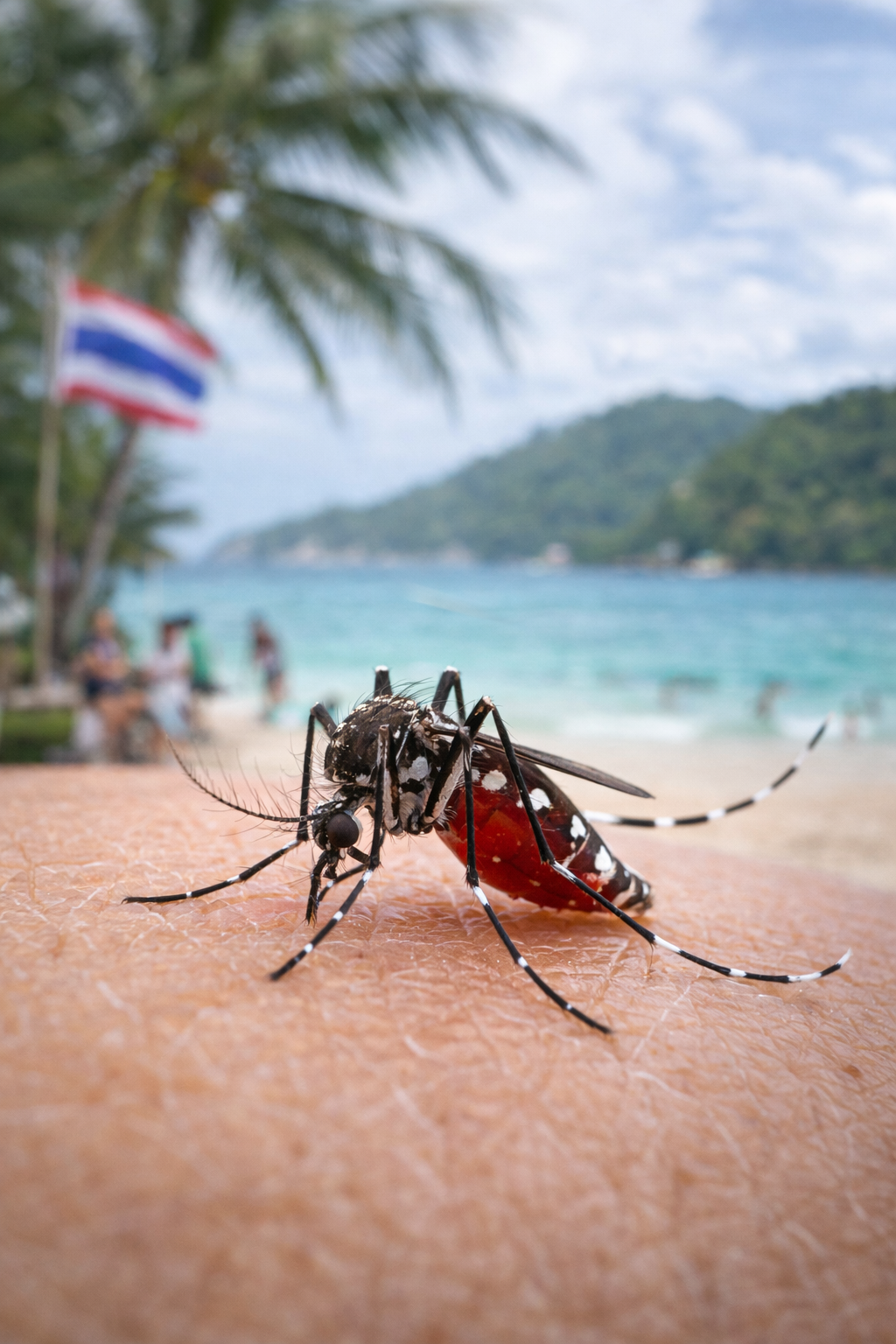
The danger they pose is that they can carry serious diseases, including dengue fever. You can read more about this in the article “Mosquito: The Most Dangerous Creature in Phuket.” However, recently there is some good news: dengue has become a declining threat in Phuket due to large-scale mosquito control efforts.
Fear №6: “What if I get sick? Isn’t the healthcare system different?”
Thailand is one of the global hubs of medical tourism and one of the leading Asian countries in this field. Healthcare services in private clinics in Phuket and Bangkok are of a very high standard, and doctors speak English.
Check out the Hospitals page, where we have compiled all the best hospitals and clinics in Phuket.
To feel at ease, simply get medical insurance — it will be your safety net in case of emergencies.
We’ve found a reliable insurance company in Phuket for you. Fill out the form, and we’ll forward your request — they’ll contact you to provide details on the terms and pricing.
And bringing an entire first-aid kit from home is unnecessary — everything you need is available in pharmacies and even supermarkets (except prescription medications). Read more in the articles “Thai Pharmacy: Essential Medicines” and “7-Eleven First-Aid Kit.”
Fear №7: “What if I’m traveling alone and feel lonely?”
This fear is rarely voiced out loud, but many people have it — even those who are not traveling solo. A new country, a different culture, everything around you unfamiliar, and it can feel like you are disconnected from your usual world.
In practice, Thailand is one of the most comfortable countries for solo travel and first-time trips. It’s very easy to be alone here without feeling lonely. Thai people are open to interaction but not intrusive: they won’t overwhelm you with questions, but they are always ready to help. In tourist areas, there are plenty of people who are also visiting for the first time, and conversations can easily start while waiting in line for coffee, on the beach, or during an excursion.
The easiest way to meet like-minded people is in places listed in the “Where to Party” section: bars, nightclubs, and karaoke spots — there’s always someone you can strike up a conversation with.
In addition, the overall atmosphere of the country greatly reduces internal tension. There is no pressure of expectations here, no judgment, and no requirement to fit into a certain image. You can simply be yourself — at your own pace, with your own emotions.
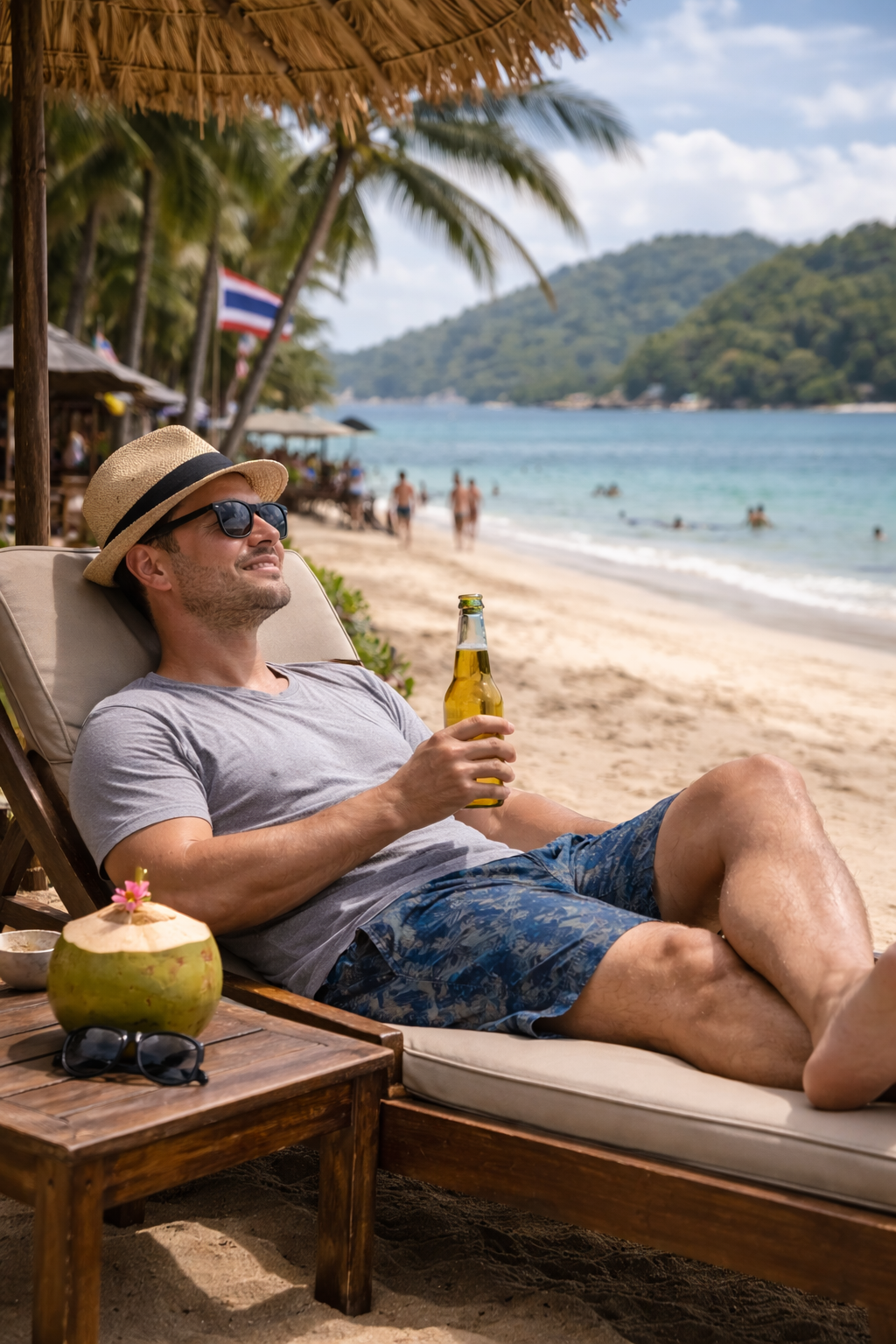
Very often, it is during a first trip to Thailand that people experience a rare feeling for the first time: comfortable solitude. A state where you feel good being on your own, yet not isolated from the world. And even if you arrived alone, you will almost always leave with the feeling that you were not alone.
How to prepare for a trip to Thailand
Even if you have anxieties and fears before your trip, good preparation can reduce them almost to zero.
1. Study the country in advance
Read about the regions of Thailand to understand the climate, transportation, and cultural differences.
2. Plan your route
- Create a rough day-by-day plan: which beaches, excursions, temples, and restaurants you want to visit.
- Leave buffer time between transfers so you don’t feel rushed or stressed.
- For more complex routes (islands, national parks), it’s better to book an excursion or transfer in advance. Or even better, go to our “Excursions” page.
3. Prepare your documents and finances
- Make copies of your passport, visa, and insurance policy — both digital and printed.
- Keep your money in different places: cash, bank cards, and an e-wallet.
For currency exchange, use only trusted services. We’ve written about which ones to use on the “Money Exchange” page.
4. Take care of mobile connectivity
The easiest option is to set up an eSIM in advance — we’ve put together a short guide to the main providers and prices, which you can read here.
5. Buy travel insurance
- Medical insurance that covers transport accidents and active leisure is essential for a worry-free trip.
- Make sure to check whether your insurance covers water activities, scooter riding, and other extreme experiences.
We’ve found a reliable insurance company in Phuket for you. Fill out the form, and we’ll forward your request — they’ll contact you to provide details on the terms and pricing.
6. Prepare yourself mentally
- Understand that fear is a normal reaction to an unfamiliar country.
- Imagine possible situations and think in advance about how you would respond.
We have an “Emergency Contacts Guide in Phuket” — save it and stay calm.
In practice, a first trip to Phuket almost always leads to a second one. Because the island is incredibly friendly, comfortable for independent travel, diverse, and relaxing. It’s easy to be a tourist here. There’s no need to “survive” or constantly stay on alert. You can simply be — and enjoy it.
To get even more out of your stay in Phuket, check out the sections below: