Unusual Thai Cultural Traditions
Why are spirits of trees feared in Thailand, why do people bring water to small roadside altars, and is it really true that one shouldn't get a haircut on Wednesdays?
Thai culture is full of nuances, superstitions, rituals, and traditions that sometimes cause slight bewilderment among foreigners. Let's dive into the world of unusual Thai cultural traditions — get ready to be surprised!
The Land of Smiles — And Not Just Out of Politeness
Let's start with the most famous Thai trait — the smile. Thailand is often called the "Land of Smiles," but behind this simple form of communication lies an entire language. For Thais, a smile can express joy, gratitude, confusion, an apology, and even irritation.
There are more than a dozen shades of the Thai smile, and only an experienced person can understand what exactly the speaker wants to say.
In Thailand, a smile is a way to save face and maintain social harmony. Even if a Thai person dislikes something, they are more likely to smile than to express their discontent openly. Conflict is almost a taboo. So, if you see a smiling Thai, don't rush to rejoice — it might not be a sign of joy at all, but rather an attempt to defuse a tense situation.
Guardian Spirits — Everywhere
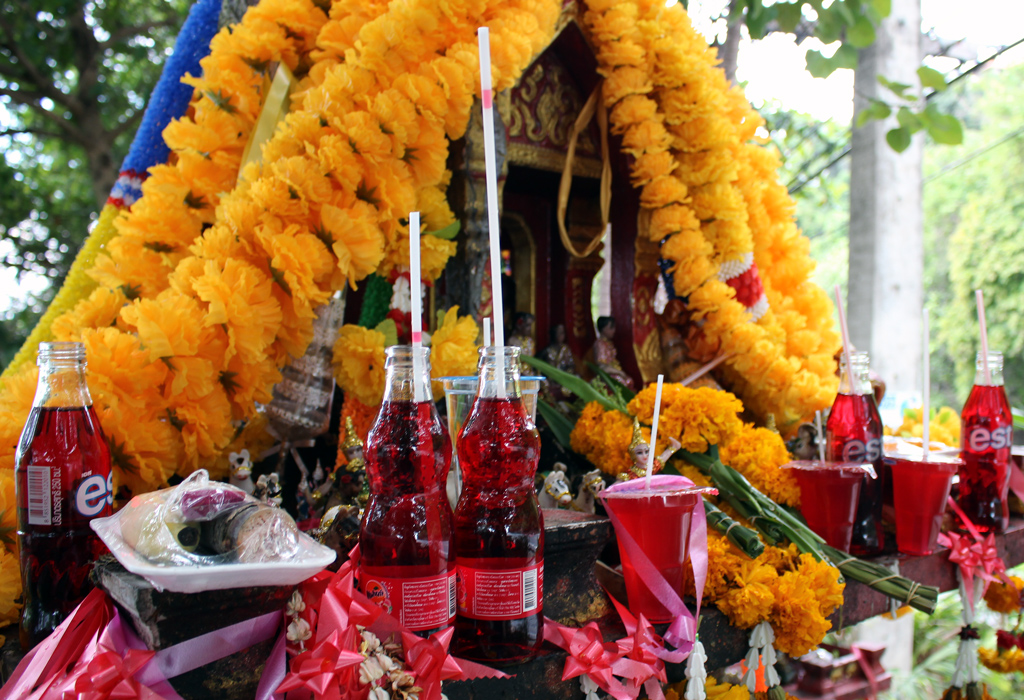
Another feature of Thai culture is a strong connection to the spirit world. Despite Buddhism being the country's official religion, Thais actively practice animism — the belief in spirits inhabiting houses, trees, crossroads, and even cars. This is precisely why in every corner of Thailand you can see the so-called "spirit houses" — small altars placed near buildings and trees.
Such houses are built for the spirits that "lived" on the land before the building appeared there. To avoid angering them, the owners "rehouse" the spirits into a special house and bring them offerings — fruit, sweets, and water. If the spirit likes its new home, it will protect the building and the people inside. But if not — expect trouble.
Don't be surprised if you see an ornate spirit house decorated with garlands and food near a business center or a luxury hotel. Thais can be modern and progressive, but they prefer not to argue with the spirit world.
Ashes Under the Threshold
In some parts of Thailand, especially in rural areas and traditional families, you may encounter the custom of burying the ashes of deceased relatives under the threshold — usually by the front door or under the stairs. This may seem strange to people from other cultures, but for Thais, there is a profound meaning behind this gesture.
- First, Thais believe that the spirits of ancestors continue to watch over the family's life and can either help or, conversely, cause harm if they are forgotten. Keeping the ashes under the threshold symbolizes that the deceased still "lives" in the house, watches over the family, and protects it.
- Second, the threshold, in traditional beliefs, is a magically significant place — a kind of boundary between the outside world and the inner one, between a safe space and everything that may come from beyond. The relative's ashes by the entrance essentially reinforce this boundary, guarding the home against evil spirits and bad influences.
- Third, according to Buddhist concepts, it is important for the soul of the deceased to find peace. And according to folk beliefs, spirits often "attach" themselves to places where they lived. Therefore, returning the ashes to the ancestral home is a way to give the soul a sense of completeness and belonging.
By the way, this is not a public tradition — often, even the guests of the house don't know about such a "neighbor" under the threshold. But for family members, it can be an important element of their inner world: the knowledge that their ancestors are near.
Alternatives, of course, do exist: in cities and among more modern Thais, this custom is encountered less frequently. Instead, ashes are kept in family chedis (small stupas on temple grounds), in temple columbaria, or a small altar with a photograph and offerings is placed inside the home.
Trees as Dwellings for Spirits
According to Thai animistic beliefs, spirits live in trees. The most well-known among them are:
- Nang Tani — a female spirit who lives in banana trees. She usually appears as a beautiful woman in green clothing. If you treat her well, she may help you. If you offend her — it's better not to know what will happen.
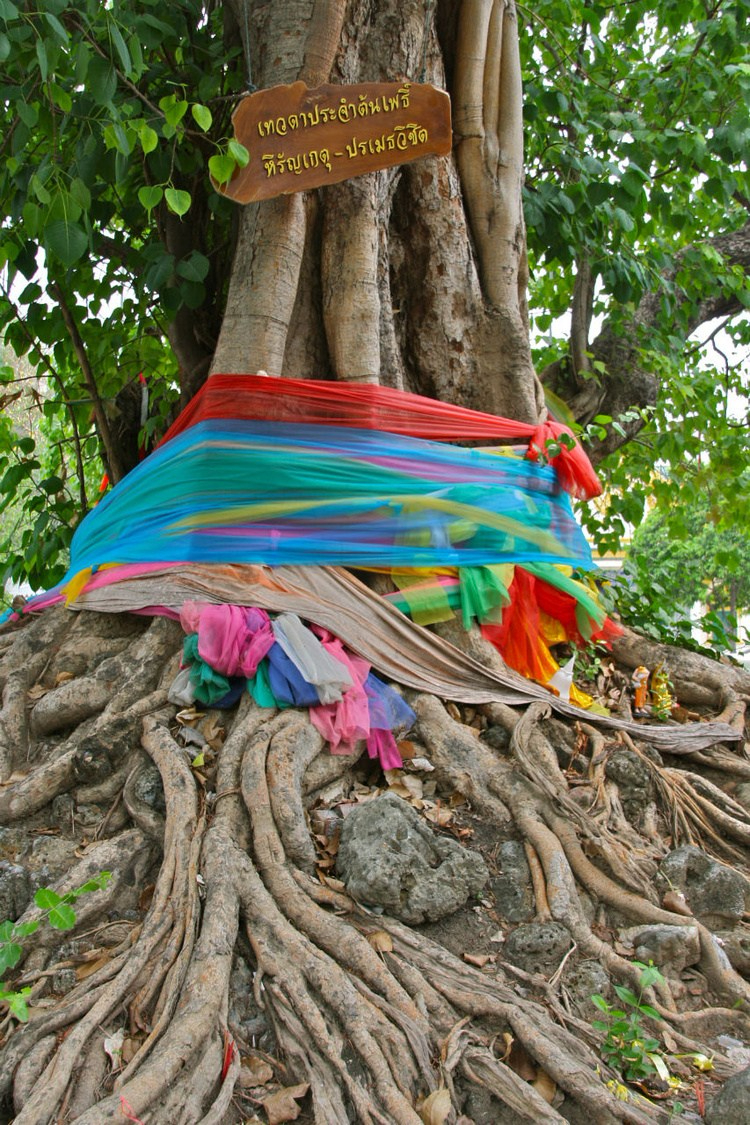
- Nang Ta-khian — a spirit inhabiting the ta-khian tree (a tropical tree with dense wood). It is one of the most "inhabited" trees. People bring offerings there, tie cloth around it as they would in a temple, and pray.
According to popular belief, cutting down a tree without warning the spirit is extremely dangerous. This can lead to illness, misfortune, or even death.
That is why, before felling a tree, Thais bring offerings — flowers, incense, and food — and ask the spirit for permission out loud, as if talking to a living being. Sometimes they also invite a monk to read a special prayer and "release" the spirit from the tree.
If you see a tree wrapped in bright fabric (usually red, yellow, or green), you are looking at a sacred tree. It is not touched or pruned, and people even try to avoid touching it without due respect. Under the tree, you may find figurines, flowers, and water — all of these are offerings to the spirit.
Some developers in Thailand, before starting construction, walk around the plots with the spirits of the trees so as not to disturb the strong energies. Sometimes, a project is simply relocated — just because "the tree with a spirit does not give permission."
Wedding Rites: Marriages Blessed by Spirits
A Thai wedding is not just a registration and a celebration. It is an entire ritual consisting of numerous rites. One of the most interesting elements is called "Rod Nam Sang" — a blessing of the newlyweds with water. Relatives and guests take turns pouring water over the hands of the bride and groom while uttering kind wishes. The water flows from a special horn, which symbolizes purity and fertility.
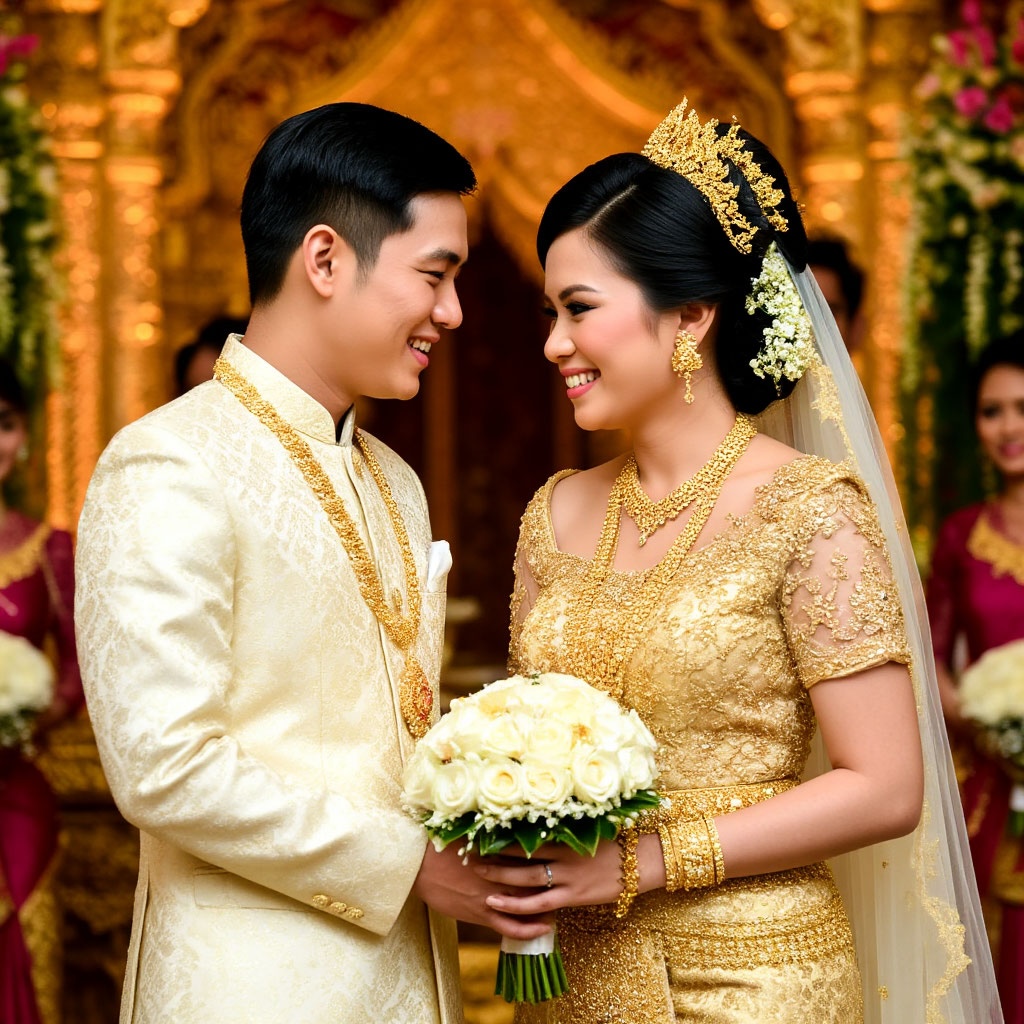
Before this, a "spirit consent" ceremony is often held. The bride's relatives may invite a monk or a shaman to appease the spirits of the land and the ancestors, and to receive their blessing for the marriage. It is believed that without the spirits' approval, family life may be unhappy.
By the way, Thais do not have a tradition of wearing wedding rings. Although you can see them in modern Thailand, especially in major cities, many couples prefer traditional symbols of love and blessing.
Flying Beads, Magical Amulets, and Tattoos
Thais adore amulets. Small figurines of Buddha, necklaces, and images of monks — all of these are worn on the body, placed in cars, and hung over the front door. It is believed that an amulet can protect against accidents, illnesses, and evil spirits. Sometimes one person wears several amulets at once — just in case.
A special place is occupied by the magical Sak Yant tattoo — a mysterious image applied to the body by a monk or a master with a special prayer. It is believed that these tattoos grant protection, strength, and luck, and can even make a person invisible to their enemies. But for the tattoo to work, one must follow certain rules: not eat specific foods, not cheat on one's partner, not steal, and so on.
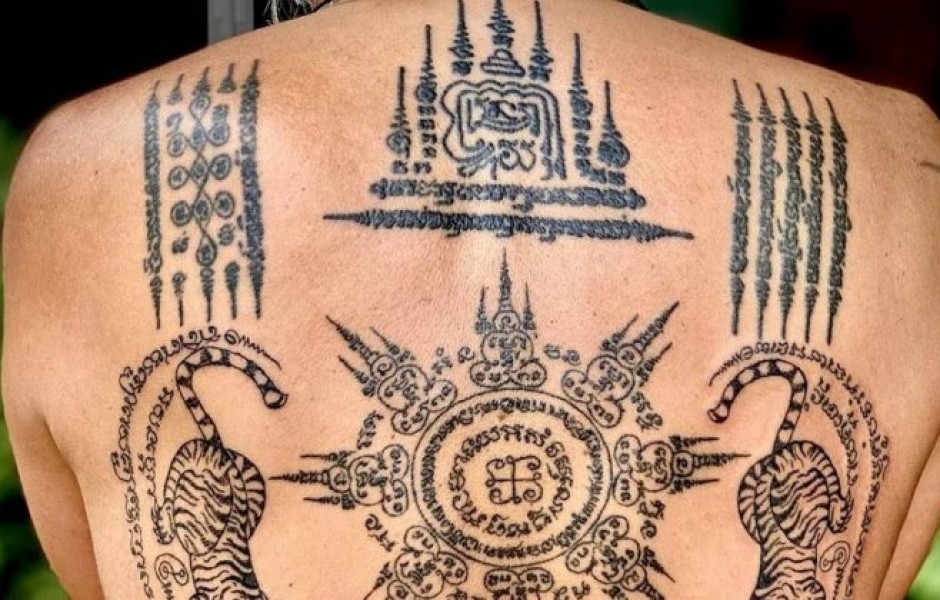
One can receive such a tattoo only in special temples — they are usually located in Bangkok or in the north of Thailand.
Festivals You Won't See Anywhere Else
Thailand is full of unusual festivals where traditions, Buddhism, and folk beliefs intertwine into a vibrant spectacle.
Songkran is the Thai New Year, which takes place in April. The streets become a complete water frenzy. People splash water on one another, symbolically washing away old grievances and misfortunes. Tourists usually perceive Songkran as a fun party, but for Thais, it is also a family holiday, a time for visiting temples and honoring their ancestors.
Read more about Songkran here.
Loy Krathong is a romantic festival in November when people release miniature boats adorned with flowers, candles, and incense onto the water. It is a sign of saying goodbye to the bad, expressing gratitude to the river, and a hope for purification and a bright future.
You can read about Loy Krathong in this article.
Fear of the Number 6
In Thailand, the number 6 can cause anxiety, especially in certain combinations. For example, a phone number or a license plate with multiple sixes in a row may be considered unfavorable. Some people even pay extra for "lucky" numbers specifically to avoid bad influence.
The reason lies in a superstition related to the sound of numbers and Chinese influence — in certain contexts, six can be associated with decline.
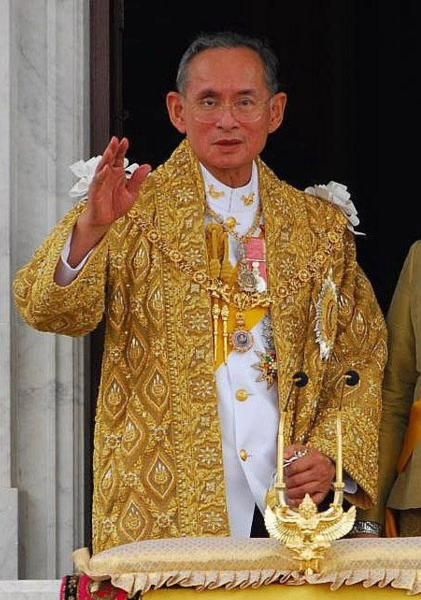
In contrast, the number 9 is held in high esteem by Thais. Firstly, in the Thai language, nine sounds like "kao", which means "to move forward." Nine is a symbol of progress and development. Secondly, the number 9 is associated with Thailand's most revered king — Rama IX. His name is also considered synonymous with moving forward.
Superstitions — At Every Turn
Thais are a very superstitious people. For example, one shouldn't cut their hair on Wednesday — it brings misfortune. One shouldn't give a clock as a gift — it measures the time until separation. It is not advisable to build a house without consulting a monk: an improper location is a direct path to misfortune.
Names can even be changed if a person has no luck. Thais often wear nicknames (often English ones or simply funny ones) to confuse evil spirits. Someone was an "unlucky Somchai," became a "lucky Jack" — and things started looking up.
In general, if you find yourself in Thailand — don't rush to judge if you see something strange. There is likely a millennium-old tradition behind it, in which Buddhism, magic, and the deepest respect for the invisible world are intertwined.