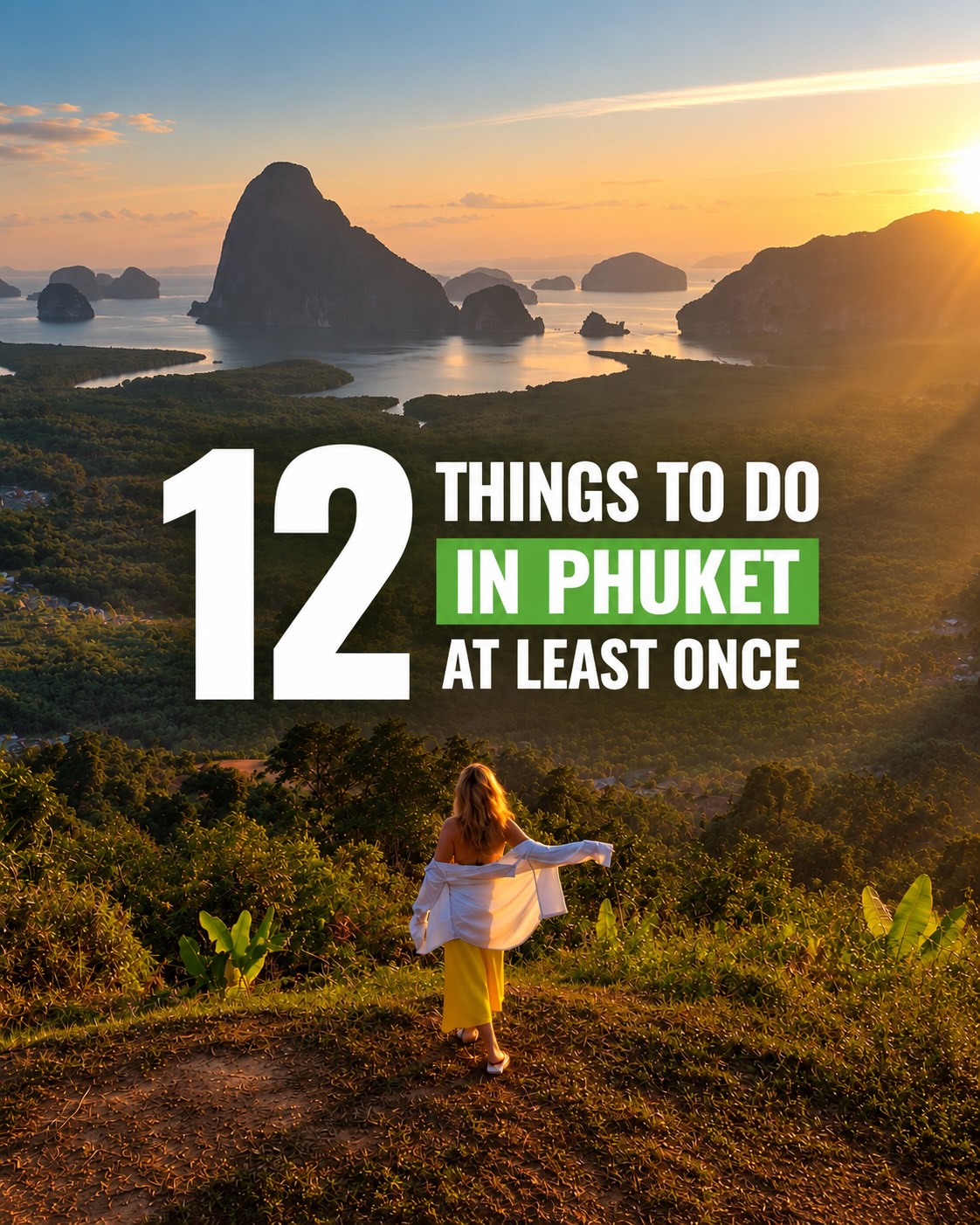
12 Things to Do in Phuket at Least Once
There’s the typical Phuket you see in guidebooks: beaches, viewpoints, island tours, and restaurants. But there’s another side to it — one that only reveals itself when you venture off the beaten path.
Spend a night in the jungle, listen to the sounds of a mangrove forest, swim with glowing plankton, watch the sunrise over the bay… Phuket offers plenty of unexpected experiences that could become the adventure of a lifetime.
We’ve put together 12 ideas and explained how to make them happen.
1. Spend a Night in the Jungle
For at least one night, trade the pool, hotel breakfast, and other familiar comforts for the indescribable feeling of being at one with nature.
The ideal option is camping, where the evenings are truly dark, the hum of motorbikes gives way to cicadas and nocturnal birds, and you wake up to the sounds of the forest instead of your phone alarm.
Komol’s Corner Camping
Geo on Google Maps (Phang Nga)
Website
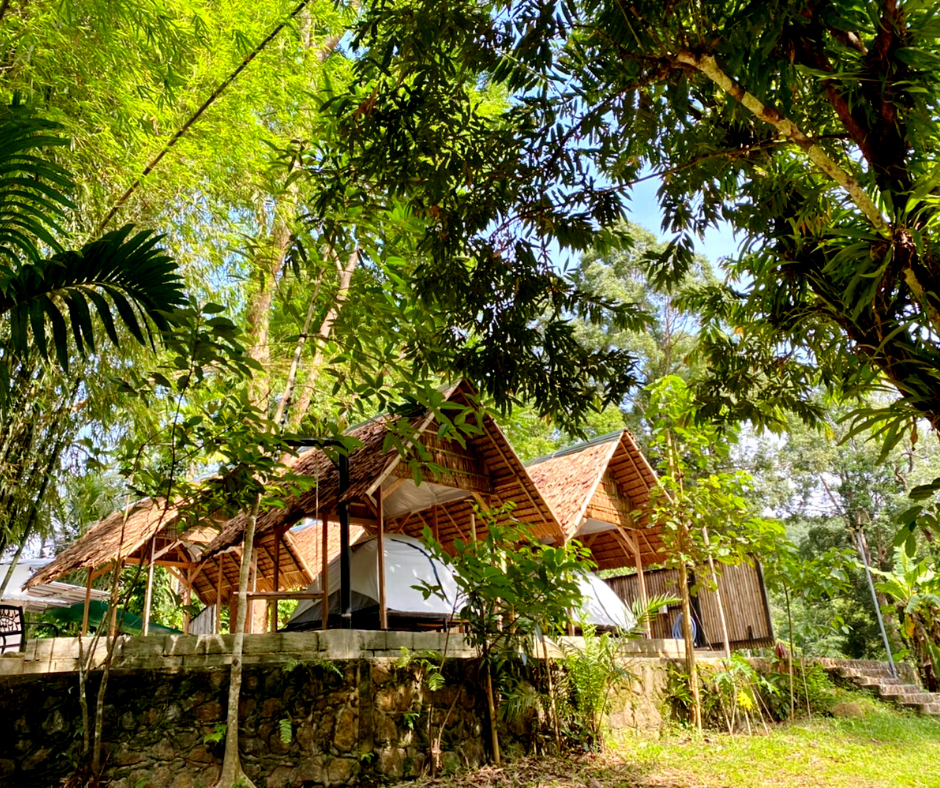
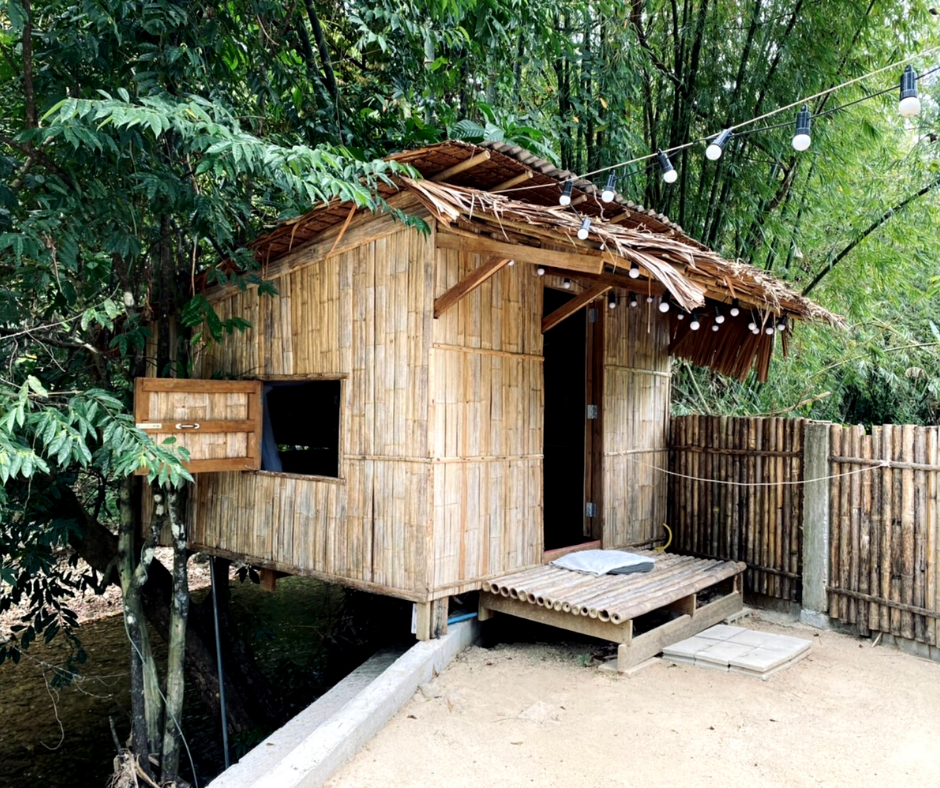
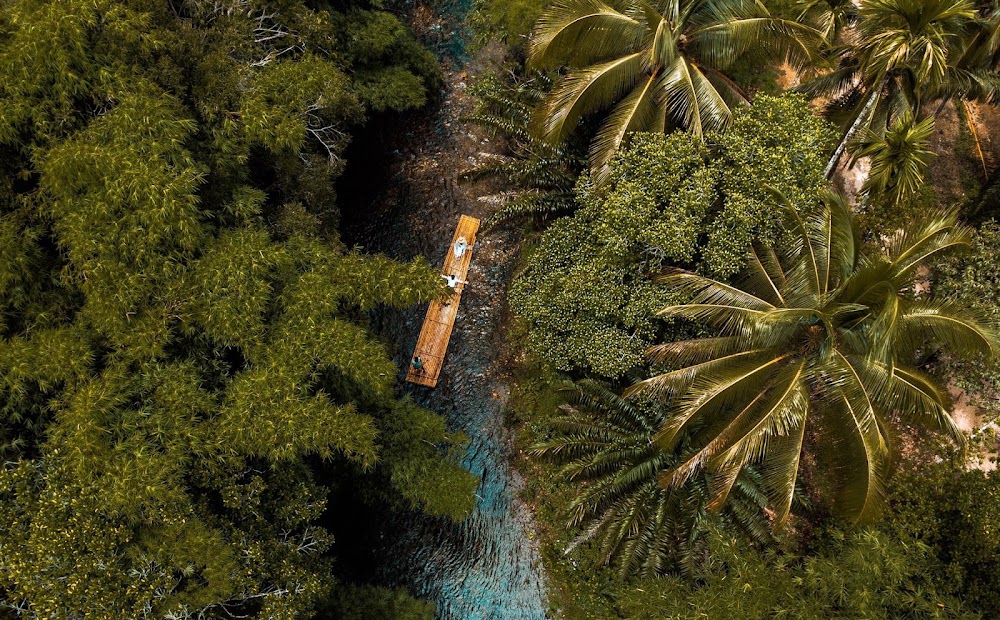
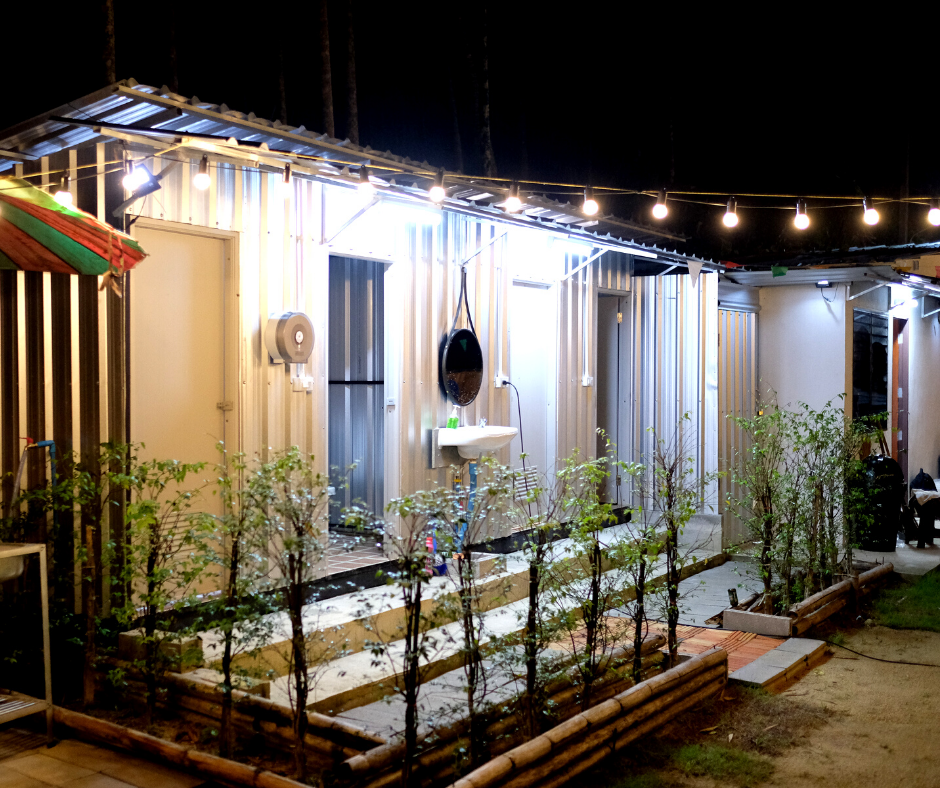
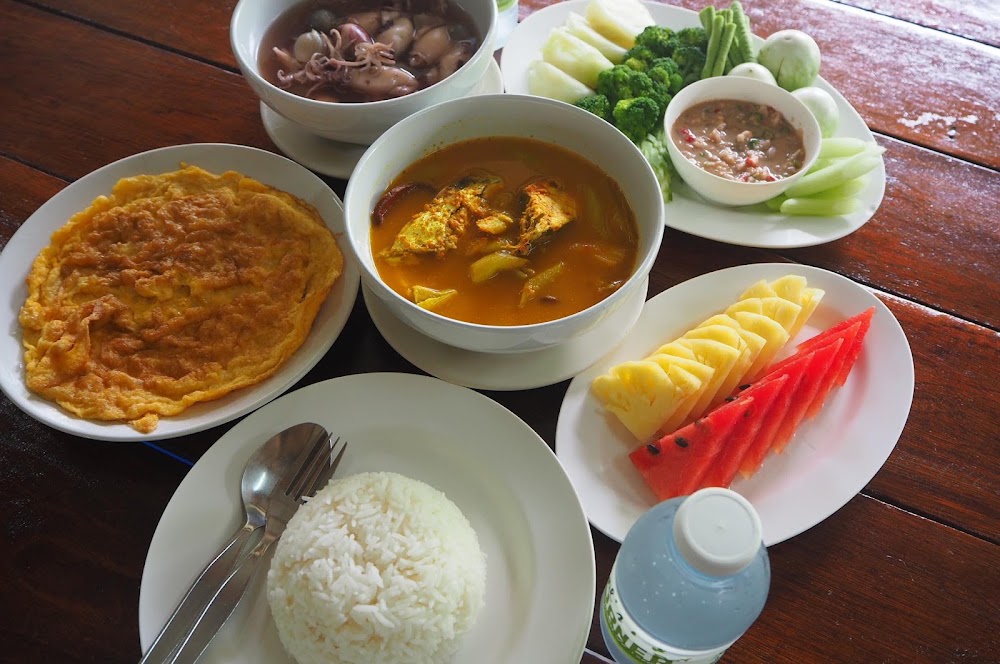
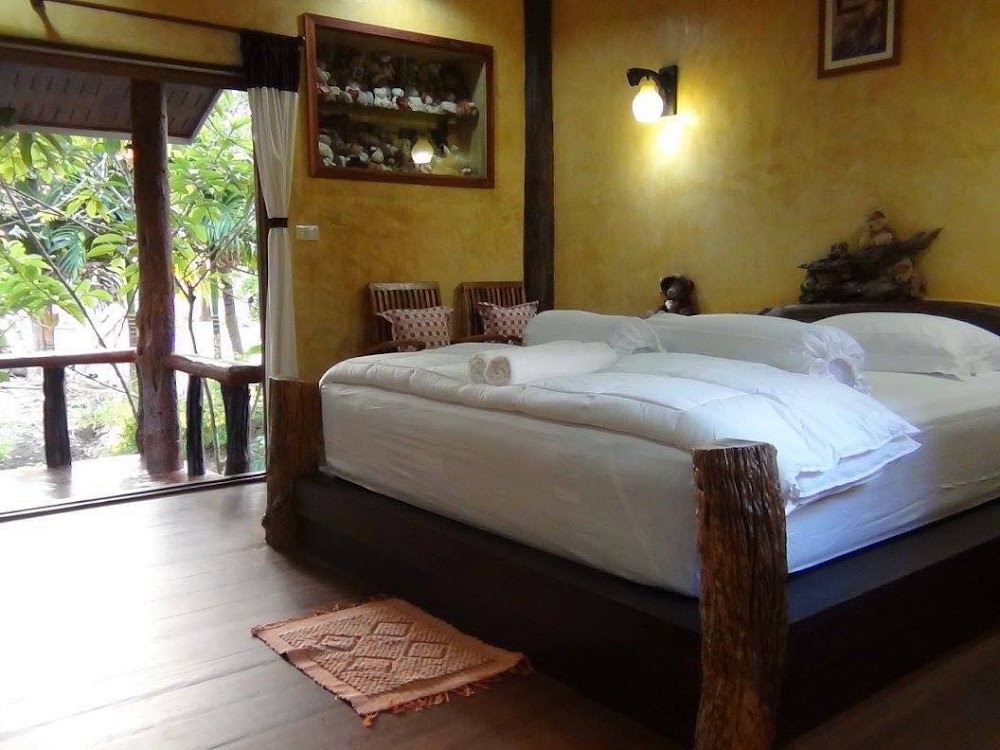
This campsite is located in Khao Lak, an hour’s drive from Phuket, on the grounds of a rafting center. The cabins are nestled among tropical greenery, close to the forest and river.
There are five accommodation options:
- Riverside bamboo cabin – 900 baht per night.
- Bamboo cabin – 800 baht.
- Room with a balcony – 800 baht.
- Air-conditioned room – 700–800 baht.
- Tent with basic amenities – 600 baht.
Prices are per night for two people, excluding breakfast. You can also go river rafting to add even more adventure to your weekend in nature.
Sawasdee Lagoon
Geo on Google Maps (Phang Nga)
Website
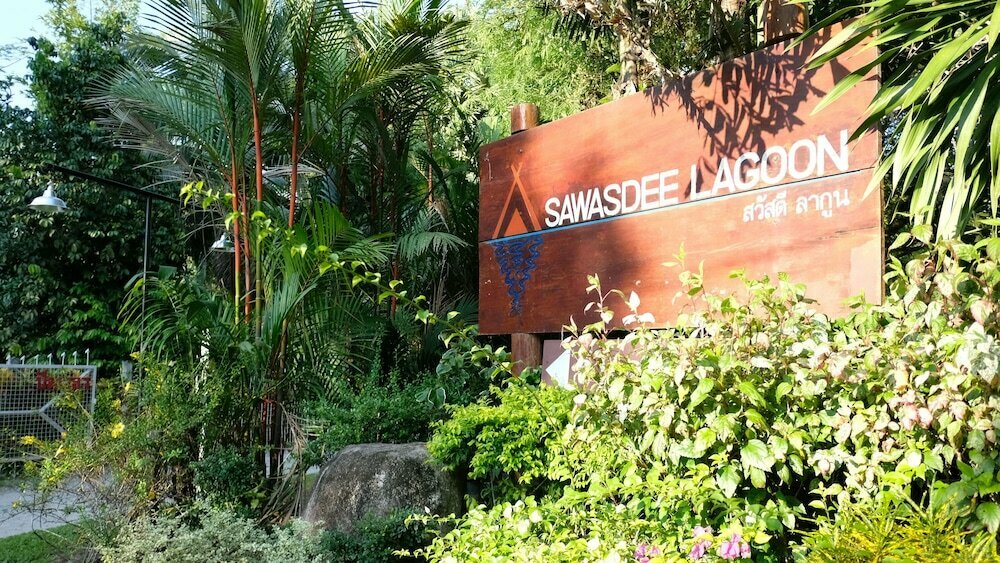
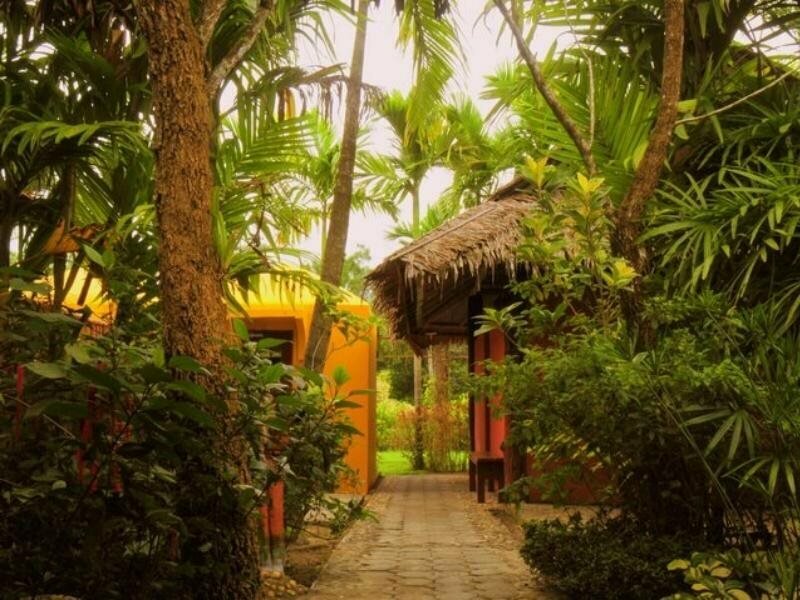
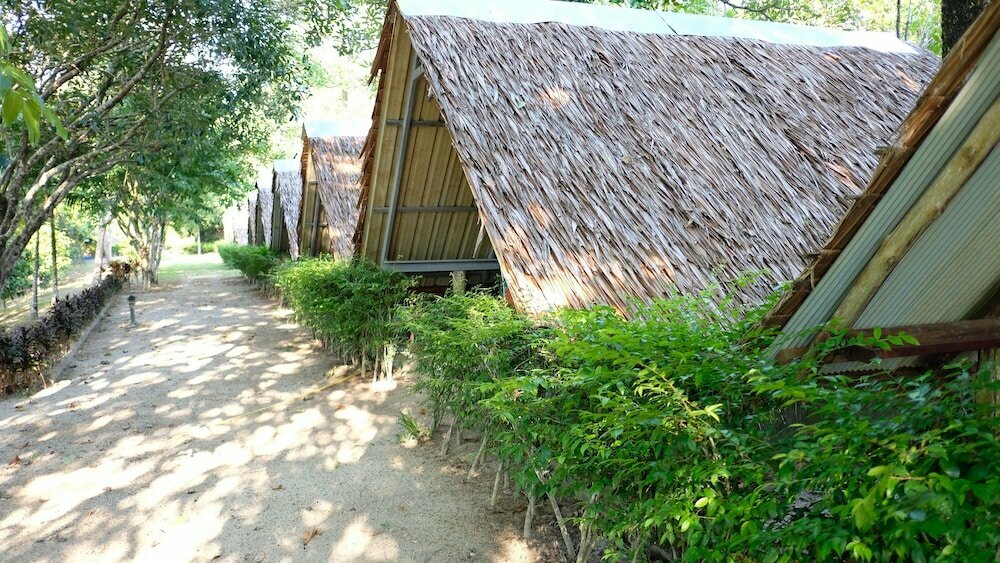
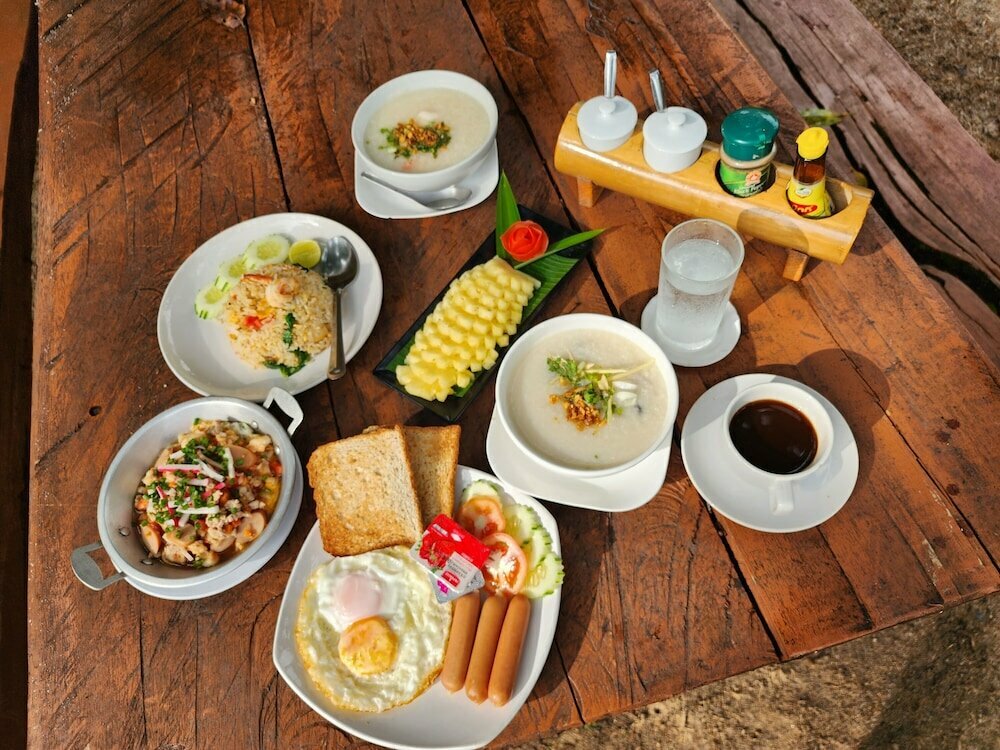
An atmospheric campsite in Phang Nga, surrounded by lush greenery, where tents sit beneath large shelters with traditional roofs. All around are vegetation and a freshwater lagoon.
What makes this campsite special is its blend of natural surroundings and basic comforts. The grounds are well maintained: this is a well-equipped campsite rather than an isolated spot in the wilderness.
There are small and large tents, as well as standard rooms. Activities include kayaking, cycling, and barbecues.
Our Jungle Camp
Geo on Google Maps (Suratthani)
Website
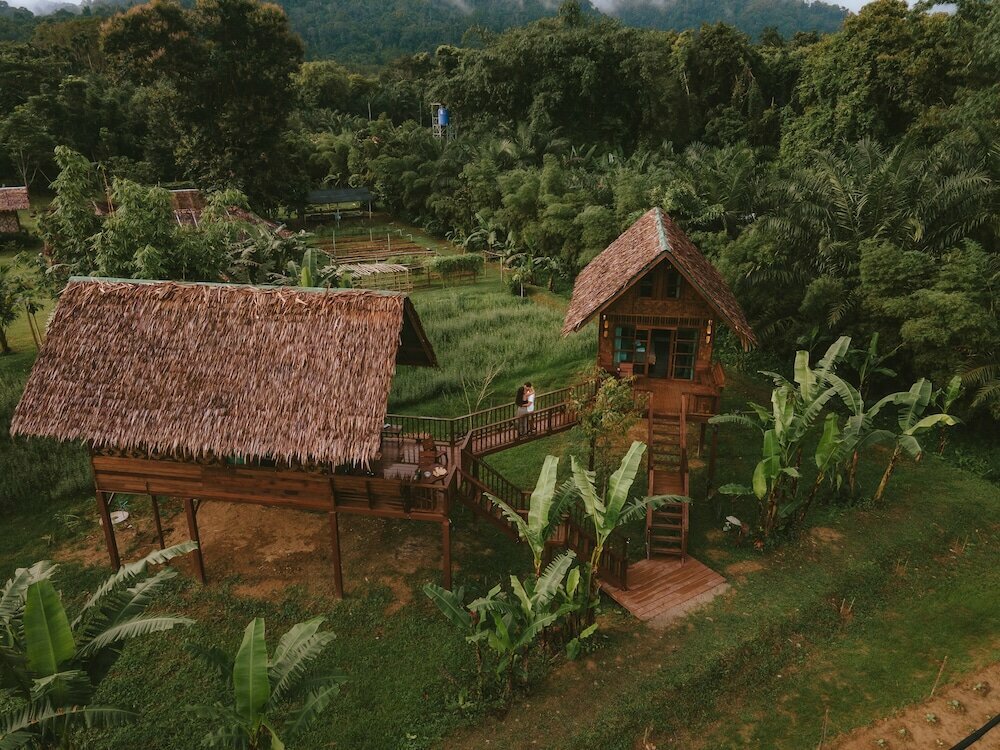
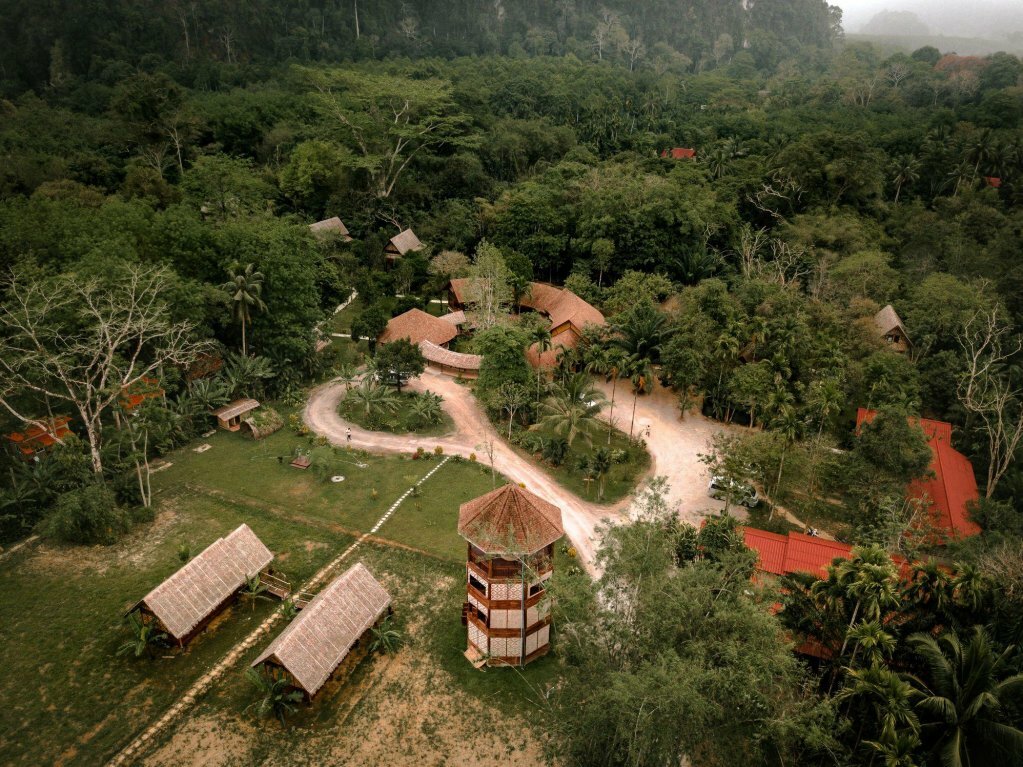
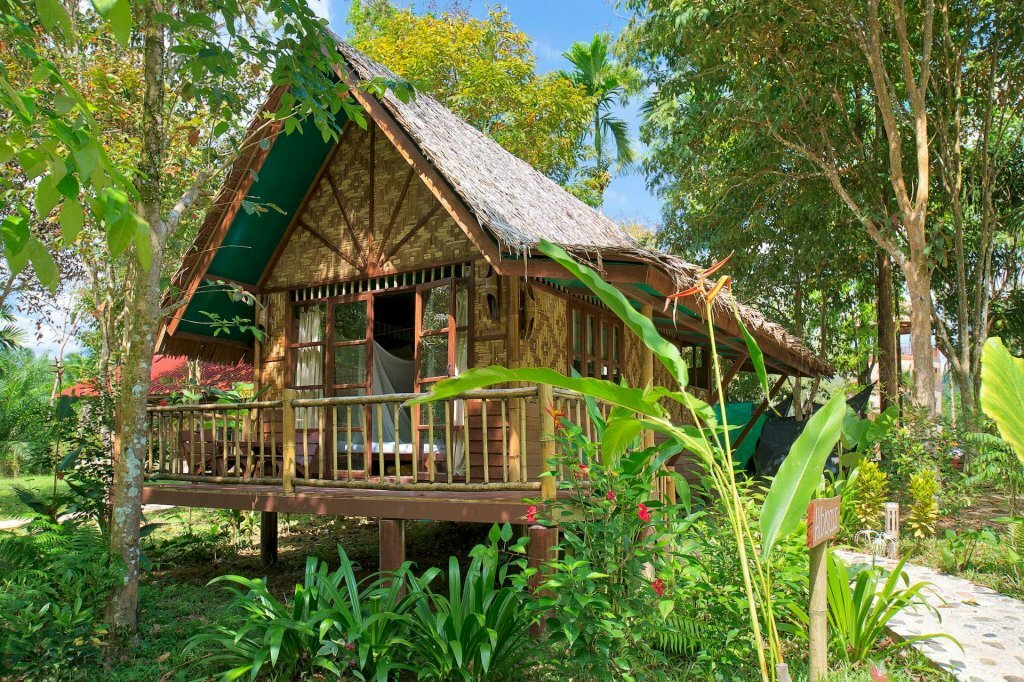
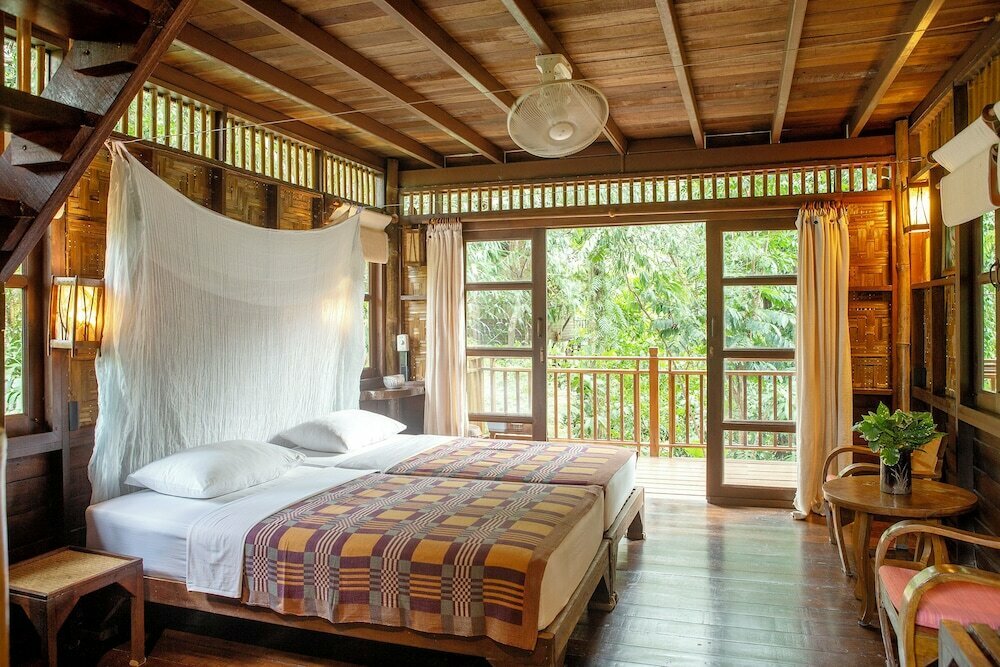
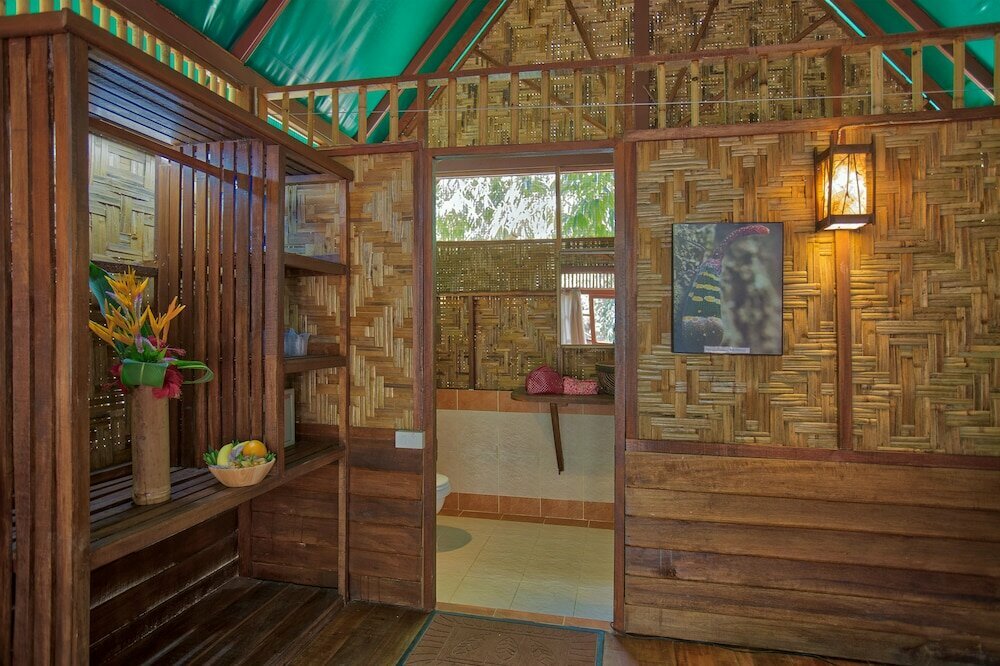
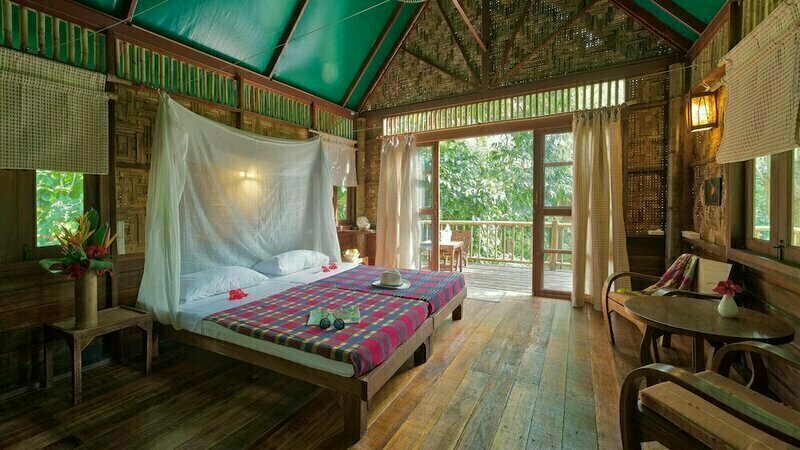
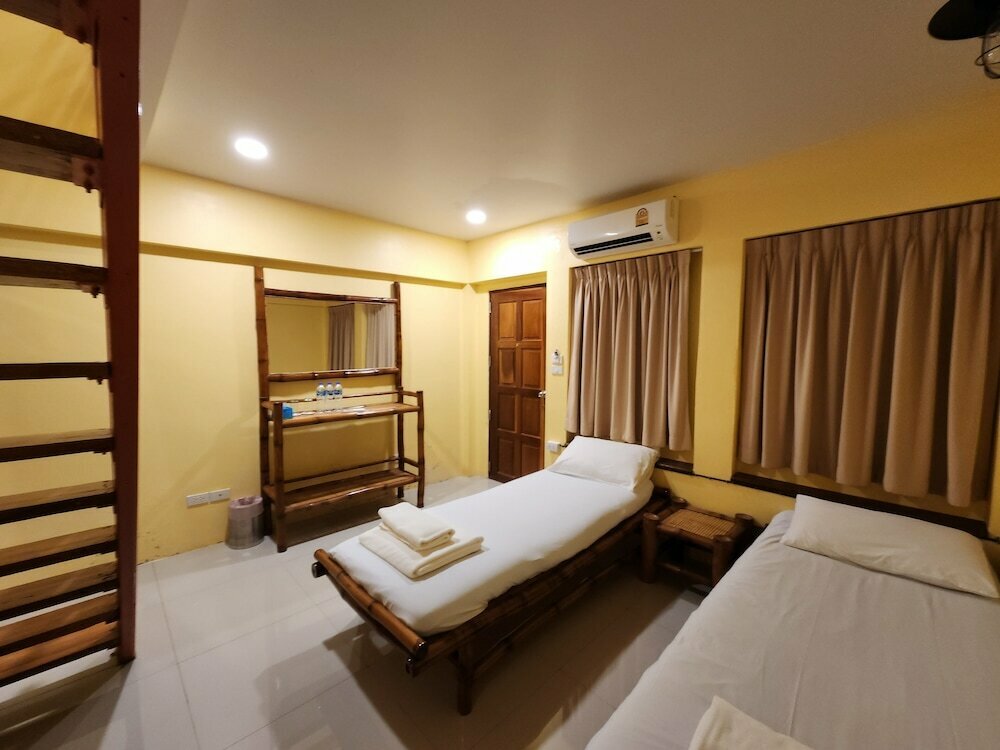
An eco-resort rather than a traditional campsite — another great option for immersing yourself in the natural world.
Here, you can stay in wooden treehouses, surrounded by tall vegetation, close to a river and limestone cliffs — a childhood dream come true!
The cabins are built from wood and bamboo and equipped with fans and mosquito nets. There is no air conditioning — a deliberate part of the concept.
An Overnight Stay on Cheow Lan Lake
Some places make you want to do more than just visit — you want to stay until morning. Cheow Lan Lake is one of them.


During the day, you glide past towering limestone cliffs and jungle, and by evening, the boat brings you to a floating hotel right in the middle of the lake.
A night in the wilderness, surrounded by nothing but mountains and jungle, with the nearest road several kilometers away. For many, this becomes one of the most memorable experiences of the entire trip.
You can stay overnight on Cheow Lan Lake as part of the Cheow Lan Lake tour. Choose the 2-Day Cheow Lan Tour (Capsules) for an authentic overnight experience, or the 2-Day Cheow Lan Deluxe Tour if you prefer more comfortable accommodation.
2. See and Hear the Mangroves
Mangrove forests are coastal woodlands where trees grow directly in saltwater or brackish water. Their intertwined roots form an entire ecosystem: home to crabs, fish, mollusks, and birds.
Read more about mangroves in our article Mangrove Forests: Phuket’s Enchanted Jungles.
Not everyone knows that mangrove forests have their own distinctive sound. During the day, you might not even notice it, but in the dark, it can seem downright eerie. In fact, this sound can have several sources. One is the mangroves’ inhabitants: crabs, shrimp, and other small animals snapping their claws, moving along the roots, and rustling in the mud. Depending on the place and time, you may also hear dripping water, the movement of the tide, and the sounds of insects.
At night, a mangrove forest can sound nothing like what you’d expect from a quiet forest by the sea: instead of the familiar sound of waves, there are mysterious taps, clicks, and rustles, as though water were dripping somewhere in the darkness.
Mangrove forests are more than just an attraction to “see in 20 minutes” — they’re a place worth spending time in. In Phuket, they are especially interesting to explore from the water — by kayak or bamboo raft.
Where to See Mangrove Forests in Phuket
- Saphan Hin, particularly the Saphan Hin illuminated walk, is the easiest option if you don’t want to travel far.
- Sirinat National Park has a separate mangrove forest area covering approximately 1 km². It is located in the northern part of Mai Khao, near the park office.
- Thapom Klong Song Nam, Krabi (geo https://maps.app.goo.gl/2v7sMdQDGUQS1GaJ8?g_st=it) – here, a wooden boardwalk winds through mangrove and swamp forest, alongside a river where fresh and seawater meet.
Exploring the mangrove forests is the best way to discover this natural wonder. You can do so on selected itineraries offered as part of these tours.


3. Watch a Muay Thai Fight
Muay Thai is more than just “some fight” — it is a cultural phenomenon in Thailand and a martial art with its own philosophy. Watching this spectacle at least once is a must when visiting Thailand.


Before the fight, the athletes perform the wai kru ritual. Then the bout begins, and the sounds around you grow louder: music, spectators, betting, and shouts from the crowd. The atmosphere heats up, and you become part of the action.
Where to Watch Muay Thai in Phuket?
- Patong Boxing Stadium Sainamyen. Tickets from 1,540 baht. Book at a discount via WhatsApp or Telegram.
- Bangla Boxing Stadium. Tickets from 1,540 baht. Book at a discount via WhatsApp or Telegram.
Even if you know nothing about Muay Thai, within a single evening you’ll quickly start recognizing kicks, elbow strikes, and knee strikes — and you’re guaranteed to get hooked.
4. Visit an Authentic Fishing Village
Phuket is more than a holiday destination — it’s also home to local communities. Here, you can still see how people live when the sea is part of their everyday lives.
For example, Koh Siray, a small island next to Phuket, is home to an Urak Lawoi community: fishing boats sit beside the houses, nets hang out to dry, and life remains closely tied to the sea.
The Urak Lawoi are often referred to as “sea gypsies” because they historically led a nomadic lifestyle, spending much of their time at sea, traveling between islands and fishing. However, a more appropriate term is “people of the sea.”
And the island of Koh Panyi in Phang Nga Bay is home to an entire village built on stilts directly over the water. Here, houses, a mosque, restaurants, and a school are connected by wooden walkways, while the famous floating football pitch was created because there simply wasn’t enough space on the island for a regular football field.
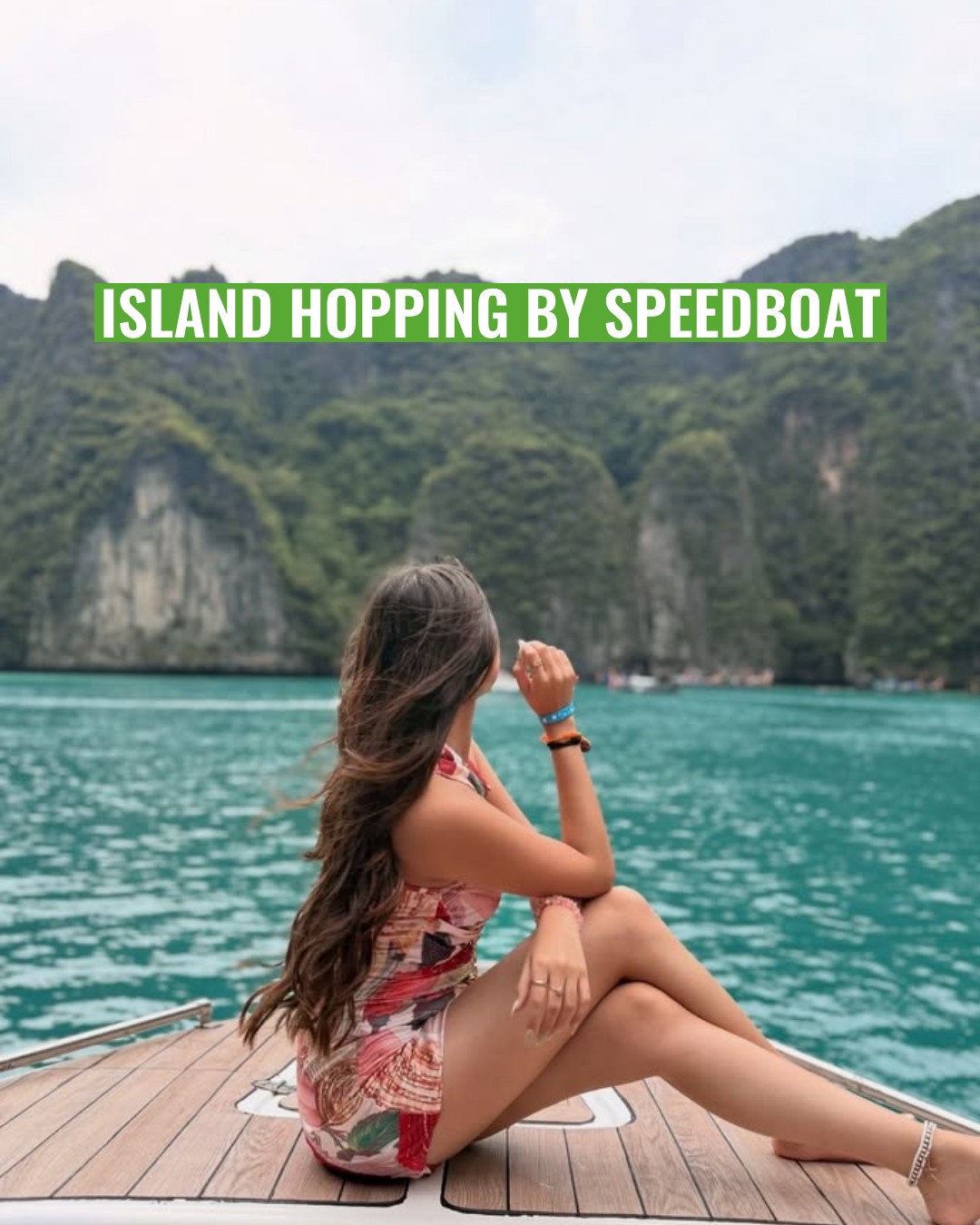
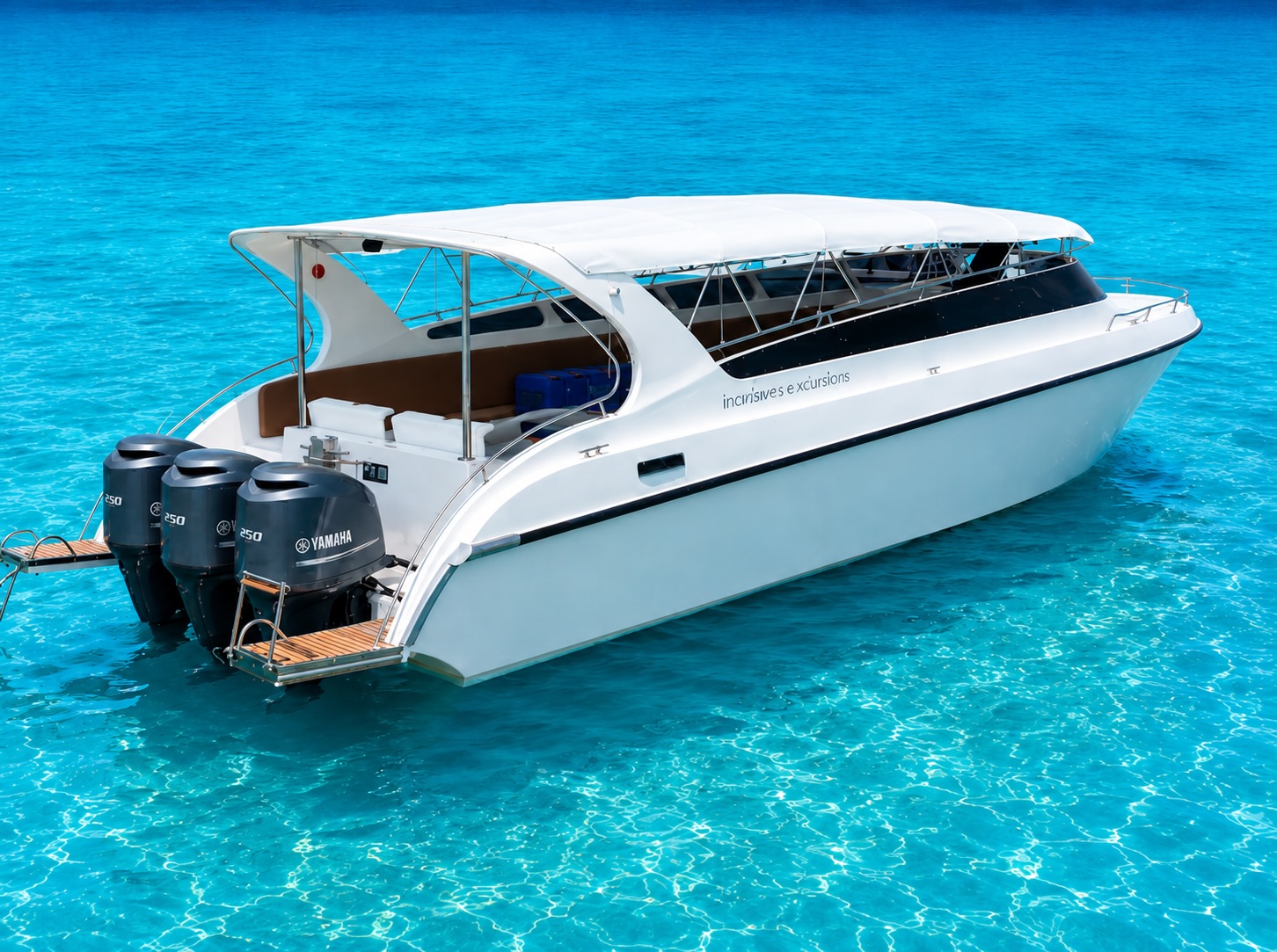
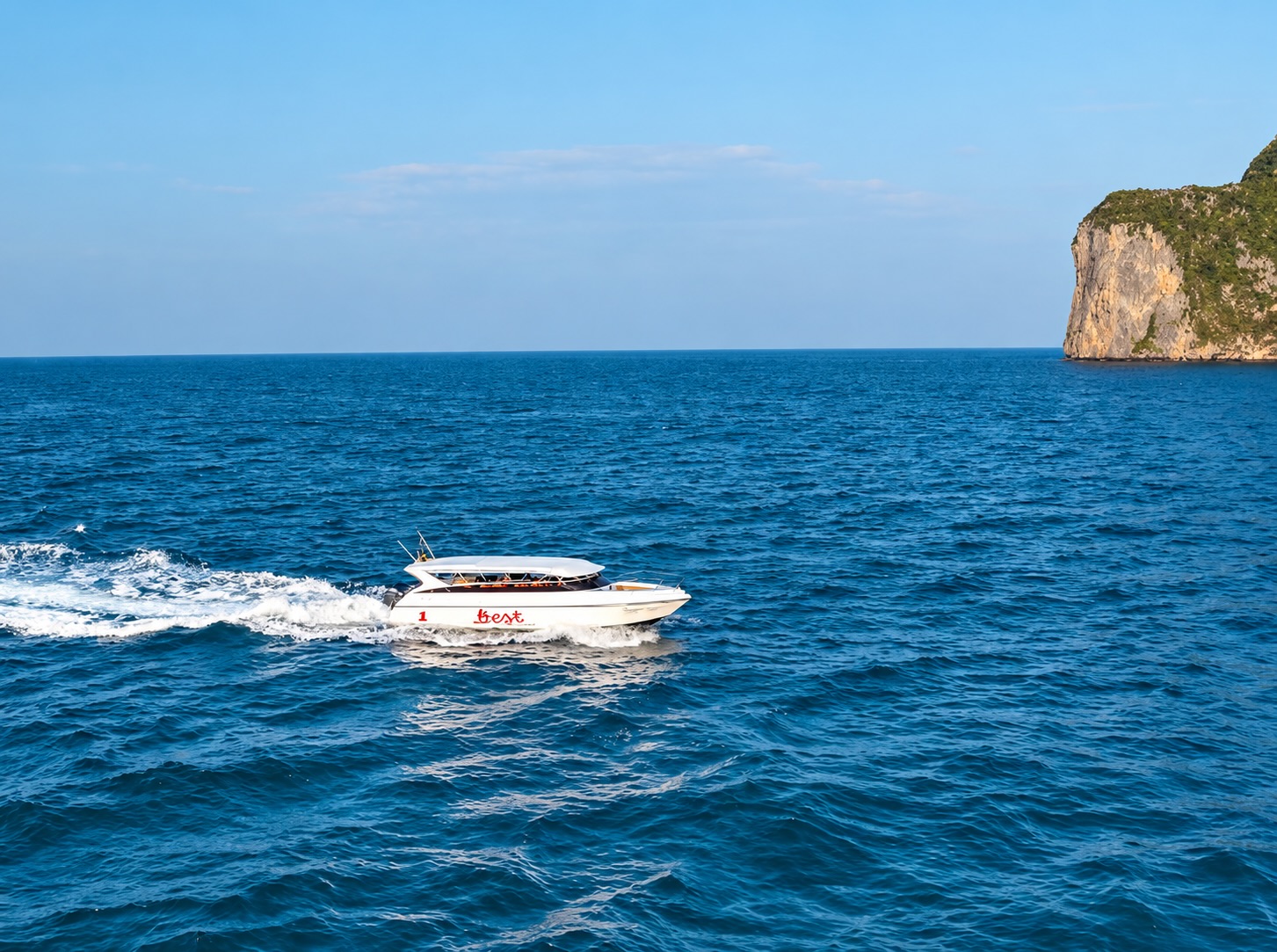
Both villages offer a glimpse of a completely different Thailand — one that lies off the beaten path.
You can visit the village of Ko Panyi as part of certain tours:
The most important thing is to treat these places as actual residential areas, not as tourist attractions: don't enter people's yards without an invitation, and don't take close-up photos of people without their permission.
5. Take a Trip to Krabi Without a Plan
You don’t have to book a tour or plan out every hour in advance. It’s easy to drive from Phuket to the neighboring province of Krabi on your own. The drive takes about 2.5–3 hours, but best of all — it’s incredibly beautiful!
You don’t have to make a detailed plan, but it’s still better to be prepared so you don’t get lost. Here are some suggestions for places to visit on the way to Krabi and in the area itself.
- On the way, you can stop by Sai Kaew Beach — a quiet beach where you can take a short break — and the Samet Nangshe Viewpoint, which offers views of Phang Nga Bay and the limestone cliffs.
- Next, head to Tham Thonglang Quarry — an old quarry with turquoise water — and then visit the large golden temple, Wat Maha That Wachiramongkol.
- Ao Nang is a convenient place to stay overnight: in the evening, you can stroll along the waterfront, walk down the resort street, and check out the Ao Nang Landmark Night Market.
- On the second day, it’s worth visiting Krabi Town and taking a boat ride down the river to Khao Khanab Nam — a cave featuring unusual rock formations, rock paintings, and a legend about giants.
- On the way back, you can make a few short stops: feed the goats at Ao Nang Goat Farm, have lunch at the Kuan Nom Saow cafe with its observation deck, and take a walk through the Thapom Klong Song Nam mangrove forest, where the water changes color with the tides.
The detailed route is available in the materials Independent Trip on Crabi with overnight stay and Independent 3-Day Trip to Krabi.
6. Spend a Night on Phi Phi
Most visitors arrive in Phi Phi in the morning and leave after lunch. Try doing the opposite and stay at least one night on Phi Phi Don island. When the day-trip boats leave, you will get a completely different experience.
In the evening, the island comes alive: bars open up, beach parties are held, DJs play, and fire shows are performed.
And Slinky Bar is a local landmark: it features the largest beach dance floor on the island!
In the morning, you can watch the sunrise on the still deserted Loh Dalum Beach, or take a boat and head to the bays and beaches before the main tour groups arrive.
You can find various tour formats for Phi Phi here:
7. Watch the Sunrise at Samet Nangshe
To do this, you'll have to wake up very early and leave Phuket while it's still dark. But believe me — it's 100% worth it.
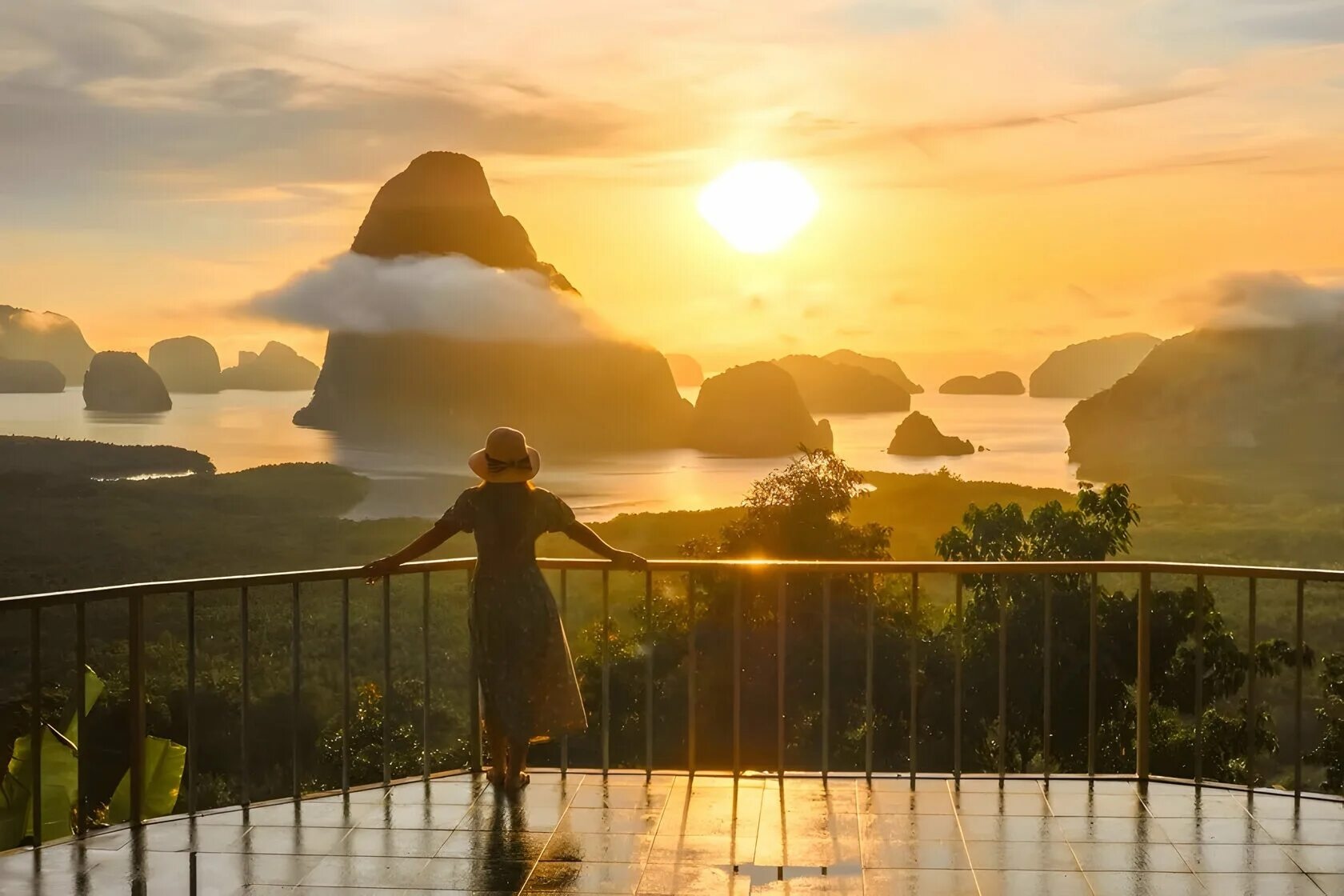
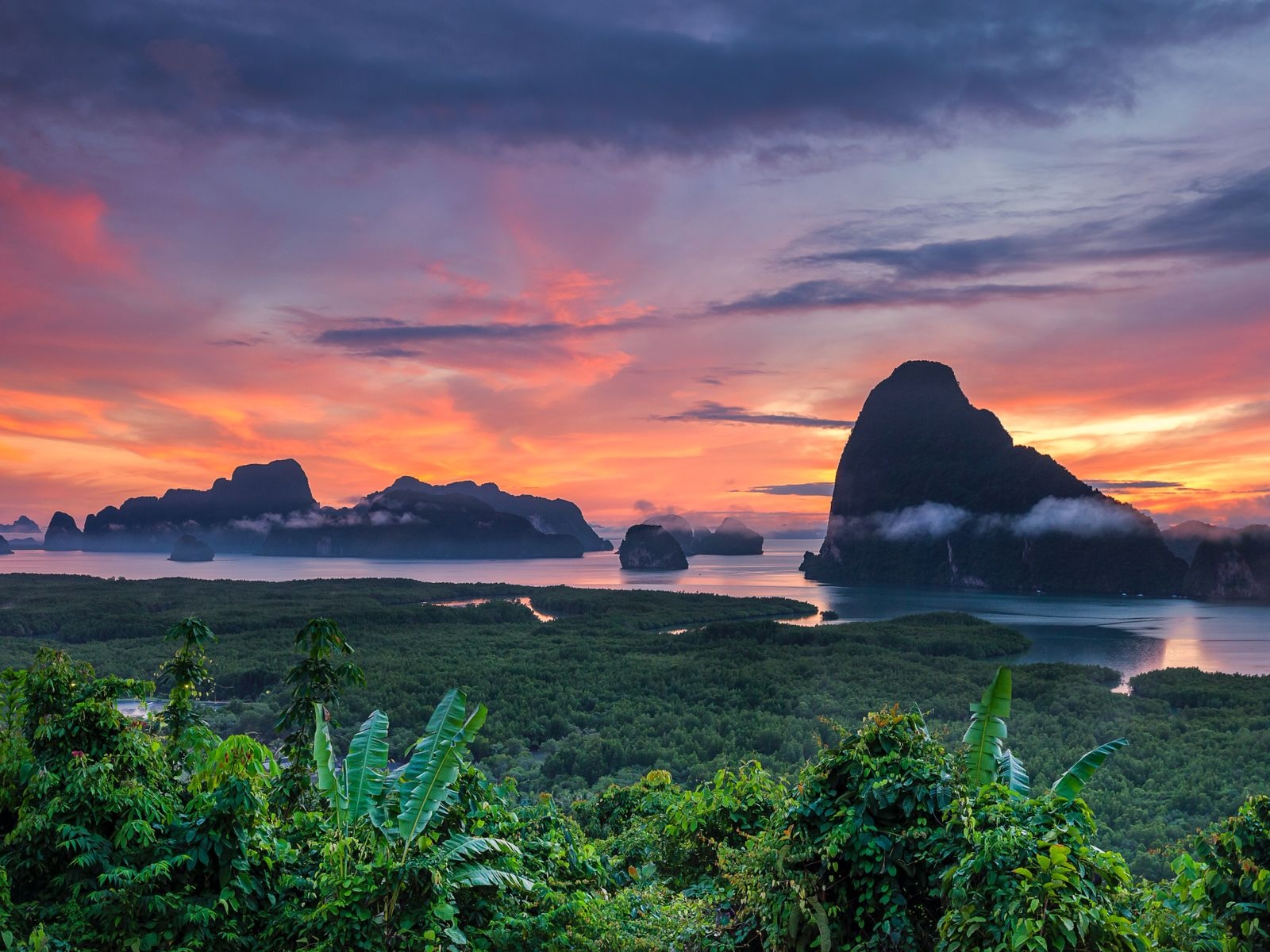
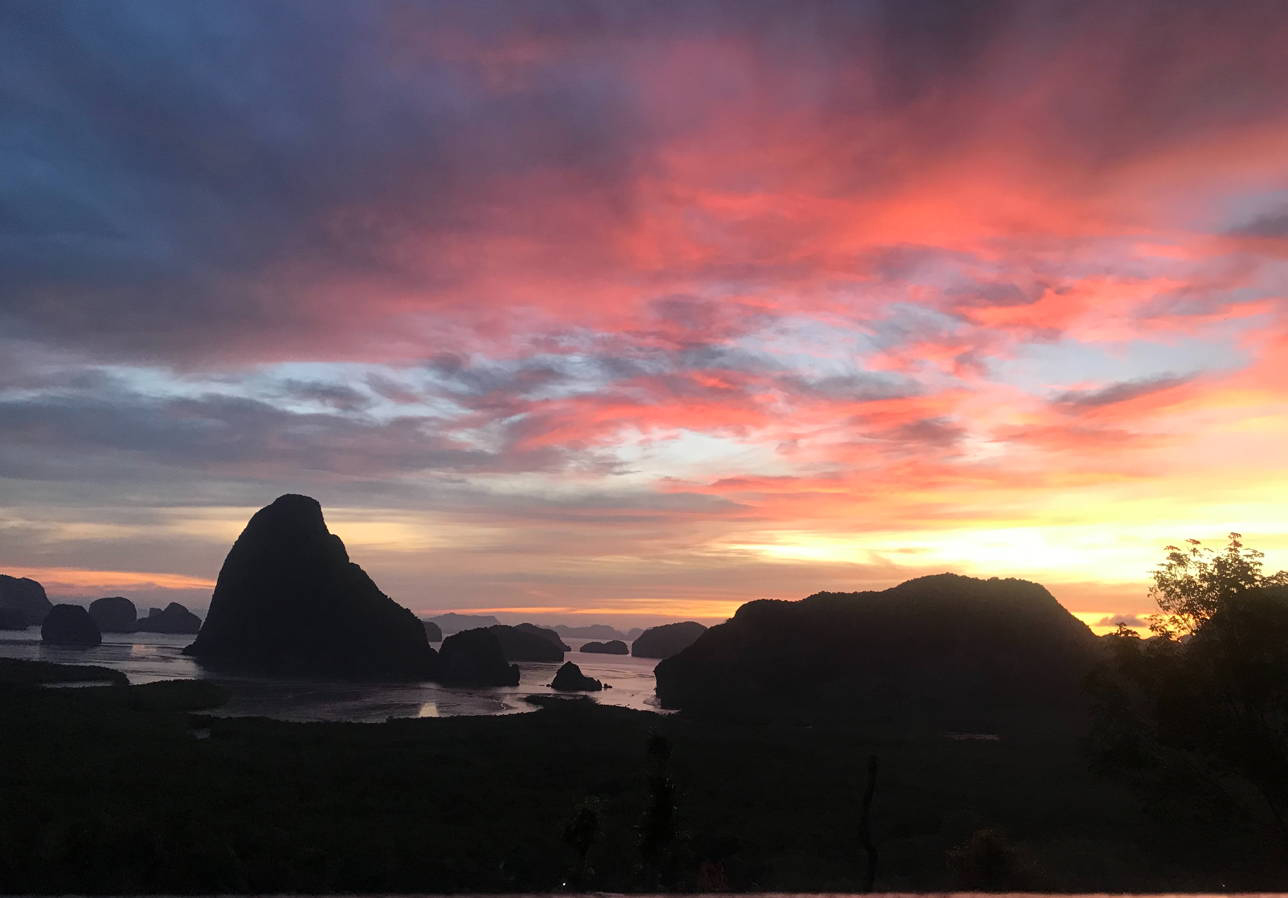
When the first rays of light begin to illuminate Phang Nga Bay, dozens of limestone islands gradually appear before you, and morning mist often hangs over the water — it's an indescribable beauty.
You can catch the sunrise at Samet Nangshe as part of a special tour, which is simply called "Samet Nangshe Sunrise. Private Tour" There are also options for group tours to Samet Nangshe.
8. Swim at Night Among Glowing Plankton
It's nothing short of magic: the sea lighting up with thousands of tiny lights. But the origin of this wonder is explainable — this is what bioluminescent plankton looks like.
In Phang Nga Bay, evening kayaking and canoeing programs are arranged for this. When the water moves around the boat or you run your hand across the surface, small bluish-green flashes appear.
The effect depends heavily on the darkness, weather, and conditions on a particular day. But if you're lucky, it will be one of those moments that is hard to capture in a photograph.
You can see the glowing plankton as part of the following tours:

9. See Sea Turtles in Their Natural Habitat
Seeing a sea turtle not in an aquarium and not in a photo, but encountering it underwater in its natural habitat is a completely different experience.
You can do this while diving. You can also explore coral reefs and observe tropical fish. Sometimes turtles also calmly swim right by or rest on the seabed, completely ignoring the divers.
Where can you meet a turtle while diving?
- Shark Point — one of the popular dive sites near Phuket. Here you can find sea turtles, leopard sharks, and many reef fish.
- Racha Yai — a good option for beginner divers: relatively calm conditions, coral reefs, and a chance to meet a turtle.
- Racha Noi — deeper and more interesting spots for experienced divers; large marine animals can be found here.
- King Cruiser Wreck — a sunken ferry between Phuket and Phi Phi, around which a large artificial reef has formed. Turtles can also be found here.
- Similan Islands — if you are willing to travel further from Phuket, this is one of the best diving options in the region. Here, the chances of encountering a sea turtle are especially high.
Of course, an encounter with a turtle is not guaranteed — they are wild animals, not part of a show program. But if you're lucky, the wow effect is guaranteed!
There are several diving tours during which you have a chance to encounter giant turtles. And not only them! Go to the Diving page and choose the one that matches your requests and skills.
10. Riding a Longtail Boat at Sunrise
Get up before dawn, head to the sea, and head out into the bay on a traditional Thai longtail boat. While Phuket is just waking up, there are almost no tourist boats on the water, and the sun is gradually rising from the horizon.
You can simply cruise along the coastline or arrange a route with the captain to the nearby islands, with stops for swimming and snorkeling.
Where to find a boat? The easiest way is to look for a captain directly at Rawai Pier or Chalong Pier. At Rawai, longtail boats are moored along the shore, and you can discuss the route and departure time with the owner. You can also book a private boat in advance through local companies.
How much does it cost? The price guideline is approximately 1,200–2,500 baht for a 2–4 hour boat rental.
Before the trip, be sure to clarify the final price, duration, route, and what is included in the cost. Early departures depend on the weather and sea conditions.
An even easier option is to book a private longtail boat tour in advance. It will cost more, but you can go on the trip with a group.

11. To See Planes Flying Low Over Mai Khao Beach


Imagine this: you are standing on the beach, the sea is roaring, and suddenly a huge passenger airliner flies right over your head. It feels like you can reach out and touch it! Phuket has a place where plane landings turn into a real show.
Where to watch? At the southern end of Mai Khao Beach, next to Phuket Airport. This is exactly where planes on their final approach can fly extremely low over the sand.
For more details on how to get to the viewpoint, read the article "The Plane Beach in Phuket: How to Get There and Take the Best Photos".
It is best to visit from December to June, as these months feature more days with sea approaches for landing. We recommend checking the flight schedule in advance using the Flightradar24 app.
12. Explore the Beach After Low Tide.
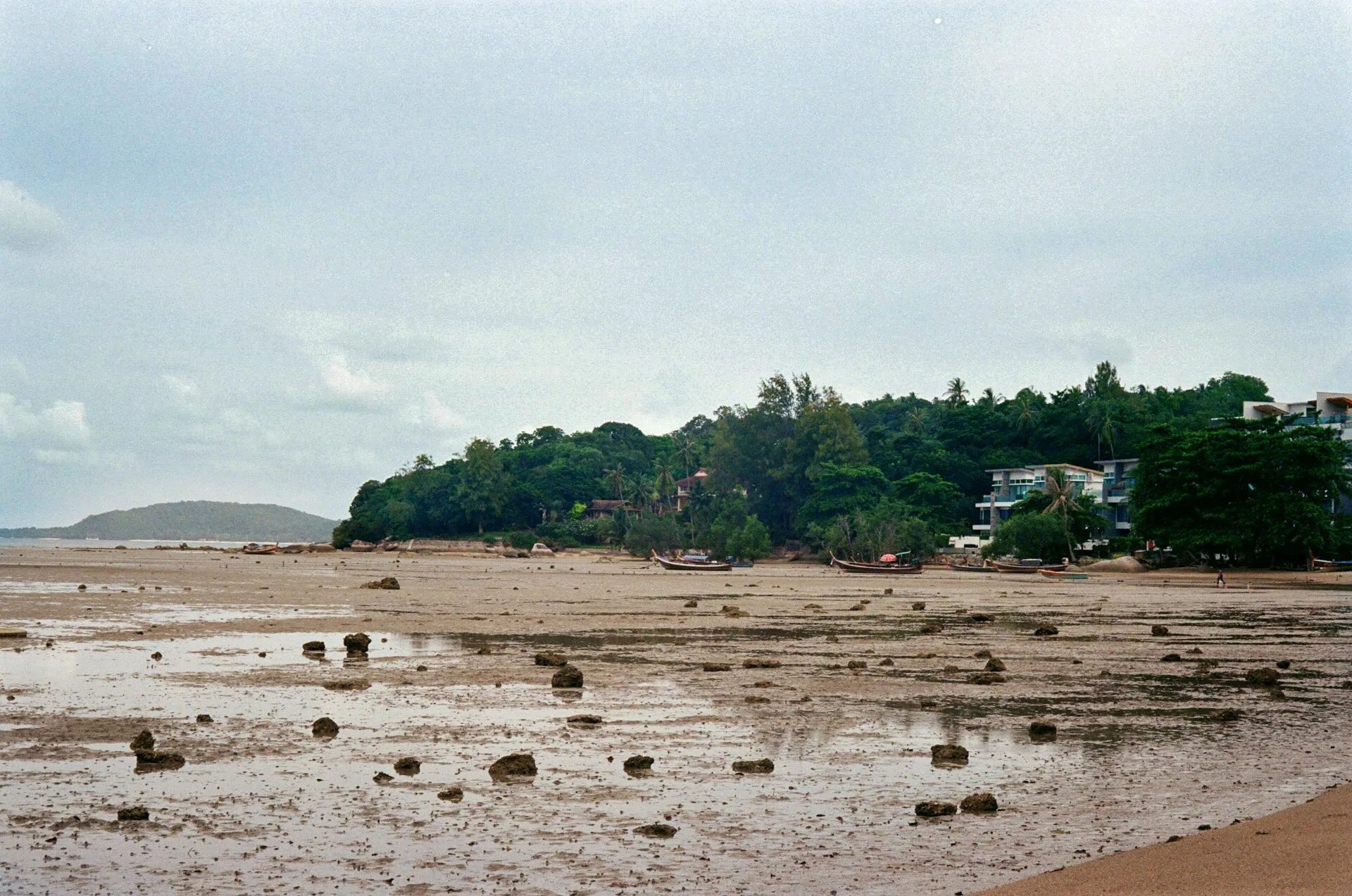
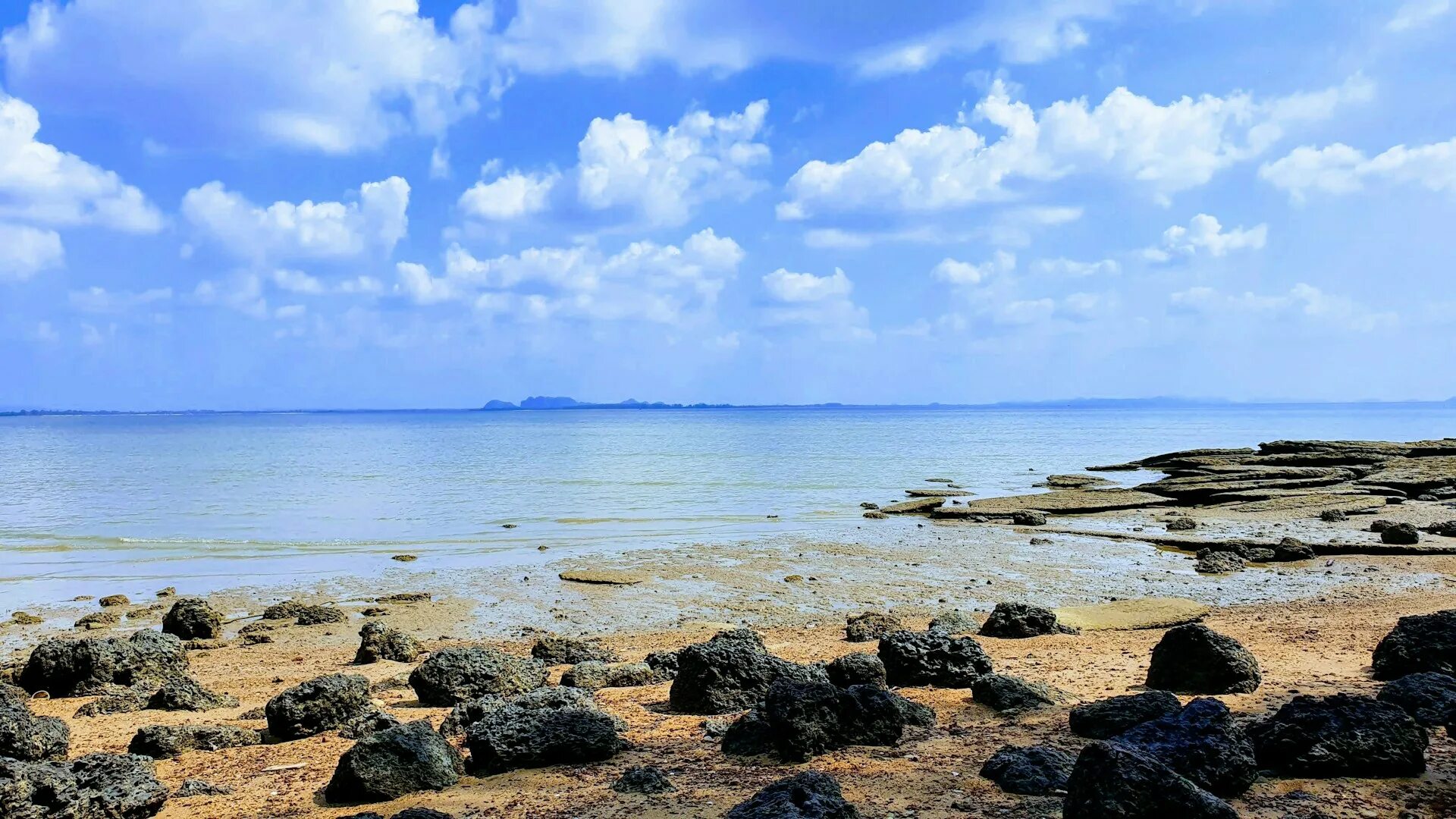
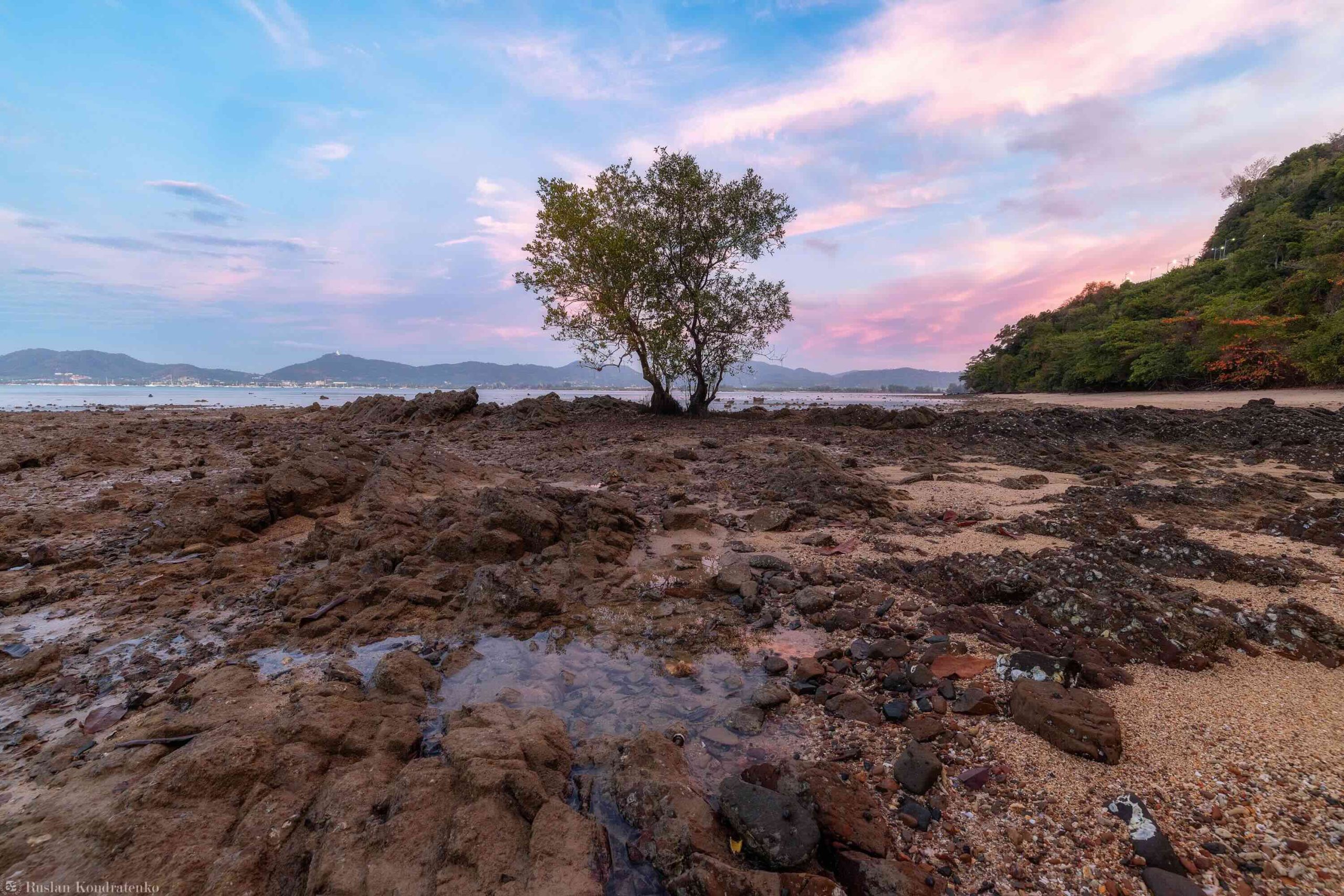
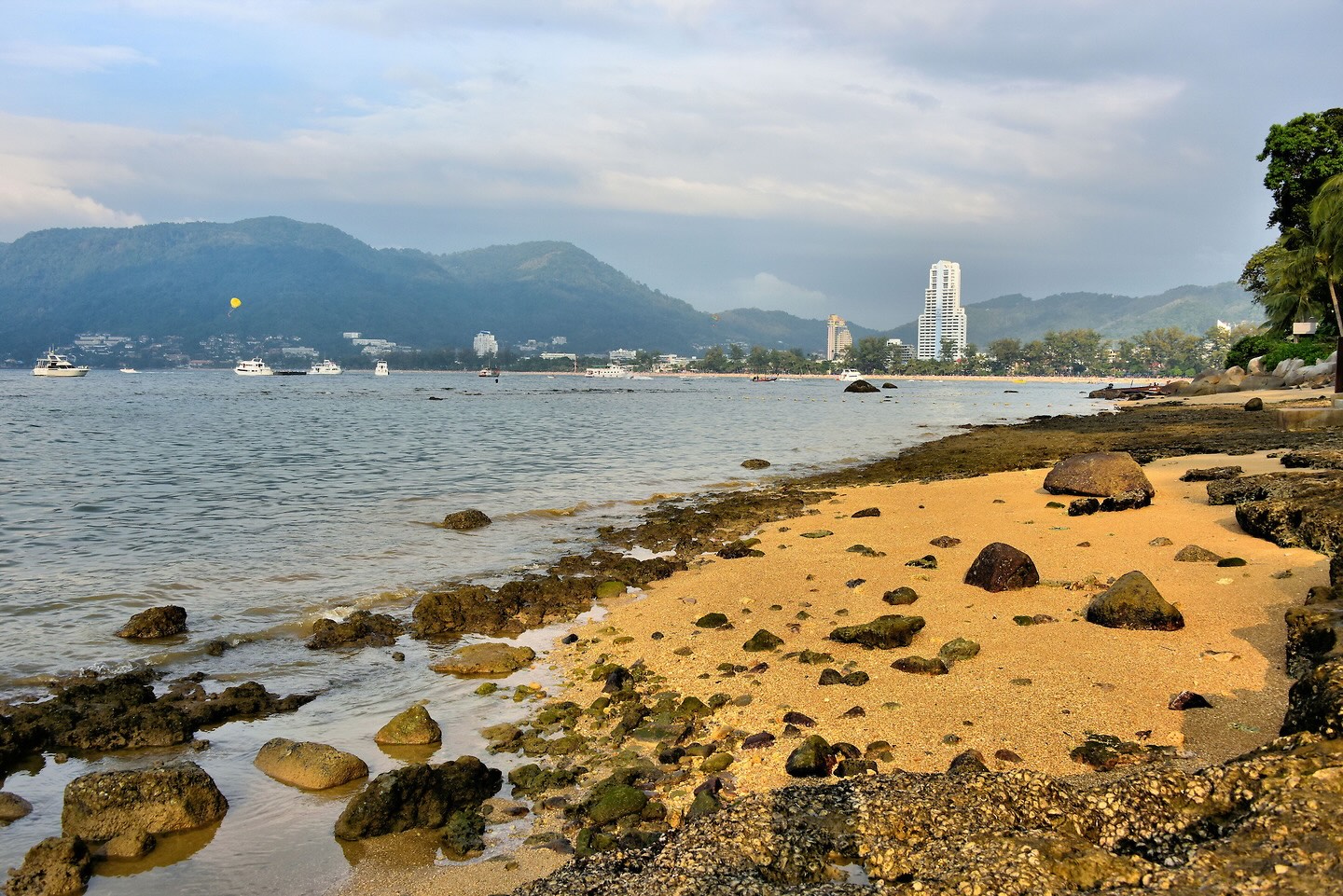
When the sea retreats, the familiar beach changes beyond recognition. Where water was just a few hours ago, sandbanks, rocky areas, small natural pools, and sea creatures that are usually invisible from the shore appear.
Why it is interesting to explore the shore after low tide:
- See the beach from a different perspective. As the sea recedes, it exposes sandbanks, rocks, and reef sections that are usually hidden underwater.
- Find marine life. Among the rocks and in small puddles, you can spot crabs, mollusks, small fish, and other creatures.
- Explore natural pools. Water remains in the depressions between rocks, where you can observe small underwater life.
- Walk where the sea used to be. On some beaches, wide sand flats and long spits open up, along which you can walk further along the shore.
- Take unusual photos. Low tide changes the familiar landscape: intricate patterns appear on the sand, reflections form in the puddles, and rocky areas reveal their texture.
The main thing is to check the tide times in advance, wear shoes suitable for walking on rocks, and avoid touching marine life.
Where to find such places on Phuket?
- Nai Yang Beach – during a strong low tide, the water recedes far from the shore, and sandbanks open up in certain areas. It is especially interesting to walk along the northern part of the beach towards Mai Khao: here, the shoreline becomes wider, and in some spots, you can see unusual shapes of sand spits.
- A small bay near the former The G Beach Club, not far from Patong, next to the Dives Guru dive center (geo). During low tide, you can explore the rocky shore and reef sections that are usually hidden underwater. Shoes for walking on rocks won't hurt.
- Tri Trang – in the shallows during low tide, rocky areas and coral bottom are exposed. This is where you can especially notice how dramatically the shoreline changes depending on the water level.
- Yanui – at the edges of the small bay, the water recedes, revealing rocks and reef sections. You can examine the shore's texture and look for small marine creatures in the natural depressions among the rocks.
Choose at least one idea from the list and try to make it happen on your next trip!